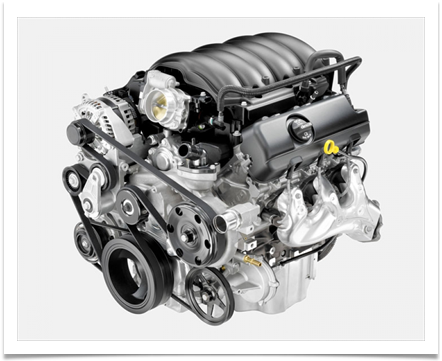
If your Tundra, Sequoia, or petrol-spec Land Cruiser 200 just dropped a cylinder or the block let go entirely, you already know a new crate V8 from the dealer isn’t cheap. That’s the gap we fill. We source, test, and ship a Toyota 1UR-FE engine for sale to shops and owners who need the truck or SUV running again without paying dealer money for it.
Table of Contents
- What Is the Toyota 1UR-FE, Exactly?
- Toyota 1UR-FE Specifications
- Where This Engine Shows Up
- What We Actually Check Before Listing a 1UR-FE Engine for Sale
- Common Reasons Owners Replace a 1UR-FE
- What to Watch For on a High-Mileage 1UR-FE
- 1UR-FE vs. 1UR-FSE vs. 3UR-FE: How the Toyota UR V8 Family Compares
- Used vs. Rebuilt: Which 1UR-FE Should You Buy?
- Installing a 1UR-FE: What to Check Before You Bolt It In
- Warranty and What Happens If Something’s Wrong
- Other Toyota V8 Engines We Stock
- Who We Ship This Engine To
- Shipping a 1UR-FE Engine Worldwide
- Red Flags When You’re Buying a 1UR-FE Anywhere Else
- Toyota 1UR-FE Engine for Sale: Frequently Asked Questions
- The Bottom Line on Buying a Toyota 1UR-FE Engine for Sale
This is the same rundown we’d give you on the phone — what this engine actually is, where it’s genuinely used, what to check before you buy one, and what to watch for once it’s in. We ship worldwide, we pull these motors out of real vehicles, and we’d rather you walk in knowing too much than find out the hard way once the crate’s open in your shop.
What Is the Toyota 1UR-FE, Exactly?
The 1UR-FE is a 4.6-liter V8 that Toyota built as the base-tier gasoline engine across its bigger trucks and SUVs during the late 2000s and 2010s. It’s worth being precise about this one because the UR family gets mixed up constantly: the 1UR-FE runs conventional sequential multiport fuel injection, not the direct-injection D-4S system used on its close relative, the 1UR-FSE. That distinction matters if you’re cross-shopping parts or trying to figure out which engine your vehicle actually has — they share a lot of architecture but aren’t interchangeable in every respect.
Toyota used the 1UR-FE as the standard V8 option in the Tundra and Sequoia, and as a petrol alternative to the diesel and 5.7L options in certain export-market Land Cruiser 200 trims. It’s a straightforward, durable design without the added complexity of direct injection, which is part of why it’s held up well as a used and rebuilt option in markets where fuel quality and simplicity both matter.
Toyota 1UR-FE Specifications
| Engine code | 1UR-FE |
| Displacement | 4,608 cc (4.6L) |
| Configuration | V8, DOHC, 32-valve |
| Fuel system | Sequential multiport fuel injection |
| Valve timing | Dual VVT-i |
| Power output | Approx. 301–310 hp, depending on year and application |
| Torque | Approx. 326–329 lb-ft (441–446 Nm) |
| Block/head material | Aluminum block, aluminum heads |
| Used in | Toyota Tundra, Toyota Sequoia, Toyota Land Cruiser 200 (petrol V8 export-market trims) |
| Related engine | Toyota 1UR-FSE (direct-injection sibling, Lexus GS460/LS460) |
Every 1UR-FE we list goes out the door with its actual pulled mileage, the trim and market it came out of, and whatever inspection data we have on hand — compression readings, oil condition, and a visual check on the valve covers and injectors where we can get to them before the engine ships.
Where This Engine Shows Up
The Tundra and Sequoia carried this engine as their base V8 option through most of their production runs in North America, which is why it’s one of the more commonly found engines in that lineup outside of the bigger 5.7L option. In export markets across the Middle East, Africa, and parts of Asia-Pacific, certain Land Cruiser 200 trims offered it as a petrol alternative to the diesel and larger V8 options, particularly in regions where a simpler, non-direct-injection engine was preferred for durability with variable fuel quality. It’s genuinely a global engine, even if it’s less talked about than some of Toyota’s more famous diesels.
That spread works in your favor when you’re sourcing a replacement. A 1UR-FE pulled from a well-kept Sequoia isn’t mechanically different from one out of a Tundra that did fleet duty for the same number of kilometers — the engine doesn’t know which badge it’s wearing.
What We Actually Check Before Listing a 1UR-FE Engine for Sale
Every used engine that comes through our warehouse gets pulled apart at least partway before we clear it for resale. We’re not running a yard where you take your chances on a running-when-parked promise — we ship internationally, and one bad shipment costs us more in reputation than the engine was worth selling. So here’s what actually happens before a 1UR-FE goes up as a listing:
We run a compression test across all eight cylinders and record the actual numbers, not just a thumbs up or down. We check for the cold-start VVT-i rattle common across Toyota’s larger V8s and note whether it clears quickly or lingers. We inspect the valve covers for gasket seepage, and we check the fuel injectors for signs of wear or clogging, since this engine’s injectors see a lot of duty on a full-size truck or SUV doing real work. And we confirm the oil condition and look for any metal content that would point to bigger internal wear.
If an engine doesn’t clear those checks, it doesn’t go up as a tested running unit — it either gets rebuilt first or it’s sold clearly labeled as a parts or core engine. We’d rather lose the sale than have you open a crate three weeks and half a world away and find out we oversold it.
Common Reasons Owners Replace a 1UR-FE
Most of the time, we’re not selling this engine to someone dealing with the minor wear issues covered above. On a truck or SUV that’s been worked hard, the internal combustion engine itself usually isn’t what fails first from routine wear — it’s more often a specific event that takes the block or heads out entirely. Overheating from a coolant system failure that wasn’t caught in time is one of the more common culprits, especially on a truck that’s been towing near its limit. Timing chain failure from years of skipped oil changes is another, and it tends to bend valves on the way down. We also see engines come in after a rod let go from running low on oil for too long, which usually isn’t something you can machine your way out of.
Whatever got you to this page, the math on a Tundra, Sequoia, or Land Cruiser 200 is usually the same: the vehicle itself still has a lot of life left in it, and a tested replacement engine costs a fraction of what it’s worth keeping on the road, compared to writing the whole thing off over one failed component.
What to Watch For on a High-Mileage 1UR-FE
This is a genuinely solid engine — Toyota built it for trucks that tow, haul, and get worked, and it holds up well. But nothing running for 250,000-plus kilometers in a full-size truck comes through completely untouched. If you’re buying a 1UR-FE — from us or anyone else — here’s what actually tends to show up as the miles climb:
Exhaust manifold cracking. This is one of the more common complaints on Toyota’s larger V8s from this era, this one included. The exhaust manifolds can develop cracks over time, especially with heat cycling from towing or heavy loads, which shows up as a ticking or popping noise on cold start that fades as things warm up. It’s not usually a sign of internal engine trouble, but it’s worth checking on any used unit.
Secondary air injection pump issues. The secondary air injection system, which helps reduce cold-start emissions, uses a pump that can fail or the check valves can stick over time. It typically throws an emissions-related code rather than affecting how the engine actually runs, but it’s worth knowing about since it’s a common source of check engine lights on higher-mileage units.
VVT-i actuator rattle on cold start. A brief rattle for a second or two on startup is common and generally not a concern. A rattle that lingers longer usually points to worn actuator components or an oil control valve worth checking.
Valve cover gasket seepage. As the miles climb, the valve cover gaskets can start to weep, particularly around the spark plug tube seals. It’s a minor, inexpensive fix, but worth knowing about before assuming any oil residue is something bigger.
Oil consumption at very high mileage. Some 1UR-FE units start using a bit more oil than they did new once they cross very high mileage, which is fairly normal for an aluminum V8 of this age and isn’t usually a sign of a bigger problem on its own.
None of this makes the 1UR-FE a risky buy — if anything, it’s one of the more dependable V8s Toyota has put in a full-size truck, and most of what goes wrong with it is exactly what you’d expect from any engine doing real towing and hauling duty for real years. The difference between a good buy and an expensive mistake usually comes down to whether the seller actually checked for this stuff, or just pulled it out of a wreck and put it on a pallet.
1UR-FE vs. 1UR-FSE vs. 3UR-FE: How the Toyota UR V8 Family Compares
If you’re not sure which engine your vehicle actually takes, this is where the confusion usually starts. Toyota’s larger V8s overlapped across the same platforms for years. Here’s the short version:
| Engine | Displacement | Typical output | Where it’s found |
|---|---|---|---|
| 1UR-FE | 4.6L V8, multiport injection | ~301–310 hp | Tundra, Sequoia, Land Cruiser 200 (petrol export trims) |
| 1UR-FSE | 4.6L V8, D-4S direct injection | ~340–380 hp | Lexus GS460, LS460 |
| 3UR-FE | 5.7L V8, multiport injection | ~381 hp | Tundra, Sequoia, Land Cruiser 200, Lexus LX570 |
The 1UR-FE and 3UR-FE share a lot of architecture and both use conventional multiport injection, but the 3UR-FE is the larger, higher-output option that became the sole engine choice on some models as the lineup evolved. The 1UR-FSE is a different animal entirely, built for direct injection and used exclusively in Lexus’s sedan lineup rather than trucks. If you’re not certain which one your vehicle has, the engine casting number and your VIN are the only reliable way to confirm it — we can check that against your VIN before you order, so you’re not stuck with an engine that bolts up but doesn’t run right with your vehicle’s wiring and ECU.
Used vs. Rebuilt: Which 1UR-FE Should You Buy?
We sell both, and which one makes sense depends on what you’re actually trying to do. A used, tested 1UR-FE — pulled from a running vehicle, compression-checked, exhaust manifolds inspected — is the cheaper option and the right call if the rest of your truck or SUV is in good shape and you just need reliable power back under the hood. A rebuilt unit, where we’ve gone through the internals and replaced wear items like the valve cover gaskets and exhaust manifold hardware, costs more but buys you a longer runway before you’re dealing with this again.
Neither is the wrong answer. Someone running a Tundra on a work site has different math than someone keeping a personal Sequoia on the road for the long haul. Tell us which situation describes you and we’ll point you at the option that actually fits, instead of just pushing the more expensive unit because it’s sitting on the shelf.
Installing a 1UR-FE: What to Check Before You Bolt It In
Compatibility on this engine family is generally good across Tundra, Sequoia, and petrol-spec Land Cruiser 200 variants of the same generation, but a few things are worth confirming before you commit to a swap. Match the engine harness and ECU pairing where possible, or be ready to have your engine management shop handle the pairing — a 1UR-FE pulled from a different market or model year can carry different sensor wiring and calibration data that needs matching to your vehicle’s ECU. Check your accessory mounts and exhaust routing against the replacement unit, since brackets and manifold designs shifted slightly across the production run. And don’t assume a 1UR-FE and a 3UR-FE are interchangeable just because they look similar under the intake — confirm with us or your mechanic first, since displacement, mounting, and in some cases wiring differ.
We include whatever documentation we have on the donor vehicle with every engine we ship, and we’re available to answer fitment questions before you buy, not just after something doesn’t line up on the bench.
Warranty and What Happens If Something’s Wrong
Every engine we sell, including every Toyota 1UR-FE engine for sale in our current stock, comes with a warranty period covering the core internals — the block, heads, crank, and rotating assembly. That’s not a marketing line, it’s how we back what our own inspection found before the engine shipped. If something turns up that our testing missed, you’re not left holding a dead engine and an apology. Tell us what’s happening and we’ll work through it with you, whether that means parts, guidance for your installer, or a resolution on the unit itself.
We’d rather spend the time answering fitment and condition questions before you order than deal with a dispute after the fact. Most of the buyers we hear back from months later are just confirming the vehicle’s still running fine — that’s the outcome we’re actually building this business around.
Other Toyota V8 Engines We Stock
The 1UR-FE isn’t the only large Toyota engine we move through the warehouse regularly. If you’re working on a heavier-duty application, we also stock the Toyota 1GR-FE V6 for 4Runner and FJ Cruiser applications, and the specialty Toyota 2UR-FSE for Lexus LS600h and LS600hL hybrids. If your shop also covers Toyota’s diesel trucks, we stock the Toyota 1KD-FTV as well. If you’re not sure which one your vehicle actually needs, send us the VIN or chassis plate details and we’ll confirm it before you order anything.
We’ve also written more broadly about the buying decisions that come up constantly with engines like this one. If you’re weighing whether a rebuilt vs. used engine makes more sense for your situation, that post covers ground that applies here too. And if you want the fuller picture on what you’re actually getting with any used engine for sale from us, that post walks through our testing process in more depth.
Who We Ship This Engine To
The Tundra and Sequoia are sold mainly in North America, but the Land Cruiser 200 platform this engine also powers is genuinely global — sold and driven across dozens of markets for over a decade. Our customer list for this engine reflects that spread. We’ve shipped 1UR-FE units to independent workshops, fleet operators, and individual owners across North America, the Middle East, Australia and New Zealand, Africa, and the wider Asia-Pacific region. Wherever your vehicle is registered and wherever it’s actually parked, we can quote you a landed cost and a realistic timeline before you commit to anything.
That’s the whole point of running this as a worldwide operation rather than a local yard: these vehicles don’t stop at any one country’s border, and neither does our ability to get you the engine that fits.
Shipping a 1UR-FE Engine Worldwide
We ship these engines internationally, and over time we’ve built a process around it that actually works instead of just hoping for the best at customs. Every engine is drained of fluids, crated properly for ocean or air freight, and documented with the paperwork most countries expect for a used engine import — origin, condition, and where relevant, an emissions or environmental compliance note. We’ve sent 1UR-FE units and engines like it to buyers across North America, the Middle East, Australia, New Zealand, Africa, and the wider Asia-Pacific region, and we handle the logistics conversation with you before the engine leaves the warehouse, not after it’s stuck in a port somewhere.
If you’re importing into a country with specific rules on used engine imports — and several do — tell us before you order. We’d rather answer that question up front than have you find out about a restriction after the engine’s already on a boat.
Red Flags When You’re Buying a 1UR-FE Anywhere Else
We’re not going to pretend every seller of a used Toyota V8 operates the way we do, so if you’re shopping around — which you should — here’s what to watch for. A seller who can’t give you an actual mileage figure, only “low miles” or “good runner,” is a seller who either doesn’t know or doesn’t want to tell you. A listing with no photos of the actual engine, just a stock photo pulled from somewhere online, means you have no idea what you’re actually getting. A seller who can’t tell you whether it’s a 1UR-FE or the larger 3UR-FE hasn’t actually checked what they’re selling. And a price dramatically below everyone else’s for the same engine and mileage bracket is almost always below that price for a reason — usually one that shows up after you’ve already paid and the engine’s on its way.
Ask for the compression numbers. Ask exactly which engine code is stamped on the block. Ask what happens if it arrives and doesn’t run right. If a seller won’t answer those questions clearly, that tells you most of what you need to know before you send any money.
Toyota 1UR-FE Engine for Sale: Frequently Asked Questions
How much horsepower does the 1UR-FE make?
Output varies by year and application, generally somewhere between about 301 and 310 hp across Tundra, Sequoia, and Land Cruiser 200 petrol variants.
Is the 1UR-FE a reliable engine?
Yes — it’s one of the more dependable V8s Toyota has put in a full-size truck or SUV. Exhaust manifold cracking and secondary air pump issues are the most common complaints, and neither one is usually a sign of deeper trouble.
What’s the difference between the 1UR-FE and the 1UR-FSE?
The 1UR-FE uses conventional multiport fuel injection and is found in Toyota trucks and SUVs, while the 1UR-FSE uses Toyota’s D-4S direct-injection system and is found exclusively in Lexus’s GS460 and LS460 sedans. They’re related but not interchangeable.
Do you ship a 1UR-FE engine internationally?
Yes, we ship worldwide and handle export documentation and crating for ocean and air freight.
What’s included when I buy a used 1UR-FE from you?
You get the tested long block with documented mileage, our inspection notes including compression readings and exhaust manifold condition, and support on fitment questions before and after your order.
The Bottom Line on Buying a Toyota 1UR-FE Engine for Sale
A used or rebuilt 1UR-FE is, for most Tundra, Sequoia, and petrol Land Cruiser 200 owners, the sensible way back on the road — a fraction of new-engine pricing, real tested history instead of a guess, and none of the wait that comes with ordering a brand-new long block through official channels. The engine itself is a straightforward, well-proven V8 that’s done real towing and hauling work in vehicles around the world for well over a decade. The known issues are minor and well documented, which actually works in your favor — a seller who knows what to check for can rule them out before the engine ever leaves the warehouse.
We test what we sell, we tell you the truth about mileage and condition, and we ship it properly wherever you are. If you’re ready to talk about a specific 1UR-FE for your Tundra, Sequoia, or Land Cruiser 200, reach out and we’ll walk you through exactly what we have in stock and what it’ll cost to get it to you.