If your Hilux, Prado, or Fortuner just threw a rod or the injectors finally gave out for good, you’ve probably already looked at what a new long block costs through official Toyota parts and quietly closed that tab. That’s usually the point people find us. We source, test, and ship a Toyota 1KD-FTV engine for sale to shops and owners who need the truck running again without paying dealer money for it.
Table of Contents
- What Is the Toyota 1KD-FTV, Exactly?
- Toyota 1KD-FTV Specifications
- Where This Engine Shows Up
- What We Actually Check Before Listing a 1KD-FTV Engine for Sale
- What to Watch For on a High-Mileage 1KD-FTV
- 1KZ-TE vs. 1KD-FTV vs. 2KD-FTV vs. 1GD-FTV: How the Toyota Diesel Family Compares
- Used vs. Rebuilt: Which 1KD-FTV Should You Buy?
- Installing a 1KD-FTV: What to Check Before You Bolt It In
- Warranty and What Happens If Something’s Wrong
- Other Toyota Diesels We Stock
- Who We Ship This Engine To
- Shipping a 1KD-FTV Engine Worldwide
- Red Flags When You’re Buying a 1KD-FTV Anywhere Else
- Toyota 1KD-FTV Engine for Sale: Frequently Asked Questions
- The Bottom Line on Buying a Toyota 1KD-FTV Engine for Sale
This is the same rundown we’d give you on the phone — what this engine actually is, what tends to fail on it after 200,000 or 300,000 kilometers, and what to check before you hand anyone money for one, us included. We ship worldwide, we pull these motors out of real trucks, and we’d rather you walk in knowing too much than find out the hard way once the crate’s open in your driveway.
What Is the Toyota 1KD-FTV, Exactly?
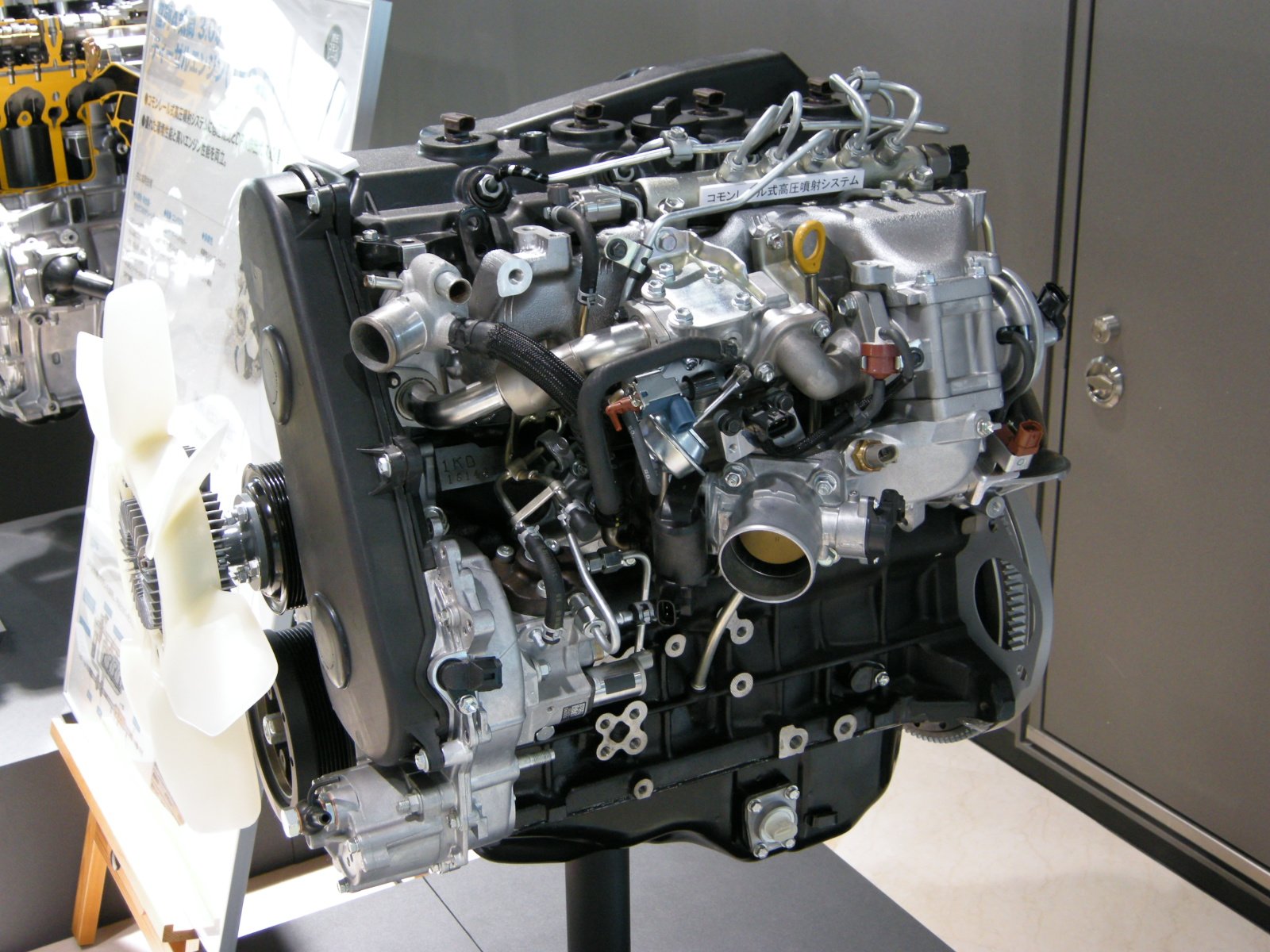
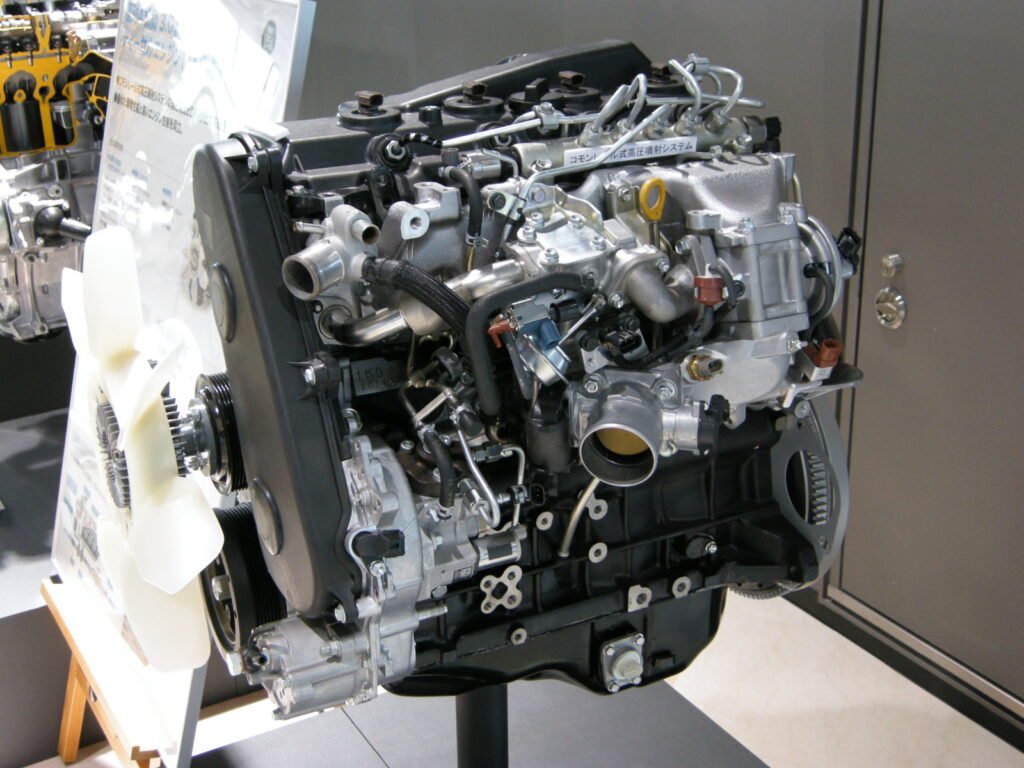
The 1KD-FTV is a 3.0-liter, four-cylinder, common-rail turbo diesel that Toyota built for well over a decade across its truck and SUV lineup. It sits in the KD engine family alongside the smaller 2KD-FTV, and it was Toyota’s workhorse diesel through most of the 2000s and into the mid-2010s before the 1GD-FTV eventually took over as the emissions rules tightened further. If you’ve spent any time around Hilux or Land Cruiser Prado forums, you already know this engine has a reputation — some of it earned, some of it exaggerated — and we’ll get into exactly what’s real further down.
It’s a DOHC, 16-valve design with common-rail direct injection and a turbocharger, with later production years moving to a variable nozzle turbo (VNT) for better response across the rev range. Depending on the year and market, output was tuned differently, so a 1KD-FTV out of an early 2000s Hilux and one out of a late-model Prado aren’t putting down identical numbers even though the block casting is the same family.
Toyota 1KD-FTV Specifications
| Engine code | 1KD-FTV |
| Displacement | 2,982 cc (3.0L) |
| Configuration | Inline-4, DOHC, 16-valve |
| Fuel system | Common-rail direct injection (D-4D) |
| Induction | Turbocharged, later years with variable nozzle turbo (VNT) |
| Power output | Approx. 120–171 hp, depending on year and market |
| Torque | Approx. 300–410 Nm, depending on year and market |
| Block/head material | Cast iron block, aluminum head |
| Production span | Roughly early 2000s through the mid-2010s |
| Used in | Toyota Hilux, Land Cruiser Prado, Fortuner, Land Cruiser 200 (early years) |
| Predecessor / successor | Predecessor: 1KZ-TE. Successor: 1GD-FTV |
Every 1KD-FTV we list goes out the door with its actual pulled mileage, the trim and market it came out of, and whatever inspection data we have — compression readings, oil condition, and a visual check on the injectors and turbo where we can physically get to them before the engine ships.
Where This Engine Shows Up
You’ll find the 1KD-FTV under the hood of Hilux pickups sold across Asia-Pacific, Australia, the Middle East, Africa, and Latin America through most of the 2000s and 2010s. The Land Cruiser Prado carried it too, as did the Fortuner once that model launched, and early Land Cruiser 200 models in some markets ran a version of it before Toyota shifted those platforms to other diesel options. It’s genuinely one of the most widely distributed diesel engines Toyota has ever built, which is part of why parts and donor engines are still relatively easy to find worldwide.
That wide distribution works in your favor when you’re sourcing a replacement. A 1KD-FTV pulled from a well-kept Prado that changed hands early isn’t mechanically different from one out of a Hilux that did the same job on a work site — the engine doesn’t know which badge it’s wearing.
What We Actually Check Before Listing a 1KD-FTV Engine for Sale
Every used engine that comes through our warehouse gets pulled apart at least partway before we clear it for resale. We’re not running a yard where you take your chances on a running-when-parked promise — we ship internationally, and one bad shipment costs us more in reputation than the engine was worth selling. So here’s what actually happens before a 1KD-FTV goes up as a listing:
We run a compression test across all four cylinders and record the actual numbers, not just a thumbs up or down. We check the oil for metal content and for the diesel-in-oil smell and dilution that this specific engine family is known for, because that’s usually the first sign of an injector seal problem. We inspect the turbo by hand for shaft play, since a VNT unit with sticking vanes or excess play needs attention before it goes back into a truck. And we check the timing chain and oil pump chain guides where we can access them, because wear there is one of the more expensive surprises on a high-mileage 1KD-FTV if it’s missed.
If an engine doesn’t clear those checks, it doesn’t go up as a tested running unit — it either gets rebuilt first or it’s sold clearly labeled as a parts or core engine. We’d rather lose the sale than have you open a crate three weeks and half a world away and find out we oversold it.
What to Watch For on a High-Mileage 1KD-FTV
This engine has a reputation online, and some of it is deserved. If you’re buying a 1KD-FTV — from us or anyone else — here’s what actually tends to show up as the kilometers climb, without the forum exaggeration:
Injector seal wear and oil dilution. This is the issue the 1KD-FTV is most known for. The injector O-rings can wear over time and let diesel seep past into the oil, which thins the oil out and, in the worst cases, raises the oil level noticeably between changes. It was common enough that Toyota revised the injector seals in later production and ran service campaigns on it in some markets. If you’re buying a used 1KD-FTV, checking the oil level and smell for diesel is one of the first things worth doing.
Oil pump chain guide wear. The chain guide that tensions the oil pump drive chain is a known wear point on early production units, and if it breaks, metal debris can circulate through the oil system. Toyota addressed this with a revised guide in later builds, and it’s one of the first things we check on any 1KD-FTV that comes through our shop before we list it.
Crankshaft pulley bolt. On some early units, the crankshaft pulley bolt could work loose over time, which throws off timing and accessory belt alignment if it’s not caught. It’s a straightforward thing to torque-check and it’s not a reason to avoid the engine, just something worth confirming on install.
EGR cooler cracking. Like most diesels running EGR to meet emissions targets, the EGR cooler on the 1KD-FTV can crack over very high mileage, which lets coolant into the intake or exhaust path. It shows up as white smoke, coolant loss with no visible external leak, or a rough idle.
Turbo actuator sticking. The variable nozzle turbo units, especially on trucks that sat for stretches without regular driving, can develop sticking vanes in the actuator. It’s rarely catastrophic on its own but it will trigger reduced power or fault codes, and it’s worth checking on any used unit before it goes back into service.
None of this makes the 1KD-FTV a bad engine — it’s one of the most produced diesel engines Toyota has ever built, and millions of them are still working every day around the world. The difference between a good buy and an expensive mistake usually comes down to whether the seller actually checked for this stuff, or just pulled it out of a wreck and put it on a pallet with a hopeful price tag.
1KZ-TE vs. 1KD-FTV vs. 2KD-FTV vs. 1GD-FTV: How the Toyota Diesel Family Compares
If you’re not sure which engine your truck actually takes, this is where the confusion usually starts. Toyota’s diesel lineup overlapped for years, and engine codes on parts listings get mixed up constantly. Here’s the short version:
| Engine | Displacement | Typical output | Where it’s found |
|---|---|---|---|
| 1KZ-TE | 3.0L (indirect injection) | ~130–150 hp | Older Hilux, Prado, Land Cruiser (pre-2000s) |
| 2KD-FTV | 2.5L | ~75–140 hp | Hilux, Innova, Fortuner (smaller-displacement models) |
| 1KD-FTV | 3.0L | ~120–171 hp | Hilux, Prado, Fortuner, early Land Cruiser 200 |
| 1GD-FTV | 2.8L | ~130–201 hp | Newer Hilux Revo, Fortuner, Prado 150, Hiace (post-2015) |
The 1KD-FTV sits right in the middle of that lineup — bigger and stronger than the 2KD-FTV, and the direct predecessor to the 1GD-FTV before Toyota downsized displacement for better fuel economy and emissions compliance. If you’re not certain which one your truck actually has, the engine casting number and your VIN are the only reliable way to confirm it. We can check that against your VIN before you order, so you’re not stuck with an engine that bolts up but doesn’t run right with your truck’s ECU and wiring.
Used vs. Rebuilt: Which 1KD-FTV Should You Buy?
We sell both, and which one makes sense depends on what you’re actually trying to do. A used, tested 1KD-FTV — pulled from a running truck, compression-checked, injector seals confirmed dry — is the cheaper option and the right call if the rest of your truck is in good shape and you just need reliable power back under the hood. A rebuilt unit, where we’ve gone through the internals and replaced wear items like the injector seals, oil pump chain guide, and gaskets, costs more but buys you a longer runway before you’re dealing with this again.
Neither is the wrong answer. Someone running a Hilux on a work site five days a week has different math than someone keeping a personal Prado on the road for the long haul. Tell us which situation describes you and we’ll point you at the option that actually fits, instead of just pushing the more expensive unit because it’s sitting on the shelf.
Installing a 1KD-FTV: What to Check Before You Bolt It In
Compatibility on this engine family is generally good across Hilux, Prado, and Fortuner variants of the same generation, but a few things are worth confirming before you commit to a swap. Match the engine harness and ECU pairing where possible, or be ready to have your engine management shop handle the pairing — a 1KD-FTV pulled from a different market or model year can carry different injector calibration data that needs matching to your truck’s ECU. Check your accessory mounts and turbo outlet routing against the replacement unit, since brackets and piping shifted slightly across the production run. And if you’re swapping in a later VNT-equipped unit to replace an earlier fixed-geometry turbo engine, confirm with us or your mechanic first — the wiring and boost control aren’t always a direct match.
We include whatever documentation we have on the donor vehicle with every engine we ship, and we’re available to answer fitment questions before you buy, not just after something doesn’t line up on the bench.
Warranty and What Happens If Something’s Wrong
Every engine we sell, including every Toyota 1KD-FTV engine for sale in our current stock, comes with a warranty period covering the core internals — the block, head, crank, and rotating assembly. That’s not a marketing line, it’s how we back what our own inspection found before the engine shipped. If something turns up that our testing missed, you’re not left holding a dead engine and an apology. Tell us what’s happening and we’ll work through it with you, whether that means parts, guidance for your installer, or a resolution on the unit itself.
We’d rather spend the time answering fitment and condition questions before you order than deal with a dispute after the fact. Most of the buyers we hear back from months later are just confirming the truck’s still running fine — that’s the outcome we’re actually building this business around.
Other Toyota Diesels We Stock
The 1KD-FTV isn’t the only Toyota diesel we move through the warehouse regularly. If you’re working on something outside that specific engine, we also stock the Toyota 2KD-FTV for the smaller-displacement Hilux and Innova, and the newer Toyota 1GD-FTV that eventually replaced it in the current Hilux Revo and Fortuner lineup. If you’re not sure which one your truck actually needs, send us the VIN or chassis plate details and we’ll confirm it before you order anything.
We’ve also written more broadly about the buying decisions that come up constantly with engines like this one. If you’re weighing whether a rebuilt vs. used engine makes more sense for your situation, or you want the fuller picture on what you’re actually getting with a used diesel engine for sale in general, those posts cover ground that applies here too. And since the 1GD-FTV is the direct successor to this engine, our breakdown of the Toyota 1GD-FTV engine for sale and its common problems is worth reading if you’re deciding between the two generations. If your shop also works on Isuzu trucks, we’ve covered the Isuzu 4JJ3-TCX engine for sale as well, a similar-class diesel with a similar set of buyer questions.
Who We Ship This Engine To
The Hilux and Prado platform is genuinely global — built and sold across dozens of markets for decades — and our customer list for this engine reflects that. We’ve shipped 1KD-FTV units to independent workshops, fleet operators, and individual truck owners across Australia and New Zealand, the wider Asia-Pacific region, the Middle East, Europe, and the Americas. Wherever your truck is registered and wherever it’s actually parked, we can quote you a landed cost and a realistic timeline before you commit to anything.
That’s the whole point of running this as a worldwide operation rather than a local yard: the Hilux and Prado don’t stop at any one country’s border, and neither does our ability to get you the engine that fits.
Shipping a 1KD-FTV Engine Worldwide
We ship these engines internationally, and over time we’ve built a process around it that actually works instead of just hoping for the best at customs. Every engine is drained of fluids, crated properly for ocean or air freight, and documented with the paperwork most countries expect for a used engine import — origin, condition, and where relevant, an emissions or environmental compliance note. We’ve sent 1KD-FTV units and engines like it to buyers across Australia, New Zealand, the Middle East, Europe, and the Americas, and we handle the logistics conversation with you before the engine leaves the warehouse, not after it’s stuck in a port somewhere.
If you’re importing into a country with specific rules on used engine imports — and several do — tell us before you order. We’d rather answer that question up front than have you find out about a restriction after the engine’s already on a boat.
Red Flags When You’re Buying a 1KD-FTV Anywhere Else
We’re not going to pretend every seller of a used Toyota diesel operates the way we do, so if you’re shopping around — which you should — here’s what to watch for. A seller who can’t give you an actual mileage figure, only “low miles” or “good runner,” is a seller who either doesn’t know or doesn’t want to tell you. A listing with no photos of the actual engine, just a stock photo pulled from somewhere online, means you have no idea what you’re actually getting. A seller who can’t say anything about the injector seals or oil condition on an engine this well known for that exact issue hasn’t actually checked it. And a price dramatically below everyone else’s for the same engine and mileage bracket is almost always below that price for a reason — usually one that shows up after you’ve already paid and the engine’s on its way.
Ask for the compression numbers. Ask about the oil condition and whether the injector seals have been checked. Ask what happens if it arrives and doesn’t run right. If a seller won’t answer those questions clearly, that tells you most of what you need to know before you send any money.
Toyota 1KD-FTV Engine for Sale: Frequently Asked Questions
How much horsepower does the 1KD-FTV make?
Output varies by year and market, generally somewhere between about 120 hp on the earliest units and up to around 171 hp on the later variable-nozzle-turbo variants fitted to some Hilux and Prado trims.
Is the 1KD-FTV a reliable engine?
Overall, yes — it’s one of the most produced diesels Toyota has ever built and millions are still on the road. The injector seal and oil dilution issue is real and worth checking on any used unit, but it doesn’t define the whole engine, and later production addressed it with revised seals.
What’s the difference between the 1KD-FTV and the 1GD-FTV?
The 1GD-FTV is the newer, smaller-displacement successor — 2.8L versus the 1KD-FTV’s 3.0L — built to meet tighter emissions standards, and it’s what replaced the 1KD-FTV in current-generation Hilux Revo and Fortuner models from around 2015 onward.
Do you ship a 1KD-FTV engine internationally?
Yes, we ship worldwide and handle export documentation and crating for ocean and air freight.
What’s included when I buy a used 1KD-FTV from you?
You get the tested long block with documented mileage, our inspection notes including compression readings and injector seal condition, and support on fitment questions before and after your order.
The Bottom Line on Buying a Toyota 1KD-FTV Engine for Sale
A used or rebuilt 1KD-FTV is, for most Hilux, Prado, and Fortuner owners, the sensible way back on the road — a fraction of new-engine pricing, real tested history instead of a guess, and none of the wait that comes with ordering a brand-new long block through official channels. The engine itself is a proven, heavily produced diesel that’s done hard work in trucks around the world for close to two decades. The known issues are well documented, which actually works in your favor — a seller who knows what to check for can rule them out before the engine ever leaves the warehouse.
We test what we sell, we tell you the truth about mileage and condition, and we ship it properly wherever you are. If you’re ready to talk about a specific 1KD-FTV for your Hilux, Prado, or Fortuner, reach out and we’ll walk you through exactly what we have in stock and what it’ll cost to get it to you.