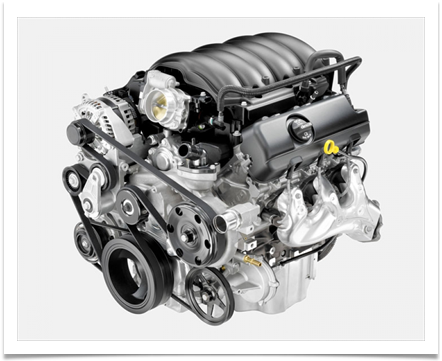
If you’re staring at a dead V6 in your Crown, Mark X, or Lexus GS300 and typing “Toyota 3GR-FE Engine for sale” into Google at midnight, you’re not alone. This is one of those engines that quietly does its job for a couple hundred thousand miles and then, when something finally goes wrong, owners realize just how hard it is to find a straight answer about what to buy next. So let’s talk it through properly – what this engine actually is, what it’s worth paying for, and what to check before you hand over money to anyone selling one.
We stock tested Toyota 3GR-FE engines here at NJ Global Auto Parts, and we ship them out to shops and individual buyers all over the world, not just locally. This guide pulls together everything we tell customers on the phone every week, so you can read it once and skip the back-and-forth.
What Exactly Is the Toyota 3GR-FE?
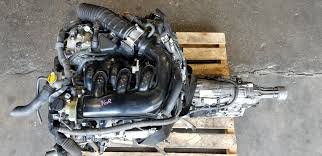
The 3GR-FE is a 3.0-liter V6 from Toyota’s GR engine family, built with an aluminum block and heads, DOHC valvetrain, and VVT-i variable valve timing. It sits between the smaller 2GR and the larger displacement Toyota V6 units, and Toyota tuned it to be smooth and refined rather than aggressive. You’ll mostly find it in the Toyota Crown (the S180 generation), the Toyota Mark X, and the Japanese-market Lexus GS300, plus the Chinese-market Toyota Reiz, which is basically a rebadged Mark X.
What makes the Toyota 3GR-FE engine worth buying instead of just patching up your old one is the balance it strikes. It’s not a screamer like a turbo four, and it’s not trying to be a big torque monster either. It’s a quiet, well-engineered six-cylinder that was built to last well past 200,000 miles when it’s maintained properly, and that reputation is exactly why people keep searching for a used or rebuilt unit rather than scrapping the car.
Toyota 3GR-FE Specifications
Here’s the spec sheet we give customers who want the numbers before anything else. These are the figures for the standard naturally aspirated 3GR-FE as fitted from the factory:
| Engine type | 3.0L V6, DOHC, 24-valve, VVT-i |
| Displacement | 2,994 cc (3.0 liters) |
| Bore x Stroke | 87.5 mm x 83.0 mm |
| Compression ratio | 10.8:1 |
| Fuel system | Sequential multi-point fuel injection |
| Power output | Roughly 220–227 hp at around 6,200 rpm (market dependent) |
| Torque | Roughly 206–221 lb-ft at around 4,700 rpm |
| Block/head material | Aluminum alloy |
| Redline | Approximately 6,500 rpm |
| Fuel type | Gasoline (91–95 octane recommended) |
Those horsepower and torque numbers move around a bit depending on the exact model year and market the engine came out of, which is normal for JDM imports since Toyota tuned the ECU slightly differently for the Crown versus the Mark X versus the GS300. If a seller gives you one exact number down to the decimal with total confidence, take it with a grain of salt – anyone who’s pulled a dozen of these out of cars will tell you the real-world dyno numbers vary from car to car anyway.
Which Cars Take a Toyota 3GR-FE?
Before you order, double check your chassis code and engine bay, because fitment on JDM engine swaps is not always plug-and-play. The 3GR-FE was factory-fitted in:
The Toyota Crown Royal and Crown Athlete (S180 chassis, early-to-mid 2000s), the Toyota Mark X (X120 chassis), the Japanese-market Lexus GS300 built on the S190 platform, and the Toyota Reiz sold in China, which shares almost everything with the Mark X. A lot of our customers are running engine swaps into older Toyota Supra, Soarer, or Chaser chassis as well, using the 3GR-FE as an upgrade over a tired inline-six, though that does require some wiring and mount work on your end.
If your car isn’t on that list, call us before you buy. We’d rather spend five minutes confirming compatibility than have you order a Toyota 3GR-FE engine for sale that ends up sitting in your garage because the harness doesn’t line up.
Why the 3GR-FE Has a Good Reputation
Three things come up over and over when we talk to mechanics about this engine. First, the bottom end is tough. Toyota didn’t cheap out on the internals, and as long as oil changes happened on schedule, rod and main bearing failures are rare even at high mileage. Second, VVT-i keeps the engine responsive without hurting fuel economy much, so daily drivers tend to see somewhere in the high teens to mid-20s mpg depending on how it’s driven. Third, parts availability is decent because the GR family shares a lot of components across Toyota’s V6 lineup, so timing chains, water pumps, and sensors aren’t impossible to track down.
None of that means the engine is bulletproof, though. Like any V6 with a timing chain instead of a belt, if the chain tensioner or guides wear out and nobody catches it, you can end up with a noisy top end or, in worse cases, chain jump and bent valves. That’s one of the first things our techs check on every 3GR-FE that comes through the shop before we list it.
Signs Your 3GR-FE Needs Replacing
A lot of people call us after they’ve already sunk money into repairs that didn’t fix anything, so here’s what we’d tell you to look for before you keep throwing parts at the problem:
A rattling or ticking noise on cold start that goes away after a minute usually points to timing chain stretch. Blue smoke out the tailpipe under acceleration is a sign of worn valve seals or piston rings letting oil into the combustion chambers. Coolant disappearing with no visible external leak often means a head gasket issue, and on the 3GR-FE that’s an expensive repair given the V6 layout – sometimes it makes more financial sense to just drop in a tested replacement instead of pulling both heads. A rough idle combined with a check engine light for a specific cylinder misfire, after you’ve already replaced coils and plugs, can point to internal engine damage rather than an ignition problem.
If you’re seeing two or more of those symptoms together, that’s usually the point where a used or rebuilt Toyota 3GR-FE engine for sale ends up being cheaper than chasing repairs one at a time on the original.
Used vs. Rebuilt: Which One Should You Buy?
We sell both, and honestly the right answer depends on your budget and how long you plan to keep the car.
A used 3GR-FE that’s been pulled from a low-mileage donor vehicle, compression tested, and inspected is the more affordable route, and it’s what most of our customers go with when they’re fixing a daily driver they don’t plan to keep forever. A rebuilt engine costs more up front because it’s been torn down, had wear parts replaced – gaskets, seals, sometimes bearings and rings depending on condition – and reassembled to spec, so it’s the better pick if you want the longest possible service life or you’re putting it in a car you intend to keep for years.
Neither option is a bad choice as long as it’s been properly tested. What you want to avoid is buying an engine with an unknown history from someone who can’t tell you the mileage or show you a compression test.
How to Make Sure You’re Getting a Genuine 3GR-FE
Because the GR family shares casting patterns and some external parts across displacements, it’s worth confirming you’re actually looking at a 3GR-FE and not a mislabeled 4GR or 2GR unit before you commit to buying. The engine code is stamped on the block, usually on a machined pad near where the transmission bolts up, and any seller who can’t show you a clear photo of that stamp shouldn’t be your first choice. We photograph the stamp on every Toyota 3GR-FE engine for sale we list, specifically so you’re not taking our word for it.
It’s also worth asking what the donor vehicle was. A 3GR-FE pulled from a Crown Athlete versus a base Crown Royal can have slightly different ECU tuning and accessory brackets, and if you’re doing a swap, knowing the donor helps you plan which wiring harness and engine mounts you’ll need. Reputable sellers keep this information on file and will tell you without hesitation.
Maintenance That Actually Extends the Life of This Engine
Once you’ve got your replacement installed, a little discipline goes a long way. Stick to factory oil change intervals or shorter, especially if you’re running the engine hard or towing anything with it – 5,000 to 7,500 miles on a quality synthetic is a safe range for most driving styles. Keep an eye on the coolant condition and flush it on schedule, since the aluminum block and heads are more sensitive to old, acidic coolant than an iron block would be. Listen for that timing chain rattle we mentioned earlier and don’t ignore it; a tensioner replacement is a fraction of the cost of a full rebuild after a chain jumps time.
Spark plugs on the 3GR-FE are tucked in behind the intake manifold on some applications, which makes the job more labor-intensive than a four-cylinder, so a lot of owners bundle plug changes with other maintenance to save on labor if they’re paying a shop to do it. None of this is complicated work, it just needs to actually happen on schedule instead of getting pushed back every time life gets busy.
Repair the Old Engine or Buy a Replacement?
This is the math question every customer eventually asks, and it’s a fair one. If you’re looking at a single, contained issue – a water pump, an ignition coil, a sensor – just fix it, obviously. But once you’re staring down a head gasket job, a timing chain replacement combined with other wear, or a bottom-end knock, the labor cost alone on a V6 often rivals or exceeds the price of a tested used engine. Shops typically quote 10 to 20 hours of labor for major internal work on a transverse or tight-fitting V6 layout, and at most shop rates that adds up fast before you’ve even paid for parts.
When we walk customers through this, we usually ask three questions: how much is the labor quote, how old and rust-free is the rest of the car, and how long do you want to keep driving it. If the car’s otherwise solid and you’re planning to keep it a few more years, a tested Toyota 3GR-FE engine for sale from us, installed by your shop or a local mechanic, usually comes out ahead of chasing internal repairs on a motor with unknown wear.
What Happens to Your Old Engine
A lot of buyers ask if we want the old engine back. We don’t run a core exchange program on the 3GR-FE the way some big chain retailers do, so you’re free to sell your old block for scrap, part it out yourself, or hand it to your mechanic as a trade toward labor costs, whichever nets you the most. If you’d like, we can point you toward what individual parts off a 3GR-FE tend to be worth so you’re not leaving money on the table by scrapping a whole block for pennies a pound.
What We Check Before We List a 3GR-FE
Every Toyota 3GR-FE engine for sale in our inventory goes through the same process before it’s available online. We run a compression test across all six cylinders and log the results. We pressure test the cooling system for leaks. We check for metal in the oil, which tells us a lot about bearing condition. We inspect the timing chain and tensioners visually where accessible, and we do a visual and borescope check of the cylinder walls when possible. If an engine doesn’t pass, it doesn’t go on the site – it gets parted out or rebuilt instead.
We also photograph the actual unit you’ll receive rather than using stock catalog images, because we think you should see what you’re buying, not a generic stock photo.
Shipping and What to Expect
We ship the 3GR-FE worldwide, not just within one country. Domestic orders typically move within a few business days once payment clears, and international orders go out via freight forwarders with tracking, since these engines are heavy and need to be crated properly. If you’re a shop ordering for a customer, we can coordinate delivery timing with your install schedule so the engine doesn’t sit around taking up bay space before you’re ready for it.
Every engine leaves here with a warranty period covering the core components, so if something turns out to be wrong that our inspection missed, you’re not just out of luck. Ask us directly about the current warranty terms when you reach out, since they can vary slightly by engine condition and price point.
Buying From Outside the United States
A good chunk of our orders for the Toyota 3GR-FE engine come from outside the U.S. – buyers in Canada, across Europe, the Middle East, and Australia and New Zealand where JDM Toyota and Lexus models are common on the road. We handle export paperwork and can advise on rough customs and import duty expectations for your country, though the final numbers always depend on your local regulations, so it’s worth checking with your customs broker or a quick call to your local port authority before the engine ships. We crate every export order to handle ocean or air freight without shifting in transit, and we’ll give you a tracking number the moment the engine leaves our warehouse so you’re not left guessing where it is.
There’s also a practical environmental angle worth mentioning here. A tested used or rebuilt engine keeps a perfectly good aluminum block out of the scrap yard and avoids the resource cost of manufacturing a brand new unit from raw materials, which is part of why reused engines have become such a normal choice worldwide, not just a budget one.
Common Questions We Get About the 3GR-FE
Is the 3GR-FE interference or non-interference? It’s an interference engine, which is part of why timing chain condition matters so much – if the chain jumps time badly enough, valves can hit pistons.
Can I swap a 3GR-FE into a non-Toyota chassis? People have done it, but you’re looking at custom mounts, a standalone or reflashed ECU, and a wiring harness adapted to your car, so budget for labor beyond just the engine cost.
How many miles can I expect from a used 3GR-FE? With regular oil changes and a healthy cooling system, 200,000-plus miles isn’t unusual, which is a big part of why this engine holds its value on the used market.
What’s the difference between the 3GR-FE and 3GR-FSE? The FSE version uses direct injection and was tuned for a bit more power in certain Lexus and Toyota applications, while the FE uses conventional port injection. They’re not directly interchangeable without swapping the whole fuel system, so make sure you know which one your donor car actually had.
Do I need a new ECU when I install a replacement 3GR-FE? Usually not, if you’re replacing like-for-like in the same chassis it came out of. If you’re swapping this engine into a different model or a non-Toyota car, you’ll want a matching ECU from the same donor, or a standalone management system, since the factory computer is coded to that specific engine.
Will a used 3GR-FE come with the wiring harness and accessories? That depends on the listing, so always check before you order. Some of our units come as long blocks, others as complete engines with harness, intake, and accessories attached. If you need a specific configuration, tell us before you buy and we’ll confirm exactly what’s included.
Ordering and Payment
Buying from us is meant to be straightforward. You can order directly through the product page, or if you’d rather talk it through first, reach out with your VIN or chassis code and we’ll confirm fitment before you pay anything. We accept standard card payments and bank transfer for larger commercial orders, and once payment clears we start prepping your engine for crating right away. You’ll get tracking information as soon as it ships, and our team stays reachable if you have questions about the delivery timeline.
For shops that order regularly, we can also set up recurring account terms, so getting your next Toyota 3GR-FE engine for sale doesn’t mean starting the paperwork from scratch every time.
Ready to Buy a Toyota 3GR-FE Engine for Sale?
If you’ve read this far, you already know more about this engine than most of the people selling them. When you’re ready, take a look at our current Toyota 3GR-FE engine for sale listing for pricing, available mileage, and stock photos of the actual unit. We can also answer fitment questions before you order – just reach out through the contact page and tell us your chassis code and what you’re swapping it into.
For readers who want the deeper technical history of the GR engine family, including how the 3GR-FE relates to the 2GR and 4GR variants, the Toyota GR engine overview on Wikipedia is a solid place to keep reading.
More Engines Currently in Stock
Shopping for something else while you’re here? We’re also stocking a Cummins ISB engine for sale for the truck and industrial crowd, a Mitsubishi 6G74 engine for sale for Pajero and 3000GT owners, a Nissan VR38DETT engine for sale for GT-R builds, and a Howo WD618 engine for sale for heavy truck applications. Browse the full catalog or call us directly if you’d rather just tell a person what you’re working on and let us point you at the right engine.