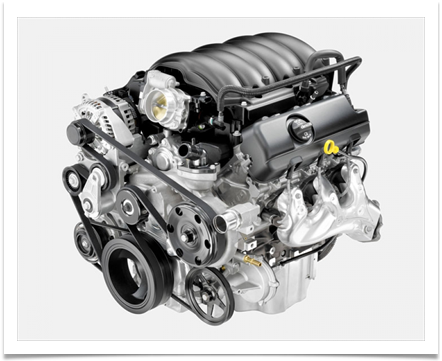
Nobody shops casually for this one. If you’re searching for a Nissan VR38DETT Engine for sale, you already know exactly what you’re dealing with – either your GT-R needs a replacement after a failure or a big turbo build, or you’re planning a swap into something else entirely and need a solid core to start from. Either way, this isn’t an engine you want to buy from the first listing you find, so let’s go through what actually matters.
We source, test, and ship VR38DETT engines to GT-R owners and builders, and this guide covers the real specs, what to check before buying, and how the process works from our end, so you can make a decision on documentation and facts instead of a rushed listing with no real history attached.
Given how much money is on the table with this particular engine, we’d rather over-explain things here than leave gaps for you to fill in with guesswork.
What Is the Nissan VR38DETT?
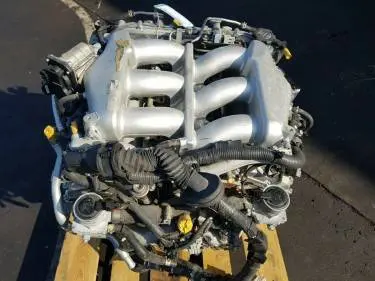
The VR38DETT is a 3.8-liter twin-turbocharged V6, built exclusively for the Nissan GT-R (R35 chassis) since its 2007 launch. It’s a DOHC, 24-valve design with plasma-sprayed cylinder bores instead of traditional iron liners, which saves weight and improves heat transfer. Unlike a mass-production engine bolted together on a standard line, every VR38DETT has historically been hand-assembled at Nissan’s Yokohama plant by a small team of specialist technicians known as Takumi craftsmen, each engine bearing a plaque with the builder’s name.
That level of build quality is part of why a Nissan VR38DETT Engine for sale commands a very different price than a typical used V6 – you’re not just buying displacement, you’re buying a genuinely low-volume, hand-finished performance engine that was designed from the outset to survive serious power.
Nissan VR38DETT Specifications
| Engine type | 3.8L twin-turbocharged V6, DOHC, 24-valve |
| Displacement | 3,799 cc (3.8 liters) |
| Block material | Aluminum with plasma-sprayed cylinder bores |
| Turbochargers | Twin IHI turbochargers (specification varies by model year) |
| Power output | Roughly 480 hp on early models, up to 565–600+ hp on later and Nismo variants |
| Torque | Roughly 430–481 lb-ft depending on model year and tune |
| Fuel system | Direct injection |
| Assembly | Hand-built at Nissan’s Yokohama engine plant |
| Fuel type | Premium gasoline (91+ octane, higher recommended for tuned applications) |
Output climbed steadily across the GT-R’s production run as Nissan revised the turbos, internals, and tuning with each generation of the car, so the exact number depends heavily on which model year the donor GT-R was. If a seller can’t tell you the specific year and spec of the VR38DETT they’re offering, that’s a red flag worth pushing on before you buy.
Where the VR38DETT Is Used
Unlike most engines we sell, this one has a single factory application: the Nissan GT-R, across every generation of the R35 from 2007 onward, including the Premium, Black Edition, Track Edition, and Nismo trims. There’s no other factory car it came in, which is part of why demand for a genuine, verified Nissan VR38DETT Engine for sale stays high – there’s no alternate donor pool to pull from.
Outside of factory GT-R replacement, this engine has become a popular swap candidate for builders working on other Nissan chassis and even non-Nissan projects who want serious twin-turbo power without starting from scratch on a custom setup. If that’s your plan, budget for the wiring, ECU, and mounting work involved, since this is not a factory-supported swap in anything other than a GT-R.
Why This Engine Has Such a Strong Reputation
The VR38DETT was engineered from day one to handle serious power reliably, which is part of why the aftermarket has been able to push these engines to four-digit horsepower numbers on built internals without the block itself being the limiting factor. The factory bottom end is genuinely strong, the twin-turbo layout is well balanced for response, and the direct injection system helps control detonation better than older port-injected turbo engines of a similar era.
None of that means the engine is immune to problems, especially on cars that were driven hard, tracked frequently, or tuned aggressively without matching supporting mods. Knowing what to look for protects you from paying GT-R-engine money for a core with hidden problems.
How Output Changed Across GT-R Generations
It’s worth understanding the rough timeline, because it directly affects what you should expect to pay and what you should ask about when sourcing a Nissan VR38DETT Engine for sale. The original 2007–2010 cars launched around 480 hp. Nissan bumped output through several running changes over the following years as turbo and internal revisions rolled out, with mid-cycle cars landing in the low-to-mid 500s. Later Premium and Track Edition models pushed further, and the Nismo variant, with its hand-selected and blueprinted internals plus larger turbos, tops the factory range at around 600 hp. None of these are interchangeable in a strict sense – a Nismo-spec engine has different internals than an early 480-hp unit – so always confirm the exact model year and trim when you’re comparing prices between listings.
This is also why we ask so many questions before quoting a price. Two engines that both say “VR38DETT” can represent very different levels of factory performance and, in turn, very different values.
Common Issues to Watch For
Bearing wear from sustained high-RPM track use or aggressive launches is one of the more serious issues to check for, and it usually shows up as a knock or unusual noise under load. Turbo failure, whether from oil starvation, wear, or a boost leak, is another common reason these engines come up for sale – the turbos themselves are rebuildable or replaceable, but it’s important to know whether that’s already been addressed on a unit you’re considering. Coolant or oil leaks around gaskets and seals are common on higher-mileage or track-used examples and are worth factoring into your budget even on an otherwise healthy engine. If a GT-R was heavily tuned with a piggyback or standalone ECU before the engine came out of the car, ask for the tune history, since aggressive tuning without proper supporting fuel and cooling upgrades is one of the more common reasons these engines fail prematurely.
Buying a Genuine, Verified VR38DETT
Given the price point of this engine, verifying authenticity and history matters more here than almost anything else we sell. Ask for the engine’s serial number and, where possible, photos of the Takumi builder’s plaque. Ask what generation and trim of GT-R it came out of, the mileage, whether it was tuned, and whether it saw track use. A reputable seller will have this information readily available and will show you real photos of the actual unit, not stock catalog images. We provide all of this on every Nissan VR38DETT Engine for sale we list, because at this price point, trust has to be earned with documentation, not just a good sales pitch.
Used vs. Rebuilt VR38DETT Engines
We carry both, though the calculation here is a little different than with a mainstream daily-driver engine. A used VR38DETT pulled from a running GT-R, compression tested and inspected, works well if you’re doing a like-for-like replacement and want to get back on the road without the cost of a full rebuild. A rebuilt or built unit – where internals have been upgraded or at minimum refreshed with new bearings, seals, and gaskets – makes more sense if you’re planning to push significant power beyond stock or want the longest possible service life on a car you’re keeping long term.
If you’re building rather than just replacing, tell us your power goals up front. The right core engine and the right level of internal preparation depend a lot on whether you’re targeting a mild bump over stock or a serious four-digit build.
Track Use, Heat Soak, and What It Means for a Used Engine
The GT-R has genuine track pedigree, which is part of its appeal, but track use also puts a different kind of stress on an engine than daily commuting does. Sustained high RPM, repeated hard braking events that heat-soak the engine bay, and back-to-back sessions without adequate cooldown time all accelerate wear on bearings, seals, and gaskets in ways that don’t always show up as an obvious symptom right away. This is exactly why we ask about track history on every unit we source, and it’s exactly why you should ask the same question of any seller you’re considering. An engine that spent its life on street driving and the occasional spirited backroad run is a fundamentally different purchase than one that saw regular lapping days, even if both show similar mileage on paper.
How We Test Every VR38DETT Before Listing It
Every unit goes through a compression test across all six cylinders, a cooling system pressure check, an oil analysis for metal content, and a turbo inspection for shaft play and boost leaks. We verify the serial number and document the donor vehicle’s generation, trim, and known history as thoroughly as we can get it. If an engine doesn’t check out clean, it isn’t listed as a running unit.
Given how much is riding on getting this purchase right, we’re happy to get on a call and walk through everything before you commit, rather than leaving you to make this decision off a product listing alone.
Repair, Rebuild, or Full Replacement?
This decision looks a little different with a GT-R than it does with a mainstream car, mostly because labor rates and parts costs are both higher across the board. A contained issue – a single turbo, a coil pack, a sensor – is usually worth repairing directly rather than replacing the whole engine. But once you’re looking at bottom-end damage, multiple cylinder compression loss, or a catastrophic failure from a missed tune or oil starvation event, the labor and machine work to properly rebuild in place can rival or exceed the cost of sourcing a tested replacement, especially once you factor in diagnostic time on a car this complex.
We’d rather you make this decision with real numbers in hand. Get a quote from a shop that specializes in GT-Rs specifically – this isn’t a car you want a generalist shop guessing on – and compare that total against a documented Nissan VR38DETT Engine for sale plus installation. For a lot of owners, especially with higher-mileage or track-used cars, the replacement route ends up being the more predictable path.
What Happens to Your Old Engine
We don’t operate a mandatory core return program, so what you do with your old VR38DETT is up to you. Given the value of this platform, a lot of owners choose to part it out themselves or sell it to a specialist who rebuilds GT-R engines for track or drag applications, rather than scrapping it outright, since even a damaged core often has real value in usable components. If you want guidance on what your old engine’s parts might realistically be worth, ask us – we deal with this platform often enough to point you in the right direction.
Ordering and Payment
Given the investment involved, we try to make the buying process as transparent as possible. You can order directly through the product listing, or reach out first if you’d rather talk through documentation, generation, and history before committing. We accept card payment and bank transfer, and for international or higher-value orders we can walk through freight insurance options so you’re covered in transit. Once payment clears, we prep and crate the engine carefully given the precision components involved, and you’ll get tracking information as soon as it ships.
Shipping the VR38DETT Worldwide
These engines ship domestically and internationally, crated securely given both the value and the precision components involved. Given how global the GT-R community is – from Japan and the rest of Asia to Europe, the Middle East, Australia, and North America – a large share of our orders for this engine cross borders. We handle export documentation and can advise generally on what to expect with customs and import duties, though you should confirm exact figures with your local customs broker, since regulations and import rules on performance vehicles and engines vary significantly by country.
Common Questions About the VR38DETT
Can I buy just the block, or does it come complete? That depends on the specific listing and what’s currently in stock. Some units are available as complete engines with turbos and accessories, others as long blocks for builders sourcing their own turbo setup. Tell us what you need and we’ll confirm what’s available.
Will a VR38DETT bolt into a different Nissan chassis? Not without significant custom work – mounts, wiring, ECU, and often transmission considerations, since the GT-R’s drivetrain is unique. It’s been done by experienced builders, but budget for real fabrication and tuning time.
How do I know if the engine I’m buying was tuned or tracked hard? Ask directly and expect a real answer with documentation where possible. We disclose known tune and usage history on every listing rather than leaving buyers to guess.
Does a used VR38DETT come with a warranty? Yes, our units include a warranty period on core components. Given the value of this engine, we think that protection matters even more than it would on a cheaper daily-driver replacement, so ask us about current terms when you reach out.
Is it worth buying a higher-mileage VR38DETT if the price is lower? Sometimes, but mileage alone doesn’t tell you enough on this platform. A well-maintained, higher-mileage engine that was never tuned aggressively can be a safer buy than a lower-mileage one that was pushed hard on an aftermarket tune without proper supporting mods. This is exactly why we lead with compression numbers, oil analysis, and known history instead of just an odometer reading.
Can you help me figure out if my build plan needs internal upgrades before I buy a core? Yes, this is one of the most common conversations we have. Tell us your target power level and intended use – street, strip, or track – and we’ll help you figure out whether a stock-internal core is enough or whether you should be looking at a built option from the start.
Maintenance Advice Once It’s Installed
Stick to premium fuel, ideally higher octane than the factory minimum if the engine has been tuned at all. Keep up with oil changes using a quality synthetic rated for turbocharged applications, and don’t stretch intervals on a car that sees spirited driving or track time. Watch coolant and oil temperatures if you’re tracking the car, since sustained high-load running is exactly the condition that exposes any marginal cooling or oiling issue. None of this is unusual advice for a performance turbo engine, but it matters more here given what you’ve invested to get this engine in the first place.
Ordering Your Nissan VR38DETT Engine for Sale
When you’re ready, check out our current Nissan VR38DETT Engine for sale listing for pricing, documented history, and photos of the actual unit. If you have questions about fitment, build plans, or verification before you commit, reach out directly and we’ll walk through it with you. We accept card payment and bank transfer for larger orders, and we can arrange freight to most destinations worldwide.
For a deeper technical look at how the VR38DETT compares to Nissan’s earlier RB and VQ performance engines, the Nissan VR engine family page on Wikipedia is a solid reference.
More Engines Currently in Stock
While you’re here, take a look at the rest of our tested inventory: a Toyota 3GR-FE engine for sale, a Cummins ISB engine for sale for truck and industrial buyers, a Mitsubishi 6G74 engine for sale, and a Howo WD618 engine for sale for heavy truck applications. Get in touch if you’d rather just describe your build and let us point you at the right engine.