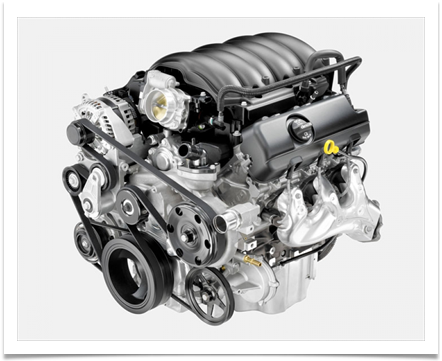
If you’re hunting for a Toyota 2UR-GSE Engine for sale, you’ve probably already noticed how thin the market is. This isn’t a Camry motor that turns up on every corner lot. It’s the naturally aspirated 5.0L V8 Toyota built with Yamaha for the IS F, RC F and GS F, and because Lexus never sold huge numbers of those cars, good used units don’t flood the market the way a Corolla engine would. We pull these out of low-mileage donor cars, run them through compression and leak-down testing, and ship them out to shops and DIY builders anywhere in the world.
We’re not going to oversell this thing. The 2UR-GSE isn’t a tuner darling like the 2JZ, and it doesn’t have the aftermarket support of an LS. What it does have is a genuinely well-engineered, high-revving V8 that Lexus and Yamaha spent real money developing, forged internals, titanium intake valves, and a factory redline north of 7,000 rpm on the naturally aspirated versions. People who buy a used Toyota 2UR-GSE engine know exactly what they’re getting into, and most of them are restoring a wrecked IS F or RC F rather than doing a budget swap.
When someone searches for a Toyota 2UR-GSE Engine for sale, they’re usually trying to dodge one of two problems: a “complete” engine that’s actually missing the dry-sump tank and lines from an RC F, or a motor with no documented compression numbers that turns out to be tired. This page walks through the real specifications, what actually goes wrong on this engine, and how we get every unit ready before it leaves our warehouse.
Table of Contents
- What Is the Toyota 2UR-GSE Engine?
- Toyota 2UR-GSE Engine Specifications
- Where the 2UR-GSE Actually Gets Used
- Being Honest About the 2UR-GSE’s Reputation
- Common 2UR-GSE Problems We Check For
- How We Prepare Every 2UR-GSE Before It Ships
- Used vs. Rebuilt 2UR-GSE: What Actually Makes Sense
- Shipping a 2UR-GSE Worldwide
- 2UR-GSE vs. Other Lexus V8s: Which One Do You Actually Need?
- Why Buy This 2UR-GSE From Us
- What’s Included With Every 2UR-GSE We Sell
- Keeping a 2UR-GSE Healthy After the Swap
- Frequently Asked Questions
- Get Your Toyota 2UR-GSE Engine for Sale Today
What Is the Toyota 2UR-GSE Engine?
The 2UR-GSE is the naturally aspirated member of Toyota’s UR V8 family, a 5.0-liter, 32-valve unit that Toyota co-developed with Yamaha specifically to be a proper enthusiast engine rather than just a bigger version of the truck V8s in the same family. It first showed up in the 2008 Lexus IS F, then got revised heads, a dry-sump oiling system and a bump to 467 horsepower for the RC F and GS F.
It’s the same basic architecture as the 1UR and 3UR V8s that power Land Cruisers and Tundras, but the internals, cams, and cylinder heads are worlds apart. Toyota wanted an engine that could rev past 7,000 rpm reliably, and that meant forged rods, lighter valvetrain components, and a completely different intake and exhaust design than the truck engines share a block casting with.
What separates the 2UR-GSE from most V8s in this price range is that it was never detuned for economy. Lexus positioned the IS F, RC F and GS F as answers to the BMW M3 and M5, and the engine had to back that up. That’s part of why a used 2UR-GSE still gets attention from builders who could buy a cheaper LS3 and call it a day, they specifically want the sound, the redline, and the Yamaha-tuned intake runners that make this V8 feel different from anything else in a Lexus.
Toyota 2UR-GSE Engine Specifications
These are the factory numbers across the applications this engine was used in. The IS F ran a slightly lower compression ratio and a wet-sump oil pan; the RC F and GS F picked up a dry sump, higher compression, and a small bump in output.
| Engine Code | 2UR-GSE |
| Configuration | 90° V8, DOHC, 4 valves per cylinder |
| Displacement | 5.0L (4,969 cc) |
| Bore x Stroke | 94.0mm x 89.5mm |
| Compression Ratio | 11.8:1 (IS F) / 12.3:1 (RC F, GS F) |
| Fuel Delivery | D-4S dual injection (port + direct) |
| Power | 416 hp @ 6,600 rpm (IS F) / 467 hp @ 7,100 rpm (RC F, GS F) |
| Torque | 383 lb-ft (IS F) / 389 lb-ft (RC F, GS F) |
| Redline | 6,800–7,300 rpm depending on application |
| Oiling | Wet sump (IS F) / Dry sump (RC F, GS F) |
| Valvetrain | Titanium intake valves, dual VVT-i, high-lift cams |
| Applications | Lexus IS F, RC F, GS F |
You can read more on the broader UR engine family’s development on Wikipedia’s Toyota UR engine page if you want the full generational breakdown between the 1UR, 2UR and 3UR variants.
Where the 2UR-GSE Actually Gets Used
Every 2UR-GSE we’ve ever pulled has come out of one of three cars: the first-generation IS F (2008-2014), the RC F coupe (2015 onward), or the GS F sedan (2016-2020). That’s it. There’s no truck or SUV application, which is part of what keeps supply tight. Most of the ones we source come from cars that were totaled after a collision but still had a healthy drivetrain, or from owners who swapped in a supercharger kit and pulled the stock long block to sell complete.
Buyers fall into two camps pretty evenly. About half are repairing another IS F, RC F or GS F after their original engine let go or after an accident. The other half are doing something more ambitious, dropping a 2UR-GSE into an older Lexus or Toyota chassis, a drift car, or occasionally a boat or off-road buggy build where the combination of light weight and high redline makes sense. We’ve shipped these to fabrication shops on four different continents at this point, and the swap community around this engine, while smaller than the 2JZ or LS crowd, is active and growing.
Being Honest About the 2UR-GSE’s Reputation
This engine has a strong reputation for a reason: it’s over-built for what Lexus actually needed it to do in a daily-driven sedan or coupe. Forged internals, a stout bottom end, and factory cooling that was designed with track days in mind all mean these motors tend to hold up well when they’re maintained properly. We’ve pulled units with well over 100,000 miles that still had healthy compression across all eight cylinders.
That said, it’s not a perfect engine, and we’d rather tell you that up front than have you find out after you’ve bought a used Toyota 2UR-GSE engine and installed it. The variable valve timing actuators can get noisy with age, the plastic intake manifold components are exactly as durable as you’d expect plastic to be after a decade of heat cycles, and the dry-sump versions in the RC F and GS F have more plumbing that can leak than the simpler wet-sump IS F setup. None of these are deal-breakers, but they’re things we check on every single unit before it ships.
Common 2UR-GSE Problems We Check For
Before any 2UR-GSE leaves our shop, we go through a checklist built from years of handling this specific engine family:
Timing chain guides: Not a common failure point on this engine, but we inspect them anyway since chain noise on cold start is one of the first things a buyer will notice and complain about.
VVTi actuator rattle: A light tick on cold start that goes away once oil pressure builds is usually cosmetic, but we still verify oil pressure holds where it should across the RPM range.
Dry sump lines and fittings (RC F/GS F units): These get pressure tested. A dry-sump 2UR-GSE with a slow leak in the scavenge lines is an easy thing for a seller to miss and a miserable thing for you to diagnose after it’s already bolted into your car.
Intake manifold runner control: The ACIS system can stick. We cycle it and confirm it’s moving freely before the engine goes anywhere.
Ignition coils and wiring harness condition: Cheap to replace individually, annoying to discover missing after the fact, so we document exactly what’s included.
How We Prepare Every 2UR-GSE Before It Ships
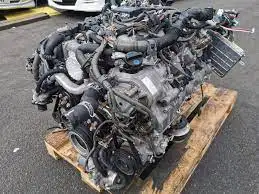
We don’t just pull an engine and box it. Every Toyota 2UR-GSE Engine for sale on our site goes through the same process: a full compression test on all eight cylinders, a leak-down test to catch ring or valve seal issues that a compression test alone might miss, a visual inspection of the timing components, and a check of every sensor and harness connector against the factory wiring diagram so we know exactly what’s there and what isn’t. We photograph the engine from every angle before crating so you can see the actual unit you’re buying, not a stock photo.
Once it passes inspection, we drain the fluids for shipping, cap every open port to keep contaminants out, and build a custom crate sized to the engine rather than using an oversized generic box that lets the unit shift around in transit. That last part matters more than people realize, a lot of shipping damage we’ve seen on other sellers’ engines comes down to inadequate crating, not the freight company being careless.
Used vs. Rebuilt 2UR-GSE: What Actually Makes Sense
For most people looking at a used 2UR-GSE, a tested low-mileage take-out is the right call. Rebuilding a 2UR-GSE properly, with attention to the timing chain, VVTi units, and dry-sump plumbing if applicable, isn’t cheap, and parts availability for this engine isn’t as deep as it is for something like a 2JZ or an LS. If you’re replacing a wrecked engine in a running car and your budget matters, a tested used unit with documented compression numbers gets you back on the road faster and usually for less money than a full rebuild.
Where a rebuild makes more sense is if you’re building something that’s going to see track use or forced induction down the line. In that case you might want fresh bearings and a fresh timing chain regardless of what a used engine tests at, simply because you’re planning to push it harder than Lexus ever intended.
Shipping a 2UR-GSE Worldwide
We ship worldwide, and we handle the paperwork that goes with international freight rather than leaving you to figure out customs documentation on your own. Every engine gets a commercial invoice, HS code, and any export documentation your country’s customs office typically asks for. Ocean freight is the most economical option for most international buyers and usually takes several weeks depending on the destination port; air freight costs more but gets a 2UR-GSE to you in days rather than weeks if you’re on a deadline. We’ll walk you through which option makes sense for your location and timeline before you commit to anything.
2UR-GSE vs. Other Lexus V8s: Which One Do You Actually Need?
If you’re cross-shopping, it helps to know how the 2UR-GSE compares to its siblings. The 2UR-FSE is the supercharged/hybrid-oriented variant used in the LS 460 and LS 600h, tuned for torque and refinement rather than redline, so it’s a poor substitute if you actually want the high-revving character of the GSE.
The smaller-displacement 1UR-FSE shares some architecture but makes noticeably less power and wasn’t built with the same internals. If your project genuinely needs the sound, the redline, and the output specific to the IS F, RC F or GS F, this engine is the only one in the family that delivers all three, and there’s no substitute for buying the exact code your build calls for.
Why Buy This 2UR-GSE From Us
We’ve been sourcing and shipping engines like this for long enough to know what buyers actually want: an honest compression number, clear photos of the actual unit, and a straight answer about what’s included and what isn’t. When you buy a Toyota 2UR-GSE engine for sale from us, you’re getting a tested unit with documented numbers, not a gamble. We also stand behind what we sell, if something doesn’t match what we told you, we’ll make it right. That’s not a marketing line, it’s just how we’ve kept customers coming back for repeat purchases on other engines.
What’s Included With Every 2UR-GSE We Sell
One of the most common complaints we hear about buying engines online, from other sellers, is vague listings. “Complete engine” can mean anything from a bare long block to a fully dressed unit with the harness, ECU, and accessories still attached. We don’t do vague. Every listing for this 2UR-GSE on our site spells out exactly what ships: the long block, cylinder heads, intake manifold, throttle body, fuel injectors, ignition coils, and the engine wiring harness. Accessories like the alternator, power steering pump, and AC compressor are noted separately since condition and inclusion can vary unit to unit depending on what the donor car had.
If you need the ECU, dry-sump tank and lines (on RC F/GS F units), or the factory engine mounts, ask before you buy rather than assuming. We’d rather answer ten extra questions upfront than have you order a long block expecting a complete swap kit and end up frustrated when a part you needed wasn’t included. Most of our repeat customers tell us this is the reason they keep coming back, they know what they’re getting before the money changes hands.
Keeping a 2UR-GSE Healthy After the Swap
Once you’ve got your 2UR-GSE installed, whether it’s back in another IS F, RC F, or GS F, or dropped into something completely different, a few habits go a long way toward making sure it lasts. Stick to the factory-recommended oil change interval, or shorten it if the car sees track time, since this engine spins high enough that oil quality and change frequency matter more than they would on a low-revving daily driver. Use a full-synthetic oil in the weight Toyota specifies; this isn’t an engine where a cheap conventional oil is going to cut it long term.
Keep an eye on coolant condition too, especially on RC F and GS F units where the dry-sump cooling circuit adds more lines and connections than a simpler wet-sump setup. A slow coolant leak is a lot cheaper to catch early than it is to deal with after it’s caused a hot spot in the heads. And if you’re running the engine harder than Lexus intended, forced induction, higher redline, repeated track sessions, budget for a fresh timing chain and VVTi actuators sooner rather than later. These are wear items on any high-revving V8, and staying ahead of them is a lot less painful than a chain failure mid-build.
Finally, if anything sounds off after installation, a tick, a whine, unusual exhaust note, don’t wait it out. Diagnose it early. Most issues on this engine are inexpensive to fix if you catch them before they cascade into something bigger, and since we tested and documented your unit before it shipped, you’ll have a solid baseline to compare against if something changes.
Frequently Asked Questions
How much horsepower does a 2UR-GSE make stock?
416 horsepower in the IS F, and 467 horsepower in the RC F and GS F, which use a higher compression ratio and revised cylinder heads.
Will a 2UR-GSE fit in a different chassis?
Yes, with the right mounts, wiring harness, and ECU work. It’s a heavier swap than a 2JZ due to the V8 layout and dry-sump plumbing on later units, but shops experienced with Lexus V8 swaps handle it regularly.
What’s the difference between the IS F and RC F versions of this engine?
The RC F and GS F versions run higher compression, a dry-sump oiling system, and slightly more aggressive cams, which is why they make more power at a higher redline than the IS F’s wet-sump setup.
Do you test every engine before shipping?
Yes. Every unit gets a compression test and leak-down test, and we document the results so you know exactly what you’re buying before it ships.
Can you ship a 2UR-GSE outside the United States?
Yes, we ship worldwide and handle export documentation, customs paperwork, and freight arrangements for international buyers.
Get Your Toyota 2UR-GSE Engine for Sale Today
If you need a tested, documented Toyota 2UR-GSE Engine for sale, we’ve got units in stock and ready to inspect. Check current availability and pricing here, or browse our full engine inventory if you’re still deciding between a few options. Not sure whether used or rebuilt is right for your build? Our guide on choosing between a used and rebuilt engine breaks down the decision in more detail.