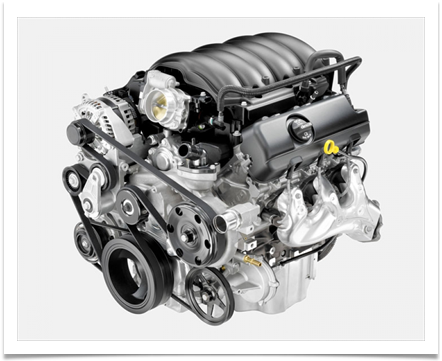
If you’re searching for a G4NH engine for sale, your Hyundai or Kia is probably running rough, burning oil, or sitting in a workshop waiting for a decision. The G4NH is a 2.0 litre four-cylinder that went into a lot of popular compact cars and small crossovers. When one goes wrong, the dealer’s quote for a new engine can be more than the car is worth.
We sell used and rebuilt G4NH engines at NJ Global Auto Parts, and we ship them to owners, workshops and importers around the world. This guide covers what the engine is, the specifications, which cars it fits, what tends to go wrong, and how to buy one without getting burned. It’s written the way we’d explain things to a customer standing at the counter.
Use it as a checklist. Whether you buy a G4NH engine for sale from us or someone else, the same questions apply, and any decent seller should be happy to answer them.
What a G4NH Engine for Sale Really Is
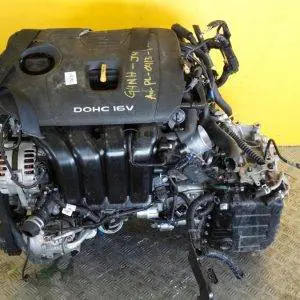
The G4NH belongs to Hyundai’s Nu family of engines, a set of 1.8 and 2.0 litre petrol units used across Hyundai and Kia. The G stands for gasoline, the 4 for four cylinders, and the N marks the Nu family. The H at the end identifies this particular version. It’s a naturally aspirated 2.0 litre with an aluminium block and head, double overhead camshafts, sixteen valves and multi-point fuel injection.
What sets it apart from some of its relatives is the way it’s tuned. It runs a high compression ratio and works on the Atkinson cycle to save fuel. If you want the theory, the Atkinson-cycle engine page explains it well. In everyday driving it means good economy and smooth, modest power, not sporty performance.
It’s a chain-driven engine, so there’s no timing belt to replace, and it has variable valve timing to help with both economy and emissions. Those details matter when you’re comparing one G4NH engine for sale with another, because not every 2.0 litre Hyundai engine is the same.
G4NH Engine for Sale: Full Specifications
Here are the main figures for the G4NH. Small differences exist between markets and model years, so let us confirm your exact car before you order.
| Item | Detail |
|---|---|
| Engine code | G4NH |
| Family | Hyundai Nu 2.0 |
| Type | Naturally aspirated inline-four, petrol |
| Displacement | 1,999 cc (2.0 litres) |
| Bore and stroke | 81 mm x 97 mm |
| Compression ratio | 12.5:1 |
| Fuel system | Multi-point injection |
| Valvetrain | DOHC, 16 valves, variable valve timing |
| Timing drive | Chain |
| Block and head | Aluminium |
| Power | About 149 hp (roughly 150 PS) |
| Torque | About 180 Nm (133 lb-ft) |
| Cycle | Atkinson |
| Approximate weight | Around 190 kg (425 lb) dressed |
You can read more about the family on the Hyundai Nu engine page. Our own product listing for the G4NH engine has photos of the units we hold.
Cars That Use the G4NH
The G4NH has been fitted to a fairly wide range of models since 2016, depending on the market. The common ones include:
The Hyundai Elantra (AD generation, roughly 2017 to 2020), the Hyundai Kona, the Hyundai Tucson, and the Hyundai Veloster. On the Kia side you’ll see it in the Cerato, sold as the Forte in some markets, plus the Seltos and the Soul. Newer cars like the Kia K4 have also carried it.
Have a look at the Hyundai Elantra and Kia Forte pages if you want the model history. Fitment depends on the year, the market and the gearbox, so always send us your VIN and we’ll confirm a G4NH engine for sale suits your car before you pay.
Why Owners Look for a G4NH Engine for Sale
The reasons are usually practical. The engine has started using a lot of oil. Or it’s lost compression. Or the car was in a crash and the engine survived the wreck but the owner can’t afford a new car. Or the vehicle has been flooded, or an engine ran low on oil and seized.
For a car that’s five to ten years old, a used G4NH engine for sale is often the sensible answer. A dealer engine costs a lot, and the car may not justify it. A tested used engine or a properly rebuilt one brings the car back to life at a cost that makes sense.
Workshops and exporters are the other big group. They buy in numbers, fix cars for resale, and want a source they can rely on. If that’s you, ask us about volume pricing.
Common Problems and What We Check on a G4NH Engine for Sale
No engine is perfect, and it’s better to know the weak points before you buy. Some owners of Nu engines have reported piston ring problems that lead to heavy oil consumption. Others have had the knock sensor detection system trigger a limp mode, and some have had catalytic converters clogged by burnt oil. Hyundai and Kia have run service campaigns on certain vehicles for related issues, so it’s worth checking the history of your car.
Here’s what we look at before we list a G4NH engine for sale.
Oil consumption signs. We look at the condition of the oil, the inside of the filler cap, the spark plugs and the exhaust for signs the engine has been burning oil.
Compression. Where the engine can be tested, we run a compression check on all four cylinders. A big gap between cylinders tells us there’s a ring, valve or head gasket issue.
Bearings. We check oil pressure where we can and turn the engine by hand to feel for roughness. Rod knock is a deal breaker.
Timing chain and variable timing. We listen for rattle and look for stretch or wear on the chain and guides. Rattle on start-up is a warning.
Leaks and cracks. The sump, valve cover, front and rear seals and block all get looked at. Overheated engines and warped heads are rejected.
Sensors and wiring. Where the engine comes with its harness, we check connectors for damage and corrosion.
Used or Rebuilt: Which One Suits You
A used G4NH engine for sale comes from a donor car, usually one that was in an accident. We test and inspect it, and it costs the least. The trade-off is that you can’t see the internals without stripping it, so you’re relying on the tests and the mileage.
A rebuilt engine has been disassembled, cleaned, measured and reassembled with new rings, bearings, gaskets and seals, and other parts as needed. It costs more and takes longer, but you get a much better idea of what’s inside.
If you keep cars for a long time, rebuilt might be worth the extra. If the car is older or you plan to sell it, a good used unit often makes more sense. Our guide, Rebuilt vs. Used Engine: Which Is Right for You?, walks through the choice.
How We Inspect Every G4NH Engine for Sale
We treat inspection as part of the product. Each unit is looked over externally for cracks, leaks and impact damage. We check the oil condition and coolant passages. Where we can, we test compression and oil pressure. We inspect the intake, the throttle body, the injectors and the exhaust manifold, and we look at the timing chain area when the cover allows it.
You’ll get photos of the actual engine you’re buying, plus the engine number so your mechanic can match it to your car. If we find something we don’t like, the engine doesn’t go on the site.
We’d rather lose a sale than send you an engine that isn’t right. That goes for every G4NH engine for sale we list.
What Comes With a G4NH Engine for Sale
This varies by unit, so we spell it out in the quote. Many G4NH engines ship as a long block with the intake and exhaust manifolds, sometimes with the throttle body, alternator, starter and wiring. Others are bare.
Ask what’s included, in writing. If your workshop needs the sensors, harness or ECU, tell us early. We can often supply them, and it saves trouble later. Our team can also quote gaskets and seals for the swap.
Installation Tips for a G4NH Engine for Sale
We don’t fit engines, so this comes from what the workshops using our units tell us. If it’s your first engine swap, use a shop that does them regularly.
Check the transmission match. The G4NH goes with certain manual and automatic gearboxes, and the bellhousing and flywheel or flexplate must suit. Compare the engine number and, if you can, the engine mounts, sump shape and accessory positions with your old unit.
Replace the wear items during the swap. New oil and filter, spark plugs, coolant, thermostat, belts and mounts cost little compared with the job. Clean the throttle body and check the intake system.
On newer cars, the ECU may need to be matched to the engine, and the immobiliser may need coding. Ask your workshop about it before you start, so the car doesn’t sit waiting for a key or software.
Prime the oil system before the first start if you can, then run the engine at idle and check for leaks. Drive gently for the first few hundred kilometres. A new G4NH engine for sale deserves that much care.
How to Identify the Right G4NH Engine for Sale
Before you order, confirm what you have. The engine code is stamped on the block, usually near where the engine meets the gearbox, and it’s also on the emissions label under the bonnet. The VIN gives you a second check, because one of the digits identifies the engine. If the code on your car says G4NH, that’s what you’re looking for. If it says something else, stop and ask.
Markets matter too. A Hyundai sold in Korea, the United States, Europe or the Middle East may carry different engine software, emissions equipment and sometimes different internal parts. Send us your VIN, the market the car was sold in, and photos of the engine label. Then we can tell you if a G4NH engine for sale in our stock will suit it, or if you need a different unit.
Signs Your G4NH Needs Replacing
Not every problem calls for a new engine. A misfire can be a coil or a plug. A rattle can be a tired tensioner. Blue smoke from the exhaust, though, or a dipstick that keeps falling low between changes, points to worn rings or valve seals. If that’s combined with poor compression, the engine is heading for the end.
Knocking that gets louder as the engine warms, a low oil pressure light, metal glitter in the oil, coolant in the oil or oil in the coolant are all serious. So is overheating that has warped the head. Once you’re at that stage, a used or rebuilt G4NH engine for sale is usually cheaper and quicker than a long repair with no guarantee.
One tip: don’t keep driving. A tired engine can go from a repair to a scrap heap in a few miles, and once the crank has spun a bearing, a lot of the value is gone.
Questions to Ask Before You Pay for a G4NH Engine for Sale
Ask the seller for the engine number and a clear photo of it. Ask about mileage and where the engine came from. Ask what tests were done, and for the results in writing. Ask what’s included, what isn’t, and what happens if it arrives damaged or doesn’t match the description.
Ask how it will be packed, who arranges freight, and who handles customs. Ask how long the quote is valid. And ask whether you can talk to a real person. A serious seller of any G4NH engine for sale will answer all of those without fuss.
If you want more background, read our pages on the G4NH replacement engine and on buying a G4NH engine online in the USA. They cover much of the same ground from a different angle.
How to Identify the Right G4NH Engine for Sale
Before you order, confirm what you have. The engine code is stamped on the block, usually near where the engine meets the gearbox, and it’s also on the emissions label under the bonnet. The VIN gives you a second check, because one of the digits identifies the engine. If the code on your car says G4NH, that’s what you’re looking for. If it says something else, stop and ask.
Markets matter too. A Hyundai sold in Korea, the United States, Europe or the Middle East may carry different engine software, emissions equipment and sometimes different internal parts. Send us your VIN, the market the car was sold in, and photos of the engine label. Then we can tell you if a G4NH engine for sale in our stock will suit it, or if you need a different unit.
Signs Your G4NH Needs Replacing
Not every problem calls for a new engine. A misfire can be a coil or a plug. A rattle can be a tired tensioner. Blue smoke from the exhaust, though, or a dipstick that keeps falling low between changes, points to worn rings or valve seals. If that’s combined with poor compression, the engine is heading for the end.
Knocking that gets louder as the engine warms, a low oil pressure light, metal glitter in the oil, coolant in the oil or oil in the coolant are all serious. So is overheating that has warped the head. Once you’re at that stage, a used or rebuilt G4NH engine for sale is usually cheaper and quicker than a long repair with no guarantee.
One tip: don’t keep driving. A tired engine can go from a repair to a scrap heap in a few miles, and once the crank has spun a bearing, a lot of the value is gone.
Questions to Ask Before You Pay for a G4NH Engine for Sale
Ask the seller for the engine number and a clear photo of it. Ask about mileage and where the engine came from. Ask what tests were done, and for the results in writing. Ask what’s included, what isn’t, and what happens if it arrives damaged or doesn’t match the description.
Ask how it will be packed, who arranges freight, and who handles customs. Ask how long the quote is valid. And ask whether you can talk to a real person. A serious seller of any G4NH engine for sale will answer all of those without fuss.
If you want more background, read our pages on the G4NH replacement engine and on buying a G4NH engine online in the USA. They cover much of the same ground from a different angle.
Shipping a G4NH Engine for Sale Worldwide
We pack each engine on a pallet or in a crate, with the openings sealed and the fluids drained, so it arrives in one piece. You get a quote for freight before you commit and tracking once it ships.
We send engines to Africa, Asia, Europe, the Middle East, Australia and the Americas. Import duty and taxes differ by country and are handled by you or your broker. If you tell us your destination port, we can quote more accurately. Delivery terms are in our shipping policy.
What Affects the Price of a G4NH Engine for Sale
There’s no single price for every G4NH engine for sale. Condition, mileage where known, whether it’s used or rebuilt, what’s included and how far it has to travel all make a difference.
Have a look at our G4NH engine price guide for a broader picture. Be careful with anything that’s far cheaper than the rest of the market. It often means a car that was in a flood, or an engine nobody tested.
Mistakes to Avoid When Buying a G4NH Engine for Sale
The first is assuming every Hyundai 2.0 engine is the same. The G4NH isn’t the G4NA or the G4KD, and the differences show up in the fuel system, compression and computer. Match the code stamped on your engine, not just the badge on the boot.
Next comes ignoring the car’s history. If the old engine died from oil starvation, find out why before the new one goes in. If a recall or service campaign applies, sort it out. The third mistake is skipping the small parts. New gaskets, plugs and a proper oil change are cheap insurance.
Then there’s paying a seller you can’t reach. Ask for photos, the engine number, an address and a phone number. If somebody selling a G4NH engine for sale won’t give you those, walk away.
How the G4NH Compares With Other Hyundai Engines
Hyundai used lots of engine codes, and buyers mix them up all the time. The G4NA is an older version of the 2.0 litre Nu with a different tune and higher power figures. The G4KD is the older Theta II 2.0 litre used in earlier Elantras and Tucsons, and the G4KE is the 2.4 litre from the same family.
We also stock these engines. Have a look at our Hyundai G4KD engine, our Hyundai G4KE engine, and the write-ups on the used G4KD and G4KE buyer’s checklist. If your car isn’t a G4NH, send us the VIN and we’ll point you to the right one. If it is a G4NH, ask us for a quote on a G4NH engine for sale.
Repair the Old Engine or Replace It
It’s a fair question. If your engine has a leak, a bad sensor or a failed oil control valve, repairing it makes sense. If the block is cracked, the bearings are gone, or the rings have failed and the engine is drinking oil, replacing it is often better than repairing.
Ask your workshop for a diagnosis in writing. Compare the repair cost and time with the price and lead time of a G4NH engine for sale. Include the risk that a repair won’t cure the problem. Sometimes it’s easier to replace the whole engine and be done.
Looking After Your G4NH After the Swap
Change the oil and filter early, at about the first thousand kilometres, then follow the schedule in your manual. Use the grade Hyundai specifies. Check the oil level regularly, especially in the first months, and keep an eye on the coolant.
Don’t ignore warning lights, and don’t ignore a rattle on start-up. Let the engine warm up before working it hard. Use good fuel and replace spark plugs on schedule. A fresh G4NH engine for sale that gets sensible care can last a long time.
Keep your receipts. They matter if you sell the car, and they help if a problem appears. Do the same with any G4NH engine for sale you buy.
How to Order Your G4NH Engine for Sale
It’s a short process. Send us the make, model, year, VIN and engine code of your car, along with your country. Photos of the old engine help. We’ll reply with what we have, the condition, the price and the freight.
Once you agree, we confirm the details and pack the engine. Browse the used engine category or the full shop for more options, and use the contact page whenever you have a question.
Why Buy From NJ Global Auto Parts
We deal in engines every day, and we sell to customers in many countries. Most of our repeat business comes from people who were treated fairly the first time. We say what an engine is and isn’t, and we don’t hide the awkward parts. Our returns policy is written down, and you can read about us before you decide.
A G4NH engine for sale should come with photos, honest notes and someone you can call. That’s what we aim to give every buyer, and it’s what you should expect from any seller.
G4NH Engine for Sale: Frequently Asked Questions
What is the G4NH engine?
It’s a 2.0 litre naturally aspirated Hyundai Nu petrol engine with multi-point injection, used in several Hyundai and Kia models.
How much power does it make?
About 149 horsepower and around 180 Nm of torque, depending on the market and vehicle.
Does it use a timing belt or chain?
It uses a chain, so there’s no scheduled belt change. The chain and guides should still be checked on high mileage engines.
Is the G4NH engine for sale used or rebuilt?
We offer both, and each listing says which one it is.
Which cars use the G4NH?
Mainly the Hyundai Elantra, Kona, Tucson and Veloster, and the Kia Cerato or Forte, Seltos and Soul. Send us your VIN and we’ll confirm.
Can you ship to my country?
Yes. We ship worldwide and quote freight before you commit. Import duty is handled at your end.
What if something is wrong on arrival?
Contact us at once with photos. We’ll compare it with our inspection record and the terms of your order.
If you’re ready to move on a G4NH engine for sale, send us your car details and we’ll tell you what we have in stock, wherever you are.