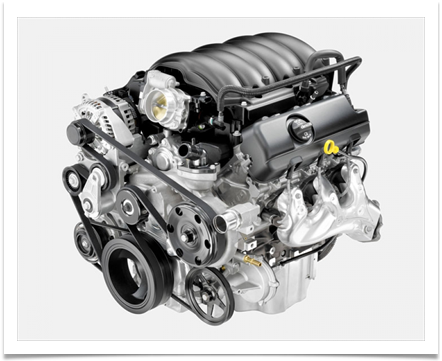
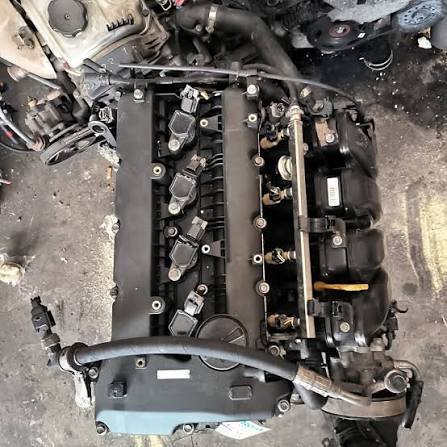
If you’re digging through listings looking for a Used Hyundai G4KD Engine for Sale, you’ve probably already run into the same problem everyone else does: half the ads don’t say what was actually tested, a third of them won’t ship past their own zip code, and almost none of them tell you what year or trim the engine came out of before you’ve already asked three follow-up emails. That’s the gap we built this business to close. We pull G4KD engines, run compression on every cylinder, check the timing chain and tensioners, and crate them for shipment anywhere in the world — not just to the next town over.
The G4KD has been under the hood of more Hyundais and Kias than most people realize. It’s the 2.0-liter gas engine that Hyundai leaned on hard through the mid-2000s and into the 2010s, and it’s still one of the most commonly searched replacement engines we deal with. When people come to us looking for a Hyundai G4KD engine for sale, they’re usually trying to avoid two things: paying dealer prices for a new long block, or getting stuck with a low-quality used unit that fails again in six months. This page covers the real specs, what actually goes wrong with these engines, and how we prepare every one before it leaves our shop.
We hear from a lot of independent mechanics and DIY owners who’ve already been burned once — a “low mileage” engine that turned out to be anything but, a seller who vanished after the payment cleared, or a unit that arrived with no paperwork explaining what was checked. When you buy a used Hyundai G4KD engine for sale through us, you’re dealing with a shop that answers the phone after the sale too, not a one-time listing that disappears once your money’s gone.
Table of Contents
- What Is the Hyundai G4KD Engine, Exactly?
- G4KD vs. G4KE: Make Sure You’ve Got the Right Engine Code
- Hyundai G4KD Engine Specifications
- Where the G4KD Shows Up
- Common Hyundai G4KD Engine Problems We Watch For
- How We Prepare Every G4KD Before It’s Listed
- Used vs. Remanufactured: Which Should You Buy?
- Shipping a Hyundai G4KD Engine for Sale Worldwide
- What to Check Before You Buy Any Used Engine
- Parts, Maintenance, and What Ownership Actually Costs
- Why Buy This Used Hyundai G4KD Engine for Sale From Us
- Frequently Asked Questions
- Get Your Hyundai G4KD Engine for Sale Today
What Is the Hyundai G4KD Engine, Exactly?
The G4KD is part of Hyundai’s Theta II family, a lineup of inline-four gasoline engines that replaced the older Delta and Sonata-era four-cylinders. It’s a naturally aspirated 2.0-liter with dual overhead cams, 16 valves, and CVVT (continuously variable valve timing) on most versions, which was a real step up in efficiency and drivability compared to what Hyundai was building a decade earlier. It uses a timing chain rather than a belt, which matters a lot when you’re weighing a used G4KD against something with a rubber timing belt that needs replacing on a schedule.
Where the G4KD sits in the Theta II lineup matters too. Its sibling, the G4KE, is a slightly different tune of the same basic architecture used in different trims and markets. If you’re not sure which one your car actually needs, check your VIN and the engine code stamped on the block itself before you order — we’re happy to help you confirm fitment over the phone or by email before you commit to anything.
G4KD vs. G4KE: Make Sure You’ve Got the Right Engine Code
Before you buy any used Hyundai G4KD engine for sale — from us or anyone else — it’s worth double-checking the actual code stamped on your block, because Hyundai used more than one 2.0-liter/2.4-liter four-cylinder across these same model years. The G4KD is the naturally aspirated 2.0-liter MPI engine. Its close relative, the G4KE, is a 2.4-liter version of the same basic architecture, and the two get mixed up constantly by owners going off memory instead of the actual code on the engine. If your car is a 2.4-liter model, you want the G4KE, not the G4KD — they are not interchangeable despite sharing a lot of the same design.
The easiest way to confirm which one you need is to look at the engine code stamped near the front of the block, or pull your VIN and run it through Hyundai or Kia’s parts lookup. If you’re not sure, send us either piece of information before you order and we’ll confirm it’s actually a Hyundai G4KD engine for sale that fits your car, not a similar-looking engine that will leave you stuck mid-install. We’d much rather answer that question up front than process a return because the wrong engine code showed up at your shop.
Hyundai G4KD Engine Specifications
Here’s what you’re actually working with when you buy a Hyundai G4KD engine for sale from us. These numbers are consistent across most production years, though calibration and rated output shift slightly by market and model year.
| Specification | Detail |
|---|---|
| Configuration | Inline 4-cylinder, naturally aspirated |
| Displacement | 2.0L (1,998 cc) |
| Bore x Stroke | 86mm x 86mm |
| Valvetrain | DOHC, 16 valves, dual CVVT |
| Fuel system | Multi-point fuel injection (MPI) |
| Timing drive | Timing chain (no belt to replace) |
| Compression ratio | 10.5:1 |
| Power output | Approximately 145–165 hp, depending on year and market |
| Torque | Approximately 190–200 Nm (140–148 lb-ft) |
| Applications | Hyundai Sonata, Elantra, Tucson; Kia Optima, Sportage, Forte |
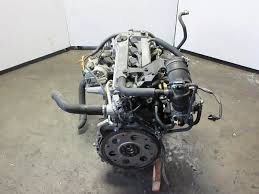
Those figures shift a little depending on exactly which car the engine came out of — a Sonata-spec G4KD and a Sportage-spec G4KD aren’t tuned identically even though the block and internals are the same. If you’re trying to match an engine to a specific chassis, send us your VIN and we’ll confirm the exact code before anything ships. For a broader look at where the G4KD sits in Hyundai’s four-cylinder history, the Theta engine family overview is worth a look if you want the full lineage.
Where the G4KD Shows Up
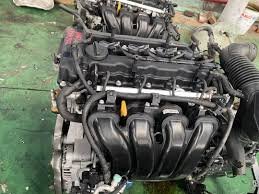
This engine spent years as one of the default four-cylinder gas engines across the Hyundai-Kia lineup, which is exactly why demand for a Hyundai G4KD engine for sale has stayed steady long after most of these cars have left dealer lots. On the Hyundai side, it powered the Sonata (NF and YF generations), the Elantra in certain markets, and the Tucson/ix35 crossover. On the Kia side, the same basic engine turned up in the Optima, Sportage, and Forte/Cerato depending on the model year and region.
Because Hyundai and Kia share engineering under the same parent company, parts interchange between these models more than owners usually expect. That’s good news if you’re shopping for a used Hyundai G4KD engine for sale, since it means the pool of donor vehicles is larger and prices stay more reasonable than they would for a engine that only ever went into one car.
Common Hyundai G4KD Engine Problems We Watch For
We’re not going to pretend this engine has a spotless record, because it doesn’t, and pretending otherwise would be a disservice to anyone about to spend real money on one. The Theta II family — which includes the G4KD along with its turbocharged and direct-injected cousins — became well known in the used-car world for a specific failure mode: metal debris left in the crankshaft oil passages during manufacturing could restrict oil flow to the connecting rod bearings over time, leading to bearing wear, knocking noise, and in worst cases a seized engine.
nn
This issue was serious enough that Hyundai and Kia ran extended warranty programs and a class-action settlement covering a range of Theta II engines in the U.S. market.
nn
Worth knowing before you buy, plain and simple.
That history is worth knowing before you buy, full stop.
Here’s the important nuance: the port-injected G4KD is generally considered less exposed to this problem than the turbocharged, direct-injection Theta variants, but it’s not immune, and buyers should still know the history before they hand over money for any Theta-family engine. That’s exactly why we run a rod-knock check and an oil pressure test on every G4KD that comes through our shop before it’s ever listed for sale. If an engine shows any sign of bearing wear, it doesn’t go up for sale — we’re not in the business of passing along a problem we already know about.
Beyond that headline issue, the more mundane wear items we watch for are: oil consumption on higher-mileage units, minor oil seepage around the valve cover and oil pan gaskets, and carbon buildup on the intake valves, which is common on any port-injected engine as it accumulates miles. None of these are dealbreakers on their own, but they’re exactly the kind of thing a rushed private-party sale won’t mention.
How We Prepare Every G4KD Before It’s Listed
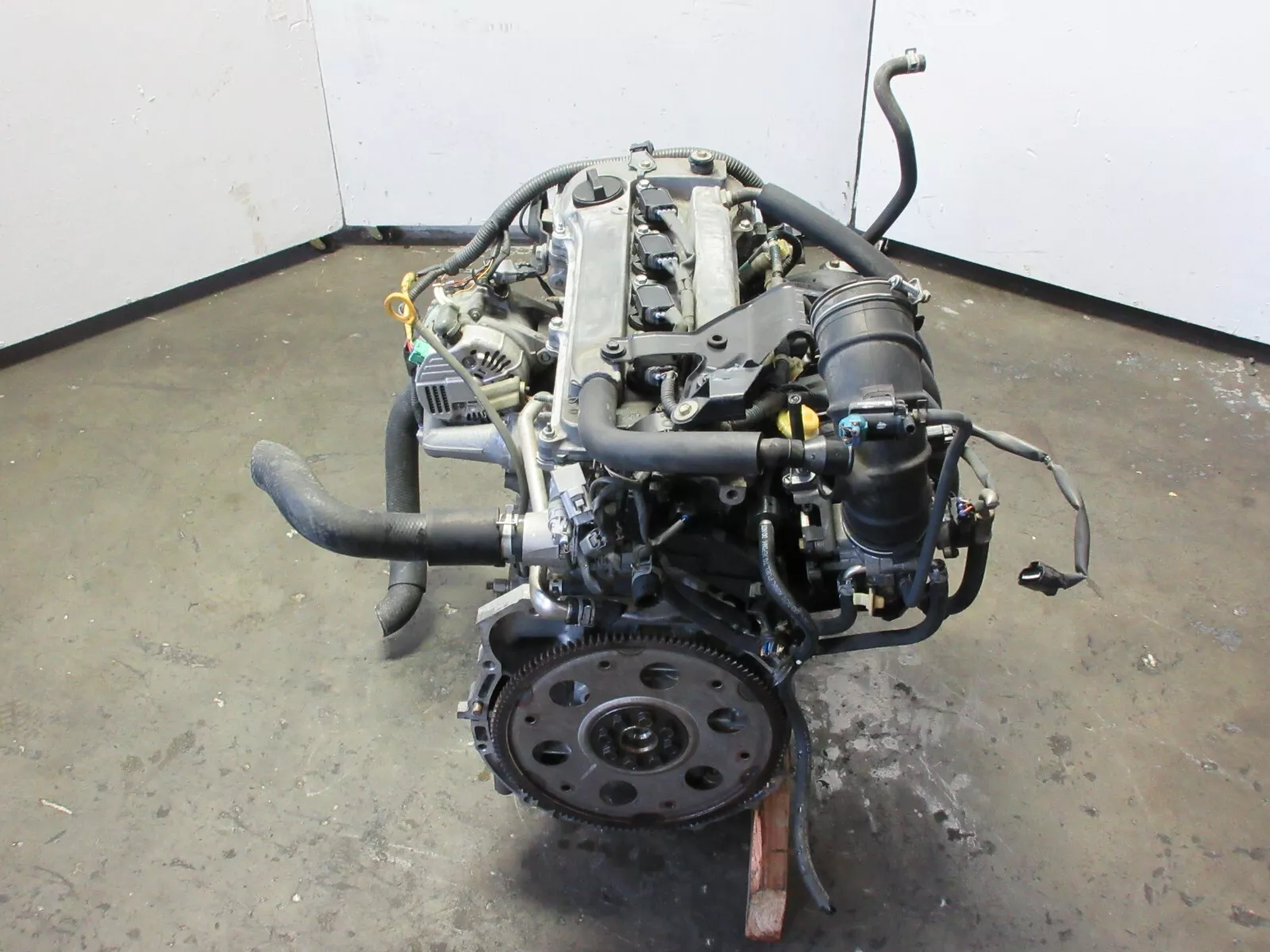
Before a Hyundai G4KD engine for sale ever goes on our site, it goes through a standard process in our shop. We start with a visual inspection for oil and coolant leaks, then pull compression across all four cylinders to get a real read on internal wear. From there we check oil pressure at idle and under load, listen for rod knock or valvetrain noise on a cold and warm start, and inspect the timing chain and tensioners for slack. We also check the accessory drive, look over the wiring harness connectors for corrosion, and verify the engine turns over freely by hand before it’s ever put on a stand and started.
If anything comes up short during that process, we handle it before the engine is listed, not after you’ve already paid freight to get it home. Every Hyundai G4KD engine for sale that leaves our shop comes with a written summary of what we found, along with photos taken during inspection so you’re not relying on our word alone.
Used vs. Remanufactured: Which Should You Buy?
This is one of the most common questions we get, and the honest answer depends on your budget and your timeline. A used G4KD — pulled from a donor vehicle, tested, and verified — costs less than a remanufactured unit and gets your car back on the road faster in most cases, since we typically have inventory ready to ship rather than needing to build one to order. A remanufactured engine, where worn components are replaced with new parts inside the original block, costs more but comes with a longer expected service life since it’s essentially reset to closer-to-new tolerances.
If you’re driving the car another two or three years and want to keep costs down, a tested used Hyundai G4KD engine for sale is usually the more practical call. If you’re planning to keep the vehicle long-term or you’re doing this for a fleet where downtime is expensive, a remanufactured unit might be worth the extra cost. We stock both and can walk you through which makes more sense for your specific situation — just tell us how long you’re planning to keep the car and what your budget looks like.
Shipping a Hyundai G4KD Engine for Sale Worldwide
We ship G4KD engines internationally on a regular basis, and the process is more routine than most first-time buyers expect. Every engine is drained of fluids, crated on a pallet, and strapped down so it can be handled with standard freight equipment on either end. Whether you’re in North America, the Middle East, Africa, Europe, or anywhere else, we can get a Hyundai G4KD engine for sale to your door or to your nearest freight terminal.
We handle export documentation and coordinate directly with your freight forwarder if you already have one lined up. If you don’t, we can point you toward companies we’ve worked with before that know how to move an engine without damaging it. We photograph every unit again right before crating, so you have a clear, timestamped record of exactly what shipped and its condition at that moment.
For buyers outside the U.S. who are concerned about import compliance, we list the model year and relevant emissions details on every listing so you can check requirements with your own customs authority before committing. We field these questions constantly from international buyers and we’d rather help you confirm everything up front than have you deal with a customs headache after the engine’s already on a boat.
What to Check Before You Buy Any Used Engine
Whether you buy from us or anyone else, here’s what actually separates a legitimate seller from someone flipping engines with no real information: ask for compression numbers, not just a claim that “it ran fine when it came out.” Ask specifically about rod knock and oil pressure, given the Theta II family’s known history. Ask for real photos of the actual engine you’d be receiving, not a stock catalog image. And ask what’s included — some listings quietly leave out the intake manifold, sensors, or accessories you’ll need to actually install it.
We answer all of these questions directly because we run the checks ourselves before anything goes up for sale. If a seller can’t tell you about compression, oil pressure, or rod knock history on a Theta-family engine specifically, that’s a sign they haven’t actually looked closely enough to know.
Parts, Maintenance, and What Ownership Actually Costs
One thing worth knowing going in: parts availability for the G4KD is excellent. Because Hyundai and Kia built so many vehicles around this engine family, sensors, gaskets, and accessory components are stocked by practically every parts supplier that carries Hyundai/Kia inventory. Routine maintenance is straightforward — oil changes on a normal interval, periodic valve cover gasket inspection, and keeping an eye on oil consumption as the engine accumulates mileage. Owners who stay on top of oil changes and don’t ignore early knocking noises tend to get a long service life out of this engine, which is exactly why it’s still such a commonly requested replacement more than a decade after most of these cars first rolled off the line.
If you’re outside our immediate service area and need help with installation or diagnosis after the sale, we maintain relationships with independent shops that work on Hyundai and Kia engines regularly, and we’re glad to point you toward someone reputable near you. A lot of engine sellers disappear the moment your payment clears — we’d rather you come back to us for the next one.
Why Buy This Used Hyundai G4KD Engine for Sale From Us
There’s no shortage of places to find a used Hyundai G4KD engine for sale — salvage yards, online marketplaces, overseas exporters you’ve never dealt with before. What’s actually in short supply is a seller who tells you the truth about condition before you pay, and who’s still reachable if something comes up after installation. We’ve built our whole process around closing that gap. Every engine we list has already been through compression testing, an oil pressure check, and a rod-knock inspection specific to the known Theta II history, and we document all of it in writing before the engine ever ships.
We also don’t disappear once your payment clears. If your installer has a question about the wiring harness, or you need documentation for a warranty claim, or you’re simply not sure the crated engine that arrived matches what you ordered, you can call us and get an actual answer from someone who was involved in testing that specific unit. That’s a different experience than buying a Hyundai G4KD engine for sale from a listing with no name attached to it, and it’s the reason a lot of our customers come back the next time they need an engine instead of starting the search over from scratch.
Pricing reflects the engine’s mileage, documented condition, and what work we’ve already put into it before listing — you can see current inventory and pricing on our site, and we’re happy to answer questions by phone or email before you commit to anything. Financing documentation is also available on request if you need it for a lender or insurer.
Frequently Asked Questions
Is this Hyundai G4KD engine for sale tested before it ships?
Yes. Every engine gets a compression test, an oil pressure check, and a rod-knock inspection before it’s listed, not just before it ships.
Does the G4KD have the Theta II bearing failure issue?
The port-injected G4KD is less commonly affected than the turbocharged, direct-injection Theta variants, but we still check every unit for rod knock and low oil pressure as a standard part of our process.
Will the engine come with the wiring harness and accessories?
Listings specify exactly what’s included. Tell us your VIN or trim level and we’ll confirm what you’ll need before you order.
Can you ship to a freight forwarder instead of my home address?
Yes — that’s actually the most common way these engines move internationally. Send us your forwarder’s details and we’ll coordinate delivery directly with them.
How do I know this engine fits my Sonata, Elantra, Tucson, Optima, or Sportage?
Send us your VIN or the engine code stamped on your current block and we’ll confirm fitment before you buy anything.
Do you offer a warranty?
Every Hyundai G4KD engine for sale we ship comes with a warranty covering the work we’ve done and the components we’ve inspected, so you know exactly what’s covered.
Should I buy used or remanufactured?
It depends on your budget and how long you’re keeping the car. We stock both and can help you decide based on your specific situation.
Get Your Hyundai G4KD Engine for Sale Today
If you’re ready to move forward, check out our current inventory or reach out with your VIN and we’ll confirm exactly which engine fits your car. We handle crating, freight quotes, and export paperwork on our end, and most orders ship within a week or two of payment clearing, depending on scheduling to your destination. We’d rather answer ten questions before you buy than deal with one problem after — so don’t hesitate to call or message us with anything that isn’t covered here.
We also stock other Hyundai and Kia engine families if the G4KD isn’t the exact match you need — browse our Hyundai G4KE engine guide for the related 2.4L option, or head to our full engine inventory to see what else we have in stock. If you’re still deciding between a used and remanufactured unit for any engine, our rebuilt vs. used engine comparison walks through the tradeoffs in more detail. Whatever you decide, we’re here to help you land the right Hyundai G4KD engine for sale the first time.
Shopping for more than one engine? We’ve also got a Toyota 2TR engine for sale and a used Nissan RD28 engine for sale, both inspected and documented the same way as every G4KD we ship.