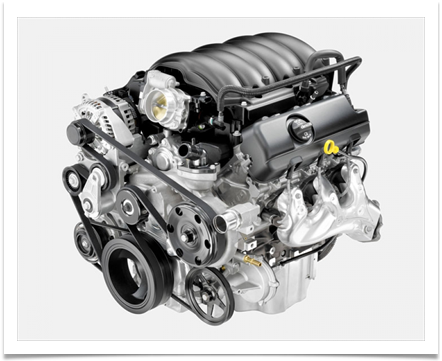
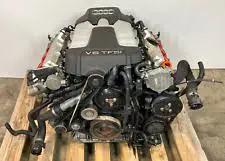
If you’re pricing out a replacement for a knocking, oil-hungry, or misfiring V6 in an A6, A7, A8, or Q7, you’ve probably already typed “Audi EA839 Engine for sale” into a search bar more than once this week. This engine has a reputation, and depending on who you ask on a forum, that reputation is either “bulletproof German engineering” or “expensive to own past 80,000 miles.” Both of those things can be true at the same time, and we’d rather walk you through why than just sell you a part and wish you luck.
We keep tested EA839 units in stock – standard single-turbo versions out of A6, A7, A8, and Q7 models, along with the higher-output S4, S5, and SQ5 tune – and we ship them to buyers everywhere, not just around our own warehouse. This guide covers the real specs, what tends to go wrong, how we test every unit before it’s listed, and what buying and shipping actually looks like from here.
What Is the Audi EA839?
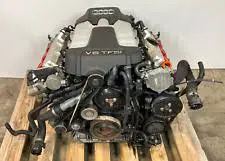
The EA839 is Audi’s 3.0-liter turbocharged V6, introduced around 2016 as the replacement for the supercharged EA837 that came before it. It’s an all-aluminum 90-degree V6 with cast iron cylinder liners built in from the start rather than pressed in later, four chain-driven camshafts with variable valve timing on both intake and exhaust, and FSI direct fuel injection feeding a single turbocharger on the standard and S-tuned versions. A twin-turbo variant of the same basic architecture, usually referred to as the 2.9 TFSI, powers the RS4 and RS5.
What makes an Audi EA839 Engine for sale worth considering instead of a full factory replacement is mostly the price gap. Audi dealer replacement costs for this engine run into five figures with labor, and a tested used or rebuilt unit from a specialist supplier closes most of that gap at a fraction of the cost, assuming you’re buying from someone who actually tests what they sell instead of just pulling a motor and shipping it.
Audi EA839 Specifications
Numbers vary a bit by tune level, since Audi and Porsche both used this basic architecture across several output levels. Here’s a realistic overview covering the common variants:
| Engine type | 3.0L V6, DOHC, 24-valve, turbocharged, direct injection |
| Displacement | 2,995 cc (3.0 liters) |
| Block/head material | Aluminum alloy with cast-in iron cylinder liners |
| Compression ratio | Approximately 10.0:1 |
| Power output | Roughly 335–340 hp (A6, A7, A8, Q7); 349–354 hp (S4, S5, SQ5) |
| Torque | Roughly 369 lb-ft (base tune); up to 369–443 lb-ft on S-tuned variants |
| Turbocharging | Single turbocharger (base/S variants); twin-turbo on the related 2.9 TFSI used in RS models |
| Valvetrain | Chain-driven DOHC, AVS variable valve timing, intake and exhaust |
| Fuel type | Gasoline, premium recommended |
The gap between a base A6 tune and an S5 or SQ5 tune mostly comes down to turbo sizing, boost pressure, and ECU calibration rather than any difference in the core architecture, but it’s still worth confirming exactly which variant you’re being quoted, since the internals and mounting hardware aren’t always a drop-in match between a base car and an S-badged one.
Which Vehicles Use the EA839?
This engine, in its single-turbo form, was factory-fitted across a wide slice of the Audi lineup starting around the 2016 model year: the Audi A6, A7, and A8 in their base V6 trims, the Q7 SUV, and the higher-output S4, S5, and SQ5. Because Audi and Porsche share platform architecture under the Volkswagen Group umbrella, related versions of this same engine family also turn up in the Porsche Cayenne, Cayenne Coupe, Macan, and Panamera, so if you’re working on one of those and hunting parts, a lot of the same knowledge applies. If you’re not sure which exact variant your car came with, your VIN or a quick look at the engine code stamped on the block will settle it before you order an Audi EA839 Engine for sale that doesn’t match your specific application.
Why This Engine Has a Strong Reputation
Three things come up consistently when Audi technicians talk about this platform. First, the switch from the older supercharged EA837 to a turbocharged design with Audi’s FSI direct injection gave a real jump in both efficiency and top-end power without sacrificing the smoothness people expect from a V6 in this class. Second, the cast iron liners built into the aluminum block from day one hold up well over time compared to some of the sleeve designs used elsewhere in the segment, which matters a lot once you’re past 100,000 miles. Third, because this same core engine spans everything from a base A6 to an S5 to a Porsche Macan, parts availability and mechanic familiarity are both better than you’d expect for what’s still a relatively specialized German V6.
None of that makes it maintenance-free. Like most modern direct-injection turbo engines, it’s sensitive to oil quality and change intervals in a way that older port-injected engines simply weren’t, and skipping maintenance catches up with this platform faster than it would with something simpler.
Common EA839 Problems
Carbon buildup on the intake valves is one of the more frequent complaints, and it’s a byproduct of direct injection itself – fuel never washes over the back of the intake valves the way it does in a port-injected engine, so deposits accumulate over time and eventually affect idle quality and throttle response. Periodic walnut-blasting or chemical cleaning keeps this in check if it’s done proactively instead of ignored for 100,000 miles.
Water pump and thermostat housing failures show up more often on higher-mileage units than owners expect, and a failing water pump on this engine can escalate quickly if it’s not caught early, since the pump often sits somewhere that makes coolant loss hard to notice until temperatures start climbing.
Timing chain tensioner wear is another item worth watching. It’s not as common an issue as on some other turbo V6 designs, but a worn tensioner can produce a rattle on cold start that’s easy to write off as normal noise until it isn’t.
Oil consumption between changes, particularly on earlier production years, is something we ask every seller and every buyer about directly, since it’s one of the clearest early indicators of piston ring or valve seal wear before it turns into a bigger problem.
Signs You Need a Replacement Engine
A knock or rattle that persists after the engine warms up, rather than clearing in the first minute, usually points to something more serious than a simple tensioner adjustment. A check engine light tied to a persistent misfire on one or more cylinders, after coils and plugs have already been replaced, often means internal wear rather than an ignition problem. Blue smoke on startup or under hard acceleration points to oil reaching the combustion chamber past worn rings or valve seals. Coolant that keeps disappearing with no visible external leak usually means a head gasket or internal coolant passage issue, and on this engine that’s an expensive diagnosis given how tightly packaged the engine bay is. If you’re seeing more than one of these at once, it’s usually the point where a tested Audi EA839 Engine for sale ends up being the more sensible move over chasing repairs piece by piece.
Used vs. Rebuilt EA839 Engines
We stock both, and the right call depends on your budget and how long you’re planning to keep the car. A used EA839 pulled from a lower-mileage donor vehicle, compression tested and inspected, is the more affordable route and works well if you’re fixing a daily driver you don’t plan to keep indefinitely. A rebuilt unit – torn down, machined where needed, and reassembled with new gaskets, seals, and wear components – costs more up front but buys you a longer runway before you’re back here again, which makes more sense if this is a car you’re keeping for years or a Porsche or S-badged Audi you’re investing in for the long haul.
How We Test Every EA839 Before Listing It
Every Audi EA839 Engine for sale in our inventory goes through a compression test across all six cylinders, a cooling system pressure check, an oil analysis for metal contamination, and a visual inspection of the turbocharger for shaft play and boost leaks. We also check for carbon buildup on the intake valves and note the condition on the listing rather than leaving you to guess. If a unit doesn’t check out clean, it doesn’t get sold as a running engine – we rebuild it properly first or part it out instead. We photograph the actual engine you’ll receive, not a stock catalog image, so you know exactly what’s showing up at your door.
How to Confirm You’re Buying a Genuine EA839
The engine code is stamped on the block, and any legitimate seller should be able to show you a clear photo of that stamp along with details about the donor vehicle. Because this architecture spans base Audis, S-badged Audis, and several Porsche models, it’s worth double-checking exactly which tune and which accessory configuration you’re getting, since mounts, wiring harness connectors, and turbo sizing aren’t always interchangeable between a base A6 unit and an S5 or SQ5 unit even though they share the same block. We include donor vehicle information and stamp photos on every listing specifically so you’re not buying blind.
Shared Platform Notes for Porsche Owners
If you’re working on a Cayenne, Macan, or Panamera rather than an Audi, the same core engine and a lot of the same failure points apply, but accessory brackets, engine mounts, and some sensor locations differ between the brands even on a shared architecture. Tell us which chassis you’re working on, not just that you need “the 3.0 turbo V6,” and we’ll confirm you’re getting a configuration that actually bolts up rather than one that needs adapter work.
How the EA839 Compares to the Old Supercharged EA837
If you’ve owned an older Audi V6, you might remember the EA837, the supercharged 3.0-liter that came before this one. The switch to turbocharging with the EA839 wasn’t just a marketing change – a turbo makes power more efficiently at a broader range of engine speeds than a belt-driven supercharger does, which is a big part of why Audi made the jump industry-wide around 2016. The tradeoff is that a turbo engine depends more heavily on oil quality and cooling system health than a supercharged one does, since the turbo itself runs hotter and spins at speeds a supercharger never approaches. That’s not a knock on the design, it’s just a different set of maintenance priorities, and it’s worth understanding if you’re used to how the older engine behaved.
Parts-wise, the two engines don’t share much beyond the general layout. If you’re sourcing a replacement, always confirm you’re being quoted an EA839 specifically and not an EA837, since sellers occasionally use the terms loosely and the two are not interchangeable in any practical sense.
Repair or Replace: Running the Numbers
A single contained issue – a water pump, a coil pack, a sensor – is almost always worth just repairing. But once you’re looking at a timing chain job combined with other wear, or a bottom-end knock, the labor alone on a tightly packaged V6 like this one often runs well past what a mainstream engine would cost to service, before parts are even factored in. Get a real labor quote from your shop, then compare that total against a tested replacement installed on the same timeline. For a lot of higher-mileage EA839-equipped cars with more than one issue stacking up, a tested Audi EA839 Engine for sale from us ends up being both the faster and the cheaper path back on the road.
What Happens to Your Old Engine
We don’t run a mandatory core return program, so your old block is yours to handle however makes sense – sell it for parts, hand it to your mechanic as a trade toward labor, or scrap it. If you want a rough sense of what individual components off an EA839 tend to be worth before deciding, ask us; we handle enough of these to give you a realistic number instead of a guess.
Shipping the EA839 Worldwide
We ship this engine domestically and internationally, crated securely given the precision components involved. Domestic orders typically move within a few business days of cleared payment, and international orders go out through freight forwarders with tracking, since these are heavy, precision-built engines that need to be handled properly in transit.
Buying From Outside the United States
A meaningful share of our EA839 orders ship internationally – buyers across Europe, the Middle East, Australia, and Asia where Audi and Porsche models built on this platform are common on the road. We handle export documentation and can give you a general sense of customs and import duty expectations, though final figures always depend on your local regulations, so it’s worth checking with your customs broker before the engine ships. Every export order is crated to handle ocean or air freight without shifting in transit, and you’ll get tracking information the moment it leaves our warehouse.
Common Questions We Get About the EA839
Is the EA839 the same engine as the EA837? No. The EA837 was supercharged and came before this platform. The EA839 replaced it with a turbocharged design starting around the 2016 model year, and the two aren’t interchangeable.
Can I put an S-tuned EA839 into a base A6? It’s been done by experienced builders, but you’re looking at ECU, wiring, and in some cases turbo plumbing differences, so it’s not a straightforward swap. Talk to us about what you’re planning before you buy a core engine for that kind of project.
Will a used EA839 come with the turbo and accessories? That depends on the specific listing, so always check before ordering. Some units come complete, others as long blocks. Tell us what your car needs and we’ll confirm what’s included.
How many miles can I expect from a used EA839? With regular oil changes on a shorter interval than the factory recommends, and proactive attention to carbon buildup, 150,000-plus miles isn’t unusual, though this engine is less forgiving of neglect than an older, simpler design.
Do you sell the EA839 for Porsche applications too? Yes, we regularly source and ship units for Cayenne, Macan, and Panamera applications, not just Audi. Tell us your exact chassis and we’ll confirm compatibility.
Is a rebuilt EA839 worth the extra cost? If you’re keeping the car for years or it’s an S-badged or Porsche model you’re invested in, the added reliability and longer service interval usually justify the extra upfront cost. For a car you might sell in a year or two, a well-tested used engine is often the more sensible spend.
What octane fuel does this engine need? Premium is recommended across every tune level, and running lower octane regularly can trigger the ECU to pull timing to protect the engine, which shows up as reduced power and, over the long run, isn’t doing the internals any favors either.
Maintenance That Extends the Life of This Engine
Shorten your oil change interval below the factory recommendation, ideally every 5,000 miles with a quality synthetic rated for turbocharged direct-injection engines, since this platform is noticeably less forgiving of stretched intervals than older designs. Have the intake valves inspected and cleaned proactively before carbon buildup starts affecting drivability, rather than waiting for a rough idle to force the issue. Keep an eye on coolant level and watch for any sign of the water pump or thermostat housing starting to weep. Replace the cabin and engine air filters on a real schedule too, since a restricted intake makes the turbo work harder than it needs to for the same amount of boost. None of this is complicated, it just needs to actually happen on schedule instead of getting pushed back.
Ordering Your Audi EA839 Engine for Sale
Buying from us is meant to be straightforward. Order directly through the product page, or reach out first with your VIN or chassis code if you want fitment confirmed before you spend anything. We accept standard card payments and bank transfer for larger commercial orders, and once payment clears we start prepping your engine for crating right away. You’ll get tracking information as soon as it ships, and our team stays reachable if you have questions about the delivery timeline. For shops that order regularly, we can also set up recurring account terms, so getting your next Audi EA839 Engine for sale doesn’t mean starting the paperwork from scratch every time.
Ready to Buy an Audi EA839 Engine for Sale?
If you’ve read this far, you already know more about this engine than most people selling them. When you’re ready, take a look at our current Audi EA839 Engine for sale listing for pricing, available configurations, and stock photos of the actual unit. We can also answer fitment questions before you order – just reach out through the contact page and tell us your chassis code and which model you’re working on. For readers who want more background on how VW Group’s turbocharged V6 family evolved, the FCP Euro guide to the EA839 engine is a solid technical reference to keep reading.
More Engines Currently in Stock
Shopping for something else while you’re here? We’re also stocking a Toyota 2GR-FE engine for sale for Camry and Highlander owners, a Mitsubishi 4B11T engine for sale for Evo X builds, a Toyota 1HDT engine for sale for Land Cruiser diesel applications, and a Toyota 2JZ-FSE engine for sale for JDM inline-six projects. Browse the full catalog or call us directly if you’d rather just tell a person what you’re working on and let us point you at the right engine.