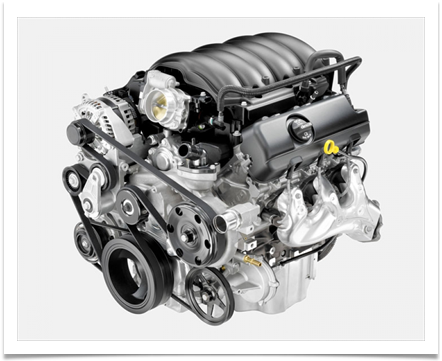
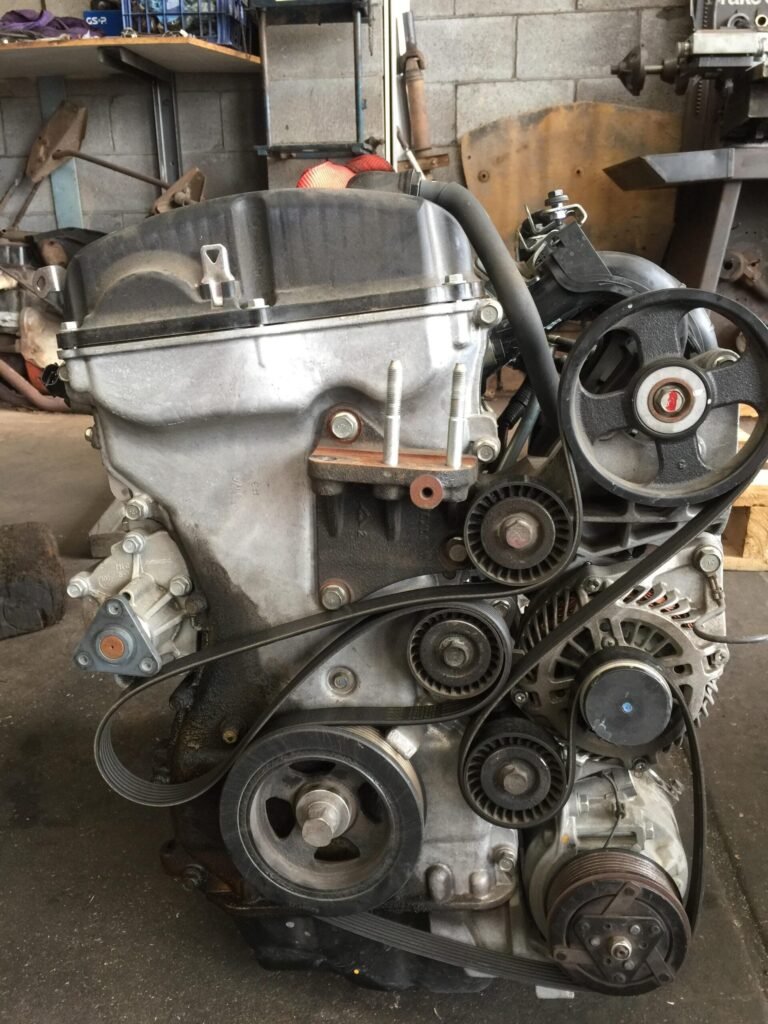
Nobody replaces this engine casually. If you’re searching for a Mitsubishi 4b11t engine for sale, chances are your Evo X is either down after a failure, or you’re building something and need a solid core to start from. Either way, this isn’t an engine you want to buy from the first listing you stumble across, so let’s go through what actually matters before you hand anyone money.
We source, test, and ship 4B11T engines to Evo owners and builders, and this guide covers the real specs, what tends to fail and why, and how the buying process works from our end, so you can make a decision based on documentation instead of a rushed forum post with no real history attached.
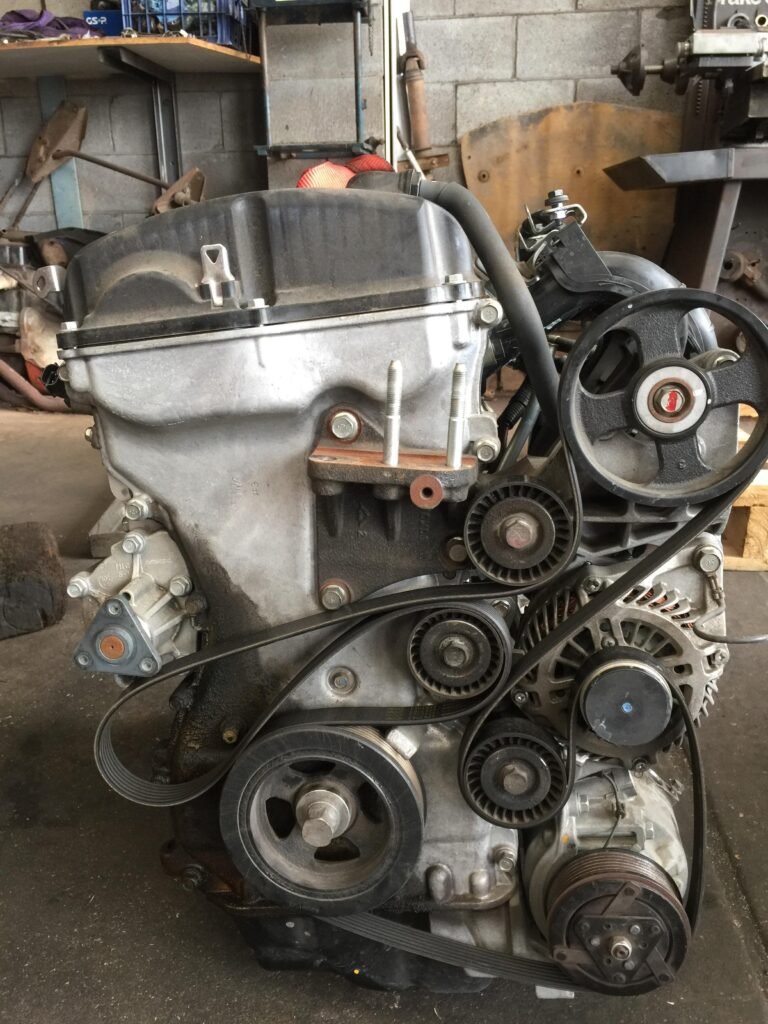
What Is the Mitsubishi 4B11T?
The 4B11T is a 2.0-liter turbocharged inline-four, built exclusively for the Mitsubishi Lancer Evolution X, which launched for the 2007 model year and ran through 2016. It’s a DOHC, 16-valve design with Mitsubishi’s MIVEC variable valve timing, an all-aluminum block, and a factory turbocharger that Mitsubishi revised over the car’s production run for quicker response at lower engine speeds. Unlike the cast-iron 4G63 that powered the earlier Evo models, the 4B11T uses an aluminum block, which cuts weight over the nose of the car but changes some of the tuning considerations compared to its predecessor.
What makes a Mitsubishi 4b11t engine for sale worth paying attention to is that this engine, in factory form, was already tuned aggressively from the factory – this isn’t a mild economy engine that happens to have a turbo bolted on, it’s a purpose-built performance unit, and that changes what you should be checking before you buy a used or rebuilt one.
Mitsubishi 4B11T Specifications
Numbers vary a bit by market and model year, since Mitsubishi tuned the ECU differently for Japan, the US, and Europe, and the UK-only FQ-series cars pushed even further. Here’s a realistic overview:
| Engine type | 2.0L inline-4, DOHC, 16-valve, turbocharged, MIVEC |
| Displacement | 1,998 cc (2.0 liters) |
| Bore x Stroke | 86 mm x 86 mm (square configuration) |
| Compression ratio | 9.0:1 |
| Fuel system | ECI-MULTI electronic fuel injection |
| Power output | Roughly 276–291 hp depending on market (up to 440 hp on the UK FQ440 Last Edition) |
| Torque | Roughly 300–311 lb-ft depending on market (up to 412 lb-ft on the FQ440) |
| Turbocharging | Single turbocharger with intercooler, revised mid-cycle for faster spool |
| Fuel type | Gasoline, premium required |
The gap between a standard US-spec car and a UK FQ440 is enormous, and it’s not just an ECU flash – those top-end UK cars had genuinely different internal components from the factory. If a seller tells you a stock 4B11T is putting out 400-plus horsepower without mentioning it’s a modified or FQ-spec unit, ask more questions before you buy.
Where the 4B11T Is Used
Unlike a lot of engines we sell, this one has a narrow, well-defined factory application: the Mitsubishi Lancer Evolution X, sold from 2007 through 2016 across Japan, North America, Europe, and other markets. A closely related non-turbo version of the 4B1 family powered other Lancer and Galant Fortis Ralliart trims, but if you’re specifically after the turbocharged 4B11T, the Evo X is the only place it came from the factory. Outside of factory replacement, this engine has become a popular swap candidate for builders working on other Mitsubishi chassis and even non-Mitsubishi projects chasing a reliable, high-revving turbo four with a strong aftermarket behind it. If that’s your plan, budget for the wiring, ECU, and mounting work involved, since it’s not a factory-supported combination outside the Evo X itself.
Why This Engine Has Such a Strong Reputation
The 4B11T earned its following because Mitsubishi built it specifically to survive serious power from the factory, which is a big part of why the aftermarket has been able to push these engines well past their stock output on built internals without the block itself being the limiting factor. The MIVEC variable valve timing system keeps the power band usable across a wide range rather than being a peaky, all-or-nothing turbo engine, and the aluminum block, while lighter than the old 4G63, has proven itself over more than a decade of ownership and motorsport use.
None of that means the engine is immune to problems, especially on cars that were driven hard, tracked, or tuned aggressively without matching supporting modifications. Knowing what to look for protects you from paying performance-engine money for a core with hidden issues.
Common 4B11T Problems
Rod bearing wear from sustained high-RPM use or aggressive launches is one of the more serious issues to check for, and it usually shows up as a knock or unusual noise under load, particularly on cars that have seen track time or repeated hard launches. Turbo failure, whether from oil starvation, wear, or a boost leak, is another common reason these engines come up for sale, and it’s worth knowing whether a turbo issue has already been addressed on any unit you’re considering. Head gasket issues can show up on engines that were tuned beyond safe boost levels without adequate supporting modifications, so ask directly about tune history on anything you’re buying. Oil consumption on higher-mileage or heavily tracked units is also worth checking for during a pre-purchase inspection, since it’s often an early sign of ring wear from sustained hard use.
Signs You Need a Replacement Engine
A knock or unusual noise under load that gets worse as the engine warms up usually points to bearing wear that’s past the point of an easy fix. Boost that won’t hold steady, or a check engine light tied to boost pressure, often means a turbo issue rather than a simple vacuum leak. Blue smoke on acceleration points to oil reaching the combustion chamber past worn rings or valve seals. Coolant that keeps disappearing with no visible external leak usually means a head gasket problem, which is a common outcome of aggressive tuning without proper supporting mods. If you’re chasing more than one of these symptoms at once, it’s usually more cost-effective to look at a tested Mitsubishi 4b11t engine for sale than to keep repairing an engine with unknown internal wear.
Used vs. Rebuilt 4B11T Engines
We stock both, and the calculation here is a bit different than with a mainstream daily-driver engine. A used 4B11T pulled from a running Evo X, compression tested and inspected, works well if you’re doing a like-for-like replacement and want to get back on the road without the cost of a full rebuild. A built or rebuilt unit – where internals have been upgraded or at minimum refreshed with new bearings, seals, and gaskets – makes more sense if you’re planning to push power beyond stock or want the longest possible service life on a car you’re keeping long term for track use.
How We Test Every 4B11T Before Listing It
Every Mitsubishi 4b11t engine for sale in our inventory goes through a compression test across all four cylinders, a cooling system pressure check, an oil analysis for metal content, and a turbo inspection for shaft play and boost leaks. We ask about and document known tune and track history wherever we can get it, since that context matters more on a performance engine like this one than it would on a mainstream daily driver. If a unit doesn’t check out clean, it doesn’t get sold as a running engine – we rebuild it properly first or part it out. We photograph the actual engine you’ll receive, not a generic stock photo, so you know exactly what’s showing up at your door.
How to Confirm You’re Buying a Genuine 4B11T
The engine code is stamped on the block, and any legitimate seller should be able to show you a clear photo of that stamp along with information about the donor vehicle. Because this engine has such a strong following in the tuning community, it’s also worth asking directly about tune and track history – a reputable seller will tell you straight if a unit was heavily modified or tracked hard, rather than letting you find out after installation. We include stamp photos and donor vehicle details on every listing specifically so you’re not buying blind.
A Popular Choice for Builds Beyond the Evo X
One thing that surprises people who only know the 4B11T from its factory application is how popular it’s become as a swap candidate outside the Evo platform entirely. Builders working on older Mitsubishi chassis, and even some non-Mitsubishi projects, have turned to this engine for its strong factory internals, high-revving character, and the deep aftermarket support that comes from over a decade of Evo X ownership and motorsport use. If that’s the project you’re working on, plan for custom mounts, a wiring solution, and either an adapted factory ECU or standalone engine management, since none of this is a factory-supported combination. Tell us about your build and we’ll help you figure out whether a stock-internal core or a built option makes more sense for your goals.
4B11T vs. the Older 4G63
If you’ve owned an earlier Evo, you’re probably used to the 4G63, the cast-iron four-cylinder that powered Evo VIII and IX. The switch to the aluminum 4B11T for the Evo X wasn’t universally popular when it launched, mostly because the 4G63 had a decade and a half of aftermarket development behind it and a reputation for surviving abuse that bordered on legendary. The 4B11T is a genuinely different engine, not just a lighter version of the old one, with a different bore and stroke, a different valvetrain, and different tuning characteristics. It’s built the aftermarket support it needed over the years since, and today there’s a deep enough catalog of upgrade parts that the “the old engine was better” argument has mostly faded, but it’s still worth knowing which engine you actually have before you go shopping for parts, since almost nothing interchanges directly between the two.
Repair or Replace: Running the Numbers
A single failed component – a coil pack, a sensor, a boost leak – is worth fixing outright. But once you’re looking at a rod knock, a cracked block, or a head gasket combined with other wear, the labor and machine work to properly rebuild in place can rival or exceed the cost of sourcing a tested replacement, especially once you factor in diagnostic time on a performance-tuned car. Get a real quote from a shop that specializes in this platform specifically, and compare that total against a documented Mitsubishi 4b11t engine for sale plus installation. For a lot of owners, especially with higher-mileage or track-used cars, the replacement route ends up being the more predictable path.
What Happens to Your Old Engine
We don’t operate a mandatory core return program, so what you do with your old 4B11T is up to you. Given the value of this platform in the tuning community, a lot of owners choose to part it out themselves or sell it to a specialist who rebuilds Evo engines for track or drag applications, rather than scrapping it outright. If you want guidance on what your old engine’s parts might realistically be worth, ask us – we deal with this platform often enough to point you in the right direction.
Shipping the 4B11T Worldwide
These engines ship domestically and internationally, crated securely given both the value and the precision components involved. Given how global the Evo community is, from Japan and the rest of Asia to Europe, the Middle East, Australia, and North America, a large share of our orders for this engine cross borders. We handle export documentation and can advise generally on what to expect with customs and import duties, though you should confirm exact figures with your local customs broker.
Buying From Outside the United States
Because the Evolution X was sold globally and has a genuinely worldwide enthusiast following, a meaningful share of our 4B11T orders ship internationally. We handle export paperwork and can give you a general sense of what to expect with customs and import duties, though final numbers always depend on your local regulations, so it’s worth checking with your customs broker before the engine ships. Every export order is crated to handle ocean or air freight securely given the precision components involved.
Common Questions About the 4B11T
Can I buy just the block, or does it come complete? That depends on the specific listing and what’s currently in stock. Some units are available as complete engines with turbo and accessories, others as long blocks for builders sourcing their own turbo setup. Tell us what you need and we’ll confirm what’s available.
Will a 4B11T bolt into a different Mitsubishi chassis? Not without significant custom work – mounts, wiring, ECU, and often transmission considerations. It’s been done by experienced builders, but budget for real fabrication and tuning time.
How do I know if the engine I’m buying was tuned or tracked hard? Ask directly and expect a real answer with documentation where possible. We disclose known tune and usage history on every listing rather than leaving buyers to guess.
Does a used 4B11T come with a warranty? Yes, our units include a warranty period on core components. Ask us about current terms when you reach out, since coverage can vary slightly by engine condition and price point.
Is it worth buying a higher-mileage 4B11T if the price is lower? Sometimes, but mileage alone doesn’t tell you enough on this platform. A well-maintained, higher-mileage engine that was never tuned aggressively can be a safer buy than a lower-mileage one pushed hard on an aftermarket tune without proper supporting mods.
Can you help me figure out if my build plan needs internal upgrades before I buy a core? Yes, this is one of the most common conversations we have. Tell us your target power level and intended use, and we’ll help you figure out whether a stock-internal core is enough or whether you should be looking at a built option from the start.
What’s the easiest way to tell a JDM-spec 4B11T from a US-spec one? Accessory brackets, some sensor locations, and occasionally boost control hardware can differ between markets, and the easiest confirmation is checking the donor vehicle’s origin against the engine’s stamped codes. We document this on every listing so you’re not left guessing which market your unit actually came from.
Do you sell the FQ-series high-output version? Availability varies since these UK-market cars are rarer outside Europe, but if you’re specifically after an FQ-spec core, tell us and we’ll let you know what we currently have access to or can source.
Maintenance Advice Once It’s Installed
Stick to premium fuel, ideally higher octane than the factory minimum if the engine has been tuned at all. Keep up with oil changes using a quality synthetic rated for turbocharged applications, and don’t stretch intervals on a car that sees spirited driving or track time. Watch coolant and oil temperatures if you’re tracking the car, since sustained high-load running is exactly the condition that exposes any marginal cooling or oiling issue. None of this is unusual advice for a performance turbo engine, but it matters more here given what you’ve invested to get this engine in the first place.
Ordering Your Mitsubishi 4b11t Engine for Sale
When you’re ready, check out our current Mitsubishi 4b11t engine for sale listing for pricing, documented history, and photos of the actual unit. If you have questions about fitment, build plans, or verification before you commit, reach out directly and we’ll walk through it with you. We accept card payment and bank transfer for larger orders, and we can arrange freight to most destinations worldwide.
Ready to Buy a Mitsubishi 4b11t Engine for Sale?
If you’ve read this far, you already know more about this engine than most of the people selling them. Take a look at our current Mitsubishi 4b11t engine for sale listing for pricing, available configurations, and stock photos of the actual unit. For a deeper technical look at how the 4B11T fits into Mitsubishi’s broader engine lineup, the Mitsubishi 4B1 engine family overview on Wikipedia is a solid reference to keep reading.
More Engines Currently in Stock
While you’re here, take a look at the rest of our tested inventory: an Audi EA839 engine for sale for A6, A7, Q7, and S-badged Audis, a Toyota 2GR-FE engine for sale for Camry and Highlander owners, a Toyota 1HDT engine for sale for Land Cruiser diesel applications, and a Toyota 2JZ-FSE engine for sale for JDM inline-six projects. Get in touch if you’d rather just describe your build and let us point you at the right engine.