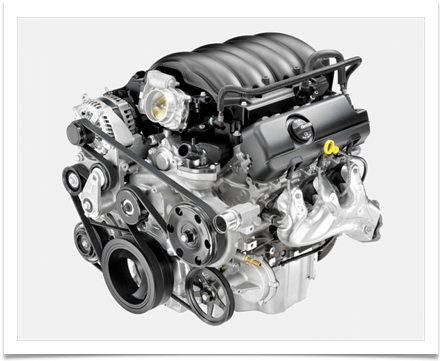
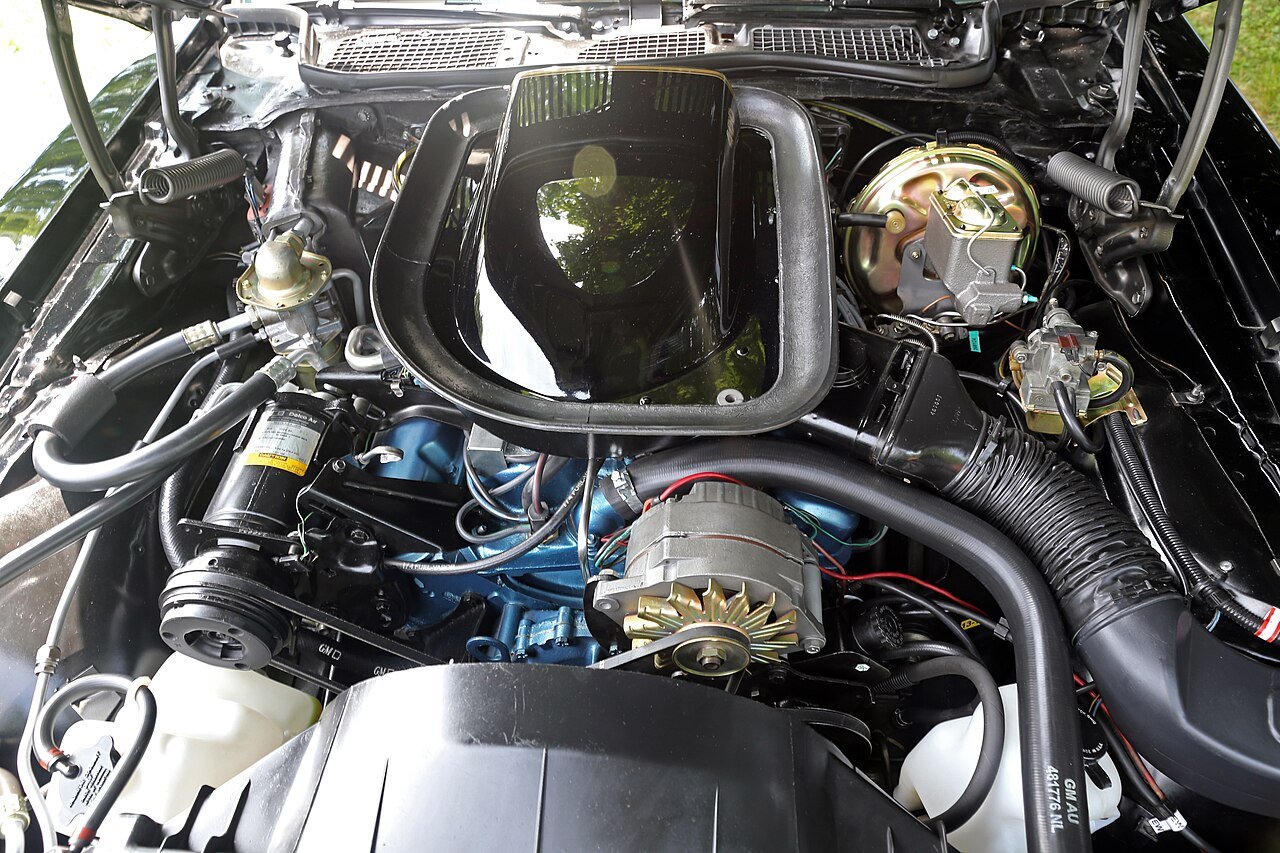
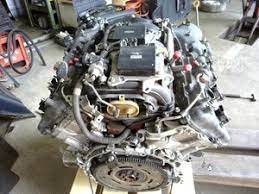
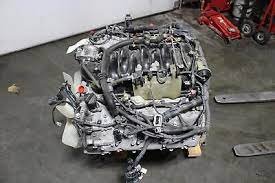
We have the Pontiac 400 V8 6.6L engine for sale, fairly used, checked in our shop and ready to ship anywhere in the world. This is the 400 cubic inch Pontiac that went into the GTO, Firebird 400, Formula, Trans Am, Grand Prix, LeMans, Catalina and Bonneville between 1967 and 1979. If you own one of those cars or you’re building one, this is the engine that belongs in it.
Prices start at $2,800 for a long block and go up to $7,500 for a complete engine with the intake, Quadrajet, distributor, exhaust manifolds and accessories. Ram Air III, Ram Air IV, HO and numbers matching engines are priced on request. Tell us about your car and we’ll quote the right Pontiac 400 V8 6.6L with shipping included.
Table of Contents
What You Get With the Pontiac 400 V8 6.6L
Every engine we list came out of a running car or a known rebuild. We turn it over by hand, run a compression test on all eight cylinders and look inside with a borescope. You get the numbers, clear photos and a short video before you pay. We also photograph the two letter code stamped on the front of the block, the head casting numbers and the date codes, because on a Pontiac those numbers tell you most of the story.
The long block is the block, crank, rods, pistons, cam, heads and valvetrain, with the timing cover, oil pan and valve covers on. The complete engine adds the intake manifold, Quadrajet carb, distributor, water pump, exhaust manifolds and whatever it came with, like the alternator, power steering pump and A/C compressor.
Pontiac 400 V8 6.6L Specifications
Pontiac built its own V8 family, and the 400 sits in the middle of it, between the 350 and the 455. All of them share the same outside size, which is why swaps are so easy.
| Engine | Pontiac 400 V8 6.6L (400 Pontiac, 400 HO, Ram Air, T/A 6.6) |
| Displacement | 400 cu in (6,555 cc) |
| Years built | 1967 to 1979 |
| Family | Pontiac V8, cast iron block and heads |
| Layout | 90 degree V8, overhead valve, 2 valves per cylinder |
| Bore x stroke | 4.12 in x 3.75 in |
| Fuel system | Rochester Quadrajet 4 barrel, 2 barrel on some economy versions |
| Compression | About 8.0:1 to 10.75:1 depending on year and version |
| Power | About 180 hp net on late engines up to 370 hp gross on the Ram Air IV |
| Torque | Up to about 445 lb-ft |
| Firing order | 1-8-4-3-6-5-7-2 |
| Dry weight | About 600 to 650 lb |
The power figures jump around because Pontiac dropped compression for unleaded fuel from 1971 and switched from gross to net ratings in 1972. A high compression 1969 Pontiac 400 V8 6.6L and a 1978 smog engine look almost the same from the outside, but they drive very differently.
Cars That Used the Pontiac 400
- Pontiac GTO 1967 to 1972, where the 400 was the standard engine
- Pontiac Firebird 400 1967 to 1969 and Firebird Formula 400 1970 to 1979
- Pontiac Firebird Trans Am 1969 to 1979, including the 1977 to 1979 T/A 6.6
- Pontiac Grand Prix 1969 to 1978
- Pontiac LeMans, Tempest and GT-37 1968 to 1977
- Pontiac Catalina, Bonneville, Executive and Grand Ville
- Pontiac Safari and Grand Safari wagons
- Pontiac Can Am 1977
Many Canadian market Pontiacs like the Parisienne and Laurentian used Chevrolet engines, so check what your car came with before ordering. We also sell plenty of these to hot rodders who want big torque from something that isn’t a Chevy, and to people building GTO and Trans Am clones.
Pontiac 6.6 or Oldsmobile 6.6? Check First
This catches a lot of buyers. From 1977 to 1979 the Firebird and Trans Am wore 6.6 LITRE decals on the shaker scoop. Some of those cars had the Pontiac 400 and some had the Oldsmobile 403, which is also 6.6 liters. California and high altitude cars mostly got the Olds engine.
The heads, intake, distributor, fuel pump and most internal parts don’t cross over between the two. On a 1977 to 1979 Firebird, the fifth digit of the VIN tells you which one it left the factory with. Z points to the Pontiac 400, K points to the Olds 403. Send us your VIN and we’ll check it for you before we quote a Pontiac 400 V8 6.6L.
How We Check Every Pontiac 400 V8 6.6L
- Compression test on every cylinder, with the numbers shared
- Borescope look at the bores, piston tops and valves
- Oil drained and checked for metal, coolant or fuel
- Engine turned by hand to feel for tight spots or noise
- Timing chain slack checked
- Block checked for freeze cracks and old repairs
- Block code, head numbers and date codes photographed
If something doesn’t look right, we tell you before you pay, not after.
Common Pontiac 400 Problems Worth Knowing
These engines are tough, but they do have a few weak spots. The timing set stretches with age, and plenty of original cam gears had a nylon coating that breaks up over time. The water pump bolts to the timing cover, so coolant leaks there are common and the gasket is worth replacing. Older blocks use a rope rear main seal that likes to drip a little.
Heads also get swapped around over the years. You’ll find 400 blocks with 455 heads, 350 heads, or heads from a different year. That can change compression a lot, so we always tell you which heads are on the engine.
Long Block or Complete Engine?
If your intake, carb, distributor and manifolds are in good shape, buy the long block and keep your parts. On numbers matching cars this matters, because the original intake and carb are part of the value.
If your car is missing parts or you’re doing a swap, a complete Pontiac 400 V8 6.6L usually works out cheaper than hunting each piece down one at a time.
Pontiac 400 V8 6.6L Price Range
- Long block: from $2,800
- Complete engine with intake, Quadrajet, distributor and accessories: up to $7,500
- Ram Air III, Ram Air IV, 400 HO and numbers matching engines: priced on request
Price depends on the year, the heads and the condition. Your quote includes shipping, so you see one total from the start.
Worldwide Shipping and Payment
We ship the Pontiac 400 V8 6.6L to the USA, Canada, Mexico, Europe, the UK, Australia, New Zealand, the Middle East, Africa, Asia, Latin America and the Caribbean. Each engine is drained, bagged, strapped and crated on a pallet, then insured for full value.
Payment is by bank transfer. You get an invoice and order confirmation by email, then tracking when it ships. Our shipping policy has the details.
Fitting Tips
Every Pontiac V8 from the 326 to the 455 shares the same outside size, motor mounts and bellhousing, so a Pontiac 400 V8 6.6L drops into any car that had a Pontiac 350, 389, 400 or 455. The bellhousing is the BOP pattern, the same one Buick and Oldsmobile used, so the usual GM automatics and 4 speeds with the right bellhousing bolt up.
Before the first start, prime the oil system with a priming tool through the distributor hole until oil shows at every rocker. Set the timing close and fill the carb so it fires quickly.
Rebuilding or Upgrading
For a restoration, keep it stock and keep the original parts with the car. Rebuild kits, cams and gaskets are easy to find.
For a driver or a weekend car, the 400 responds well to good aluminum heads, a modern roller cam and a better intake. Stroker kits can take the same block to around 455 or 467 cubic inches, and a lot of people do exactly that with a Pontiac 400 V8 6.6L because the block is cheaper and easier to find than a 455.
Who Buys This Engine From Us
GTO and Firebird owners, Trans Am restorers, classic car shops, clone builders and people who just want a big, simple V8 with torque everywhere. Every Pontiac 400 V8 6.6L leaves with photos, numbers and an honest description of what it is.
A Short History of the Pontiac 400
Pontiac brought out the 400 in 1967 as a replacement for the 389, mostly so the GTO could stay under GM’s rule against engines bigger than 400 cubic inches in intermediate cars. It went straight into the GTO and the new Firebird 400.
The best years were 1968 to 1970. The Ram Air III and Ram Air IV versions went into the GTO Judge and the early Trans Am, and those are some of the most wanted Pontiac engines today. From 1971 compression came down, and through the late 70s the Pontiac 400 V8 6.6L carried on mainly in the Firebird, Grand Prix and full size cars.
The last ones were built for the 1979 Trans Am and Formula. Pontiac called that version the W72, and it was the strongest engine you could get in a Firebird that year.
Ram Air, HO and the Other Versions
Not every 400 is the same. The 400 HO ran from 1967 to 1968 with better heads and a hotter cam. The Ram Air III came in 1969 and 1970 and made 366 hp gross in the GTO. The Ram Air IV, also 1969 and 1970, had round port heads, a bigger cam and 370 hp on paper, and most people think it made more. Late cars had the W72, rated at 200 to 220 hp net.
Each version has its own block code. We tell you exactly which version the Pontiac 400 V8 6.6L is, and we photograph the code so you can check it yourself.
How to Identify a Pontiac 400
Pontiacs are easy to check once you know where to look. Most blocks from this era have the displacement cast on the side, so you’ll see 400 there. On the front of the block, just below the passenger side head, there’s a stamped two letter code. That code tells you the version, the transmission it came with and roughly what car it went into. Next to it there’s often a partial VIN on later engines.
The heads have a number cast near the center exhaust ports. You’ll see numbers like 6X on many late 70s engines, and different numbers on the high output heads of the late 60s. The head number tells you the chamber size and so the rough compression. On a Pontiac 400 V8 6.6L that matters, because the same block can run anywhere from about 8:1 to over 10:1 depending on the heads.
Every block also has a date code, a letter for the month and numbers for the day and year. Restorers use it to make sure the engine was built a few weeks before the car. We photograph all of these on every Pontiac 400 V8 6.6L we sell, so you or your judge can check them yourself.
Buying Checklist Before You Order
- Know your car’s year, model and VIN
- Check if it was a Pontiac 400 or an Olds 403 from the factory
- Decide if you need numbers matching or just a good running engine
- Check which parts you already have, like intake, carb and manifolds
- Ask for compression numbers and photos, which we send before you pay
Send us that and we’ll match the right engine to your car the first time.
Break In and the First 500 Miles
Most original Pontiacs use a flat tappet cam, and those need zinc. Use a break in oil that has plenty of it. Prime the oil system before you crank, then once it starts, hold it between 2,000 and 2,500 rpm for about 20 minutes, changing the speed a little. Don’t let it idle during that time.
After that, change the oil and filter, look for leaks and check the timing. Drive normally for the first 500 miles without full throttle runs, then change the oil again.
Keeping Your Pontiac 400 V8 6.6L Healthy
- Use oil with zinc and change it every 3,000 miles or once a year
- Keep an eye on the timing cover and water pump area for coolant leaks
- Run a good radiator and a clean cooling system, these engines make heat
- Check the timing chain if you hear a rattle at startup
- Keep the Quadrajet clean, most running problems start there
Treat it like that and a Pontiac 400 V8 6.6L will keep running for a very long time.
Why Buy From NJ Global Auto Parts
We sell used engines every day, and old American V8s are a big part of that. We know what a healthy Pontiac looks like and what to watch out for. You talk to real people by phone, email or WhatsApp, and you can ask us anything before you buy.
We also stand behind what we sell. If the engine doesn’t arrive the way we described it, we’ll make it right. Our used engine warranty guide explains how that works, and you get it in writing with your invoice. We don’t rush anyone. Look at the photos, talk to your mechanic, then decide.
Other Names for This Engine
People search for this engine a lot of different ways: Pontiac 400, 400 Pontiac, Pontiac 400 engine, Pontiac 6.6, Pontiac 6.6 litre, T/A 6.6, 400 HO, Ram Air III, Ram Air IV, W72 400 and Poncho 400. They all point to the same engine family on this page, the Pontiac 400 V8 6.6L.
Related Engines
Looking at other big V8s? These are worth a look:
- Pontiac 455 V8 7.5L
- Oldsmobile 455 V8 7.5L
- Buick 455 V8 7.5L
- AMC 401 V8 6.6L
- Chevrolet 454 Big Block V8 7.4L
- Chrysler 440 Magnum V8 7.2L
You can also read our tested used engines guide and the used Chevy engines page, or browse all Pontiac engines. The full engine family is covered in the Pontiac V8 engine article, and the Pontiac GTO article covers the car that made the 400 famous.
Frequently Asked Questions
Will a Pontiac 400 fit where my 350 or 455 was?
Yes. Same mounts, same bellhousing, same outside size. You may need different exhaust manifolds or headers depending on the car.
Is it a numbers matching engine?
Each quote says so clearly, with photos of the block code and date codes.
Can it run on today’s fuel?
Low compression 1971 and later engines are fine on regular unleaded. Early high compression engines want premium and sometimes a little less timing.
Do you ship outside the USA?
Yes, by sea or air freight to most countries, fully insured.
How do I pay?
By bank transfer, with an invoice and order confirmation by email. Call +1 (209) 733-0882 with any questions.
Order Your Pontiac 400 V8 6.6L
Contact us with your car’s year, model and VIN, plus your country. We’ll match a Pontiac 400 V8 6.6L to it and send a price with shipping, usually the same day. More about us is on our about page.

Reviews
There are no reviews yet.