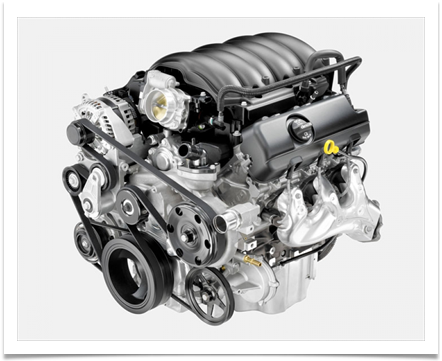
A Mitsubishi 4D56 turbo engine for sale is one of the most common things we’re asked about, and it’s easy to see why. This 2.5 litre diesel has been pulling Pajeros, L200s and Delicas along bad roads for decades. Mechanics know it, parts are everywhere, and when it’s looked after it just keeps going.
The catch is that there are a lot of different 4D56 engines out there. Old indirect injection units, intercooled versions, water-cooled turbo versions and the later common rail DI-D engines all wear the same basic name. Buy the wrong one and you’ll spend a week swapping parts that should have just bolted on.
We’re NJ Global Auto Parts, and we sell and ship these engines to customers around the world. This guide explains the versions, the specifications, the vehicles they fit, the problems to look for and how we check each Mitsubishi 4D56 turbo engine for sale before it goes anywhere. It’s the same advice we’d give a friend.
What a Mitsubishi 4D56 Turbo Engine for Sale Actually Is
The 4D56 is a four cylinder diesel from Mitsubishi’s Astron family. It displaces 2,477 cc and it first showed up in the 1980s. It’s a simple engine at heart: a cast iron block, an aluminium head, a belt-driven camshaft and, on most versions, belt-driven balance shafts to smooth out the vibration a big four cylinder makes.
Over the years Mitsubishi added a turbo, then an intercooler, then a water-cooled turbo, and finally a full common rail version with a twin-cam, 16-valve head. That last one is usually called the DI-D or CRDi. So when you see a Mitsubishi 4D56 turbo engine for sale, the first job is to find out which generation it belongs to.
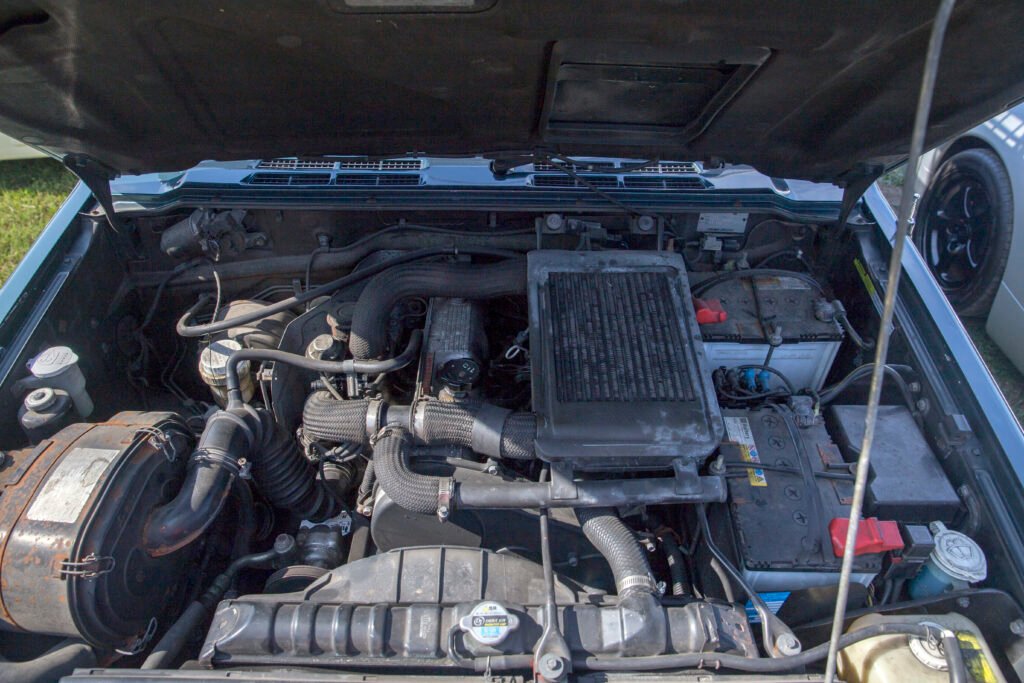
If you want the long technical history, the Mitsubishi Astron engine page lists the variants in detail. For buying purposes, you mostly need to know the split between the older indirect injection turbo engines and the newer common rail ones.
Mitsubishi 4D56 Turbo Engine for Sale: Specifications
These are the figures buyers ask about. Power and torque vary a lot by generation, so we’ve given ranges and explained them below.
| Engine code | 4D56 (turbo versions often marked 4D56T; common rail versions called DI-D or CRDi) |
| Type | Inline four cylinder turbo diesel |
| Displacement | 2,477 cc (2.5 L) |
| Bore x stroke | 91.1 mm x 95.0 mm |
| Block / head | Cast iron block, aluminium head |
| Valvetrain | SOHC 8-valve on older engines, DOHC 16-valve on DI-D engines |
| Fuel system | Indirect injection with distributor pump on older engines; common rail direct injection on DI-D |
| Compression ratio | About 21:1 on older indirect injection engines, lower on common rail versions |
| Timing drive | Toothed belt, with a separate balance shaft belt on most versions |
| Power, non-intercooled turbo | Roughly 62 to 66 kW (84 to 90 hp) |
| Power, intercooled turbo | Roughly 73 to 77 kW (99 to 104 hp) |
| Power, DI-D common rail | About 100 kW (136 PS), later variable-geometry versions up to 131 kW (178 PS) |
| Torque | From around 200 Nm on early turbo engines to 400 Nm on the strongest DI-D |
| Fuel | Diesel |
That jump from about 90 hp to 178 hp is why version matters so much. The later DI-D engine is basically a different animal, with electronic control, a different head and a different fuel system. It is not a straight swap for an old mechanical 4D56 without a lot of extra work.
When we quote a Mitsubishi 4D56 turbo engine for sale, we tell you the generation, the turbo type and what vehicle it came from. That’s the information you actually need.
Which Vehicles Use the 4D56 Turbo
Mitsubishi used this engine in a long list of four wheel drives, pickups and vans. The most common ones we get asked about are:
- Pajero / Montero / Shogun, first and second generation. The Mitsubishi Pajero is probably the truck most people connect with this engine.
- L200 / Triton / Strada pickups, across several generations, including DI-D versions.
- Delica and L300 vans, including the Delica Space Gear.
- Challenger / Pajero Sport, first generation.
- Various commercial vans and light trucks in different markets.
Hyundai also built close relatives of this engine under licence for the Galloper, H-1 / Starex and Porter. Some parts cross over and some don’t, so don’t assume a Hyundai engine is the same thing just because it looks alike.
The easiest way to get this right is to send us your VIN or chassis number. We’ll match the Mitsubishi 4D56 turbo engine for sale to your vehicle and tell you what you can reuse from your old engine.
Older 4D56 or DI-D: Which One Do You Need?
Here’s the short version.
If your vehicle came with the older 4D56 with a mechanical or early electronic injection pump, buy the same type. It’s the simplest, cheapest route, and you keep your wiring and gauges as they are. An older Mitsubishi 4D56 turbo engine for sale is easy to work on and forgiving of poor conditions, which is why so many are still running.
If your vehicle came with the DI-D common rail engine, you need a DI-D. The engine computer, the loom, the fuel system and the sensors all expect it. You’ll also want to know if your truck had the fixed turbo or the variable-geometry turbo version, because the power levels and some parts are different.
Some people want to put a DI-D into an older truck for the extra power. It can be done, but you need the matching computer, wiring, fuel tank pickup and often a stronger clutch and gearbox. Budget for all of it before you buy. A cheap Mitsubishi 4D56 turbo engine for sale doesn’t stay cheap once you add a conversion.
7 Facts to Check on Any Mitsubishi 4D56 Turbo Engine for Sale
These are the checks we do ourselves, and the ones you should ask any seller about. A shiny rocker cover doesn’t tell you what’s inside.
1. The Engine Number and Generation
The engine number is stamped on the block. We photograph it and use it to confirm the generation and turbo type. If a seller can’t or won’t send that photo, be careful. It takes thirty seconds with a phone.
2. Timing Belt and Balance Shaft Belt History
This is the big one on a 4D56. The timing belt and the balance shaft belt must be changed on schedule. If the balance belt fails it can take the timing belt with it, and then you’re looking at bent valves and a damaged head.
On any Mitsubishi 4D56 turbo engine for sale, ask when the belts were last done. If nobody knows, plan to change both belts, the tensioners and the idler before the engine goes in. We tell you what we know about belt condition, and we’ll say when we don’t know.
3. Signs of Overheating and Head Cracks
The older 4D56 head doesn’t like being overheated. Cracks between the valve seats and around the pre-combustion chambers are a known weak spot on the indirect injection engines. We look at the head, the coolant and the gasket area for any sign that the engine has been cooked.
If an engine has a cracked head, we won’t pass it off as a good used Mitsubishi 4D56 turbo engine for sale. It either gets repaired or it doesn’t get sold as a runner.
4. Compression
We test compression on all four cylinders of each Mitsubishi 4D56 turbo engine for sale and look at how close together the readings are. Low or uneven numbers point to worn rings, a leaking valve or a head gasket problem. On a diesel, poor compression means hard starting, smoke and low power, so it matters.
5. The Turbocharger
We check shaft play on every Mitsubishi 4D56 turbo engine for sale, look for oil on the compressor side and in the intake pipes, and listen for any rubbing. On water-cooled turbo versions we check the coolant lines too. A worn turbo on a 4D56 isn’t the end of the world, but you should know about it before you pay.
6. The Injection System
On an older Mitsubishi 4D56 turbo engine for sale we check the injection pump for leaks and signs of tampering. A pump that’s been turned up for more power often leaves the engine smoky and hot. On DI-D engines we look at the injectors, the injector seals and the high pressure pump. Leaking injector seals on the DI-D leave black carbon around the injector and can cause real trouble later.
7. What’s Included
A Mitsubishi 4D56 turbo engine for sale can mean anything from a bare long block to a complete engine with turbo, pump, alternator, starter and manifolds. We list exactly what’s fitted, with photos. That way you can compare prices properly and plan your install.
Common 4D56 Problems Worth Knowing
The 4D56 has a good reputation, but it has a few habits. Knowing them helps you judge any Mitsubishi 4D56 turbo engine for sale and helps you keep the one you buy healthy.
Belt neglect. Most serious 4D56 failures we see start with an overdue timing or balance belt. Follow the interval for your version, and shorten it if you drive in dust, heat or heavy towing.
Cracked heads. Mostly on the older indirect injection engines, usually after overheating. A tired radiator, a slipping fan clutch or a low coolant level can be enough.
Head gasket leaks. Often linked to the overheating problem. Signs include coolant loss, bubbles in the radiator and white smoke.
Glow plugs. Weak glow plugs make cold starts hard. They’re cheap, so if the engine is out, it’s a good time to check or replace them.
Turbo oil seals. Worn seals let oil into the intake or exhaust, and you’ll see blue smoke. Usually a turbo rebuild or replacement sorts it.
DI-D injector seals and EGR. On the common rail engines, leaking injector seals and a sooted-up EGR system are the usual complaints. Neither is unusual on a modern diesel, and both can be handled.
We’ve written more about replacements on our Mitsubishi 4D56 replacement engine page, and about buying online on our guide to buying a 4D56 diesel engine online.
Used, Rebuilt or Long Block?
Different buyers need different things, and we try not to push anybody toward the most expensive option.
Used. A tested engine from a donor vehicle, sold as described. For a standard Pajero or L200 that just needs to get back to work, a used Mitsubishi 4D56 turbo engine for sale is usually the smart choice.
Rebuilt. A rebuilt Mitsubishi 4D56 turbo engine for sale has been stripped, measured and reassembled with new wear parts where needed. It costs more, but it’s the better choice for vehicles that tow, work hard every day or will stay with you for years.
Long block. The core engine without all the ancillaries. It makes sense if your turbo, pump and accessories are healthy and you only need the block and head.
Each Mitsubishi 4D56 turbo engine for sale on our site says which type it is, and your quote will confirm it in writing.
What Affects the Price of a Mitsubishi 4D56 Turbo Engine for Sale
The first question is almost always “how much?” It’s a fair question, and the answer depends on a handful of things.
- Generation. DI-D engines usually cost more than older mechanical ones because of the fuel system and electronics.
- Condition. Even compression, a healthy turbo and a clean head make an engine worth more.
- Used or rebuilt. Rebuilds include parts and labour.
- How complete it is. A turbo and injection pump add real value.
- Freight. Where the engine is going changes the total cost, so we quote it up front.
If you see a Mitsubishi 4D56 turbo engine for sale for much less than everyone else, ask why. There’s often a reason, and it’s better to hear it before you pay. You can check the current listing on our Mitsubishi 4D56 turbo engine product page.
Shipping a Mitsubishi 4D56 Turbo Engine for Sale Worldwide
We ship every Mitsubishi 4D56 turbo engine for sale worldwide. The 4D56 is a compact engine, which helps with freight costs, but it still needs to be packed properly. We drain the fluids, seal the openings, strap the engine down and pack it on a pallet or in a crate.
Sea freight is the usual choice because it keeps costs down. Air freight works when you need the vehicle running quickly. We quote the shipping cost before you commit, and we tell you where the engine will arrive.
You’ll get a commercial invoice, a packing list and the bill of lading or airway bill. Your customs broker takes care of the import duty in your country. Engines are classified under the international HS system managed by the World Customs Organization, so your broker will know how to handle the paperwork.
Our shipping policy has the full details, and our refund and returns policy explains what happens if something arrives damaged.
Tips for Fitting Your 4D56
A good engine can be ruined by a rushed install. These are the things experienced mechanics do when they fit a Mitsubishi 4D56 turbo engine for sale into a vehicle.
Do the belts first. On any Mitsubishi 4D56 turbo engine for sale with unknown history, and unless you have proof they were just done, fit new timing and balance belts, tensioners and idler before the engine goes in. It’s much easier on the bench.
Fix the cooling system. If the old engine died from overheating, find out why. Flush or replace the radiator, check the fan clutch and replace the thermostat and hoses. Otherwise the new engine will go the same way.
Clean the intercooler. If the old turbo failed, oil and debris may be sitting in the intercooler and pipes. Clean them before you start the new engine.
New filters and fluids. Oil, oil filter, fuel filter and air filter. Cheap parts, big difference.
Bleed the fuel system. Air in the fuel is the usual reason a freshly fitted diesel won’t start. Bleed it properly before you crank it for long.
Take it easy early. Let it warm up, check for leaks, and do an early oil change.
Other Engines Worth a Look
Sometimes the 4D56 isn’t the only answer. If you run a heavier Mitsubishi truck, our Mitsubishi 4M40 engine may suit you better. If you need a petrol V6 for a Pajero or Montero, look at our Mitsubishi 6G74 engine. And you can see everything in one place under Mitsubishi engines or our wider used engines range.
For official model information in your market, Mitsubishi Motors is the place to check what your vehicle was originally sold with.
Why Buy Your 4D56 From NJ Global Auto Parts
We match every Mitsubishi 4D56 turbo engine for sale to your VIN before you pay. We send photos of the actual engine and a written summary, including the bits that aren’t perfect. We quote freight up front, wherever you are.
If we don’t have the right engine for your vehicle, we’ll tell you. We’d rather lose a sale than send an engine that won’t fit. You can read more about us or browse the shop.
People buy from us because they want a straight answer. A workshop fixing customer vehicles and an owner keeping one old Pajero alive get the same attention. Ask about a Mitsubishi 4D56 turbo engine for sale and you’ll talk to someone who knows what a balance belt is.
Questions to Ask Before You Pay for a Mitsubishi 4D56 Turbo Engine for Sale
Whether you buy from us or from somebody down the road, run through these questions first. A seller who knows the engine answers them without fuss.
- Which generation is it: older indirect injection, intercooled, water-cooled turbo or DI-D?
- Can I see a clear photo of the engine number?
- When were the timing belt and balance shaft belt last changed?
- What were the compression readings on all four cylinders?
- Any sign of overheating, head cracks or coolant in the oil?
- Does it come with the turbo, injection pump, alternator and starter?
- Is it used, rebuilt or a long block?
- What does the freight quote include, and where does it arrive?
Vague answers usually mean nobody really checked. That doesn’t always mean the engine is bad, but it does mean you’re buying an unknown. Price it that way.
We answer every one of these for each Mitsubishi 4D56 turbo engine for sale that we list. When we don’t know something, for example belt history on an engine that came out of an auction vehicle, we say so plainly and suggest you budget for a belt kit.
Looking After a 4D56 Once It’s Running
This engine rewards basic care more than almost anything else. Most of the worn-out engines we see weren’t unlucky. They were neglected. If you buy a Mitsubishi 4D56 turbo engine for sale and follow a few simple habits, it can give you many more years of work.
Change the oil on time. Diesel soot turns oil black quickly and wears the turbo bearings and the top end. Use a good diesel-rated oil in the grade your manual asks for.
Keep the cooling system healthy. Check the coolant level often, replace old hoses, and never ignore a temperature gauge that creeps up. On this engine, heat is the enemy of the head.
Let the turbo cool down. After a hard run or a long tow, idle the engine for a minute before switching off. It saves turbo bearings.
Watch the belts. Write the belt change date and kilometres on a label under the bonnet. It sounds old fashioned, but it stops the most expensive 4D56 failure there is.
Use clean fuel. Change fuel filters on schedule and drain the water separator. On a DI-D this matters even more, because common rail injectors hate water and dirt.
Do those things and the engine you buy from us has every chance of lasting as long as the vehicle does. That’s the whole point of choosing a good Mitsubishi 4D56 turbo engine for sale in the first place.
Frequently Asked Questions
What vehicles use the 4D56 turbo?
Mainly the Pajero / Montero / Shogun, L200 / Triton / Strada, Delica and L300 vans, and the first Challenger / Pajero Sport. Send us your VIN and we’ll confirm the match.
Can I fit a DI-D into a vehicle that had the older 4D56?
Yes, but it’s a conversion. You’ll need the matching computer, wiring and fuel system parts, and possibly a stronger clutch.
Is your Mitsubishi 4D56 turbo engine for sale used or rebuilt?
We sell both. Each listing says which, and your quote confirms it.
Does it come with the turbo and injection pump?
That depends on the engine. We list what’s fitted and show it in the photos.
How often should the belts be changed?
Follow the interval for your version, and do it sooner in dusty or heavy work. If the history is unknown, change them before fitting.
Do you ship to my country?
We ship every Mitsubishi 4D56 turbo engine for sale worldwide by sea or air, with the freight quoted before you pay.
A Mitsubishi 4D56 turbo engine for sale should come with clear photos, honest notes and someone who answers the phone. That’s what we try to give every customer. Tell us your vehicle and VIN through the contact page, and we’ll tell you what we have, what it costs and how fast we can get it to you.