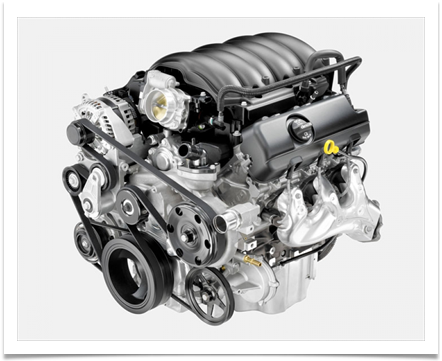
Two inline six diesels, same family, same look from a distance, both found in Mercedes trucks and buses all over the world. One is 6.4 litres, the other is 7.2. If you run an Atego, an Axor, a Citaro, a Unimog, an Econic or a Freightliner with a Mercedes engine, you have probably had to work out which one you have and which one to buy. That is what this Mercedes OM926 vs OM906 guide is for.
We are NJ Global Auto Parts, and we sell truck and car engines worldwide. The OM906 and the OM926 are two of the medium duty diesels we supply most, to fleet owners, bus operators, rebuilders and workshops. We see both in the yard every week. So this Mercedes OM926 vs OM906 comparison comes from handling the engines, not from a brochure.
Looking for an engine already? See our Mercedes-Benz OM926 engine for sale page, or send your chassis number and engine number through our contact page and we will check OM906 stock for you as well.
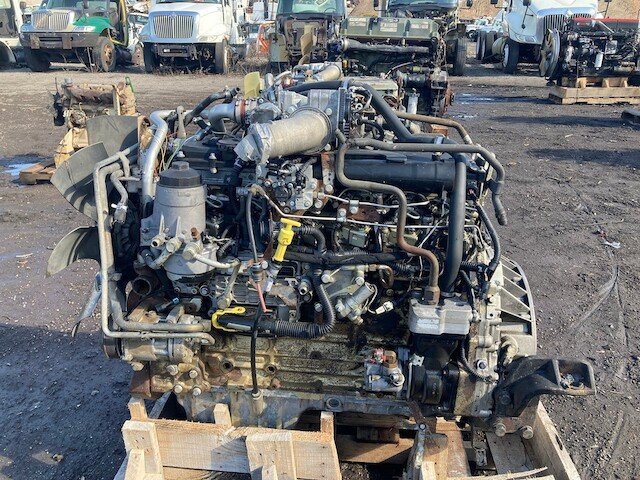
Mercedes OM926 vs OM906: The Quick Answer
The OM926 is the bigger brother. It has a larger bore and a longer stroke, which takes it from 6.4 to 7.2 litres. That gives it more torque and lets it run higher outputs without working as hard. The OM906 is a little lighter and was fitted to a huge number of trucks, buses and Unimogs, so it is everywhere and parts are easy to find.
Both are part of the Mercedes 900 series, which is why the Mercedes OM926 vs OM906 question is about degree rather than design. Both are inline six, four valves per cylinder, turbocharged and intercooled, with electronically controlled unit pump injection. Many service parts and a lot of the design are shared. The Mercedes OM926 vs OM906 choice usually comes down to what your chassis was built with, how heavy you load it, and what is available at a fair price when you need it.
Mercedes OM926 vs OM906 Specifications Side by Side
Outputs vary a lot by application, model year and emissions level. These are the core numbers and typical ranges.
| Specification | Mercedes OM906 LA | Mercedes OM926 LA |
|---|---|---|
| Layout | Inline 6, turbo, intercooled | Inline 6, turbo, intercooled |
| Displacement | 6,374 cc (6.4 L) | 7,201 cc (7.2 L) |
| Bore x stroke | 102 mm x 130 mm | 106 mm x 136 mm |
| Valves | 4 per cylinder, 24 total | 4 per cylinder, 24 total |
| Fuel injection | Electronic unit pumps (PLD) | Electronic unit pumps (PLD) |
| Typical power | About 230 to 350 hp | About 240 to 330 hp |
| Typical peak torque | Up to about 1,200 Nm | Up to about 1,300 Nm |
| Family | Mercedes 900 series | Mercedes 900 series |
| North American name | MBE906 | MBE926 |
| Era | Late 1990s onward | Early 2000s onward |
Look at the power ranges and you will notice they overlap. That surprises people. In the Mercedes OM926 vs OM906 comparison, the bigger engine is not always rated higher. What it gives you is more displacement for the same job, which usually means more torque low down and less stress at the same power.
Where You Find Each Engine
OM906 applications
- Mercedes Atego medium duty trucks
- Mercedes Axor lighter configurations
- Mercedes Econic refuse and municipal trucks
- Mercedes Citaro and other city buses, plus Setra and coach chassis
- Unimog U400 and U500
- Freightliner and other North American trucks as the MBE906
- Industrial and agricultural machinery
OM926 applications
- Mercedes Atego heavier models
- Mercedes Axor
- Mercedes Econic
- Mercedes Zetros
- Mercedes Citaro and Setra buses
- Freightliner M2, Business Class and fire apparatus as the MBE926
- School and transit buses in North America
Because both went into the same chassis lines, you can find two trucks with the same badge and different engines. That is why the Mercedes OM926 vs OM906 question comes up so often. The engine number on the block is the only reliable answer.
How to Tell Which One You Have
Do not go by the badge on the cab. Check these instead:
- Engine data plate. On the block, it shows the engine model and serial number. Look for 906 or 926 in the code.
- Engine number. The full number starts with the engine type code, for example 906 9xx or 926 9xx.
- Vehicle data card. Mercedes trucks have a data card and the dealer can decode the chassis number.
- Displacement on documents. Registration papers sometimes list 6,374 cc or 7,201 cc.
Send us a clear photo of the data plate and we will confirm it for you. It is the first step in any Mercedes OM926 vs OM906 order we handle.
Performance: How They Feel on the Road
On paper the Mercedes OM926 vs OM906 difference looks small. On a loaded truck it is real. The OM926 pulls a heavy load up a hill with less downshifting, and it holds speed better on long climbs. The OM906 is perfectly good on a city bus or a medium load, and it is a little lighter, which counts on some vehicles.
Drivers who have driven both sides of the Mercedes OM926 vs OM906 debate on similar trucks usually say the 926 feels lazier in a good way. It does not have to rev as hard. That is the heart of the Mercedes OM926 vs OM906 performance difference: same family character, more muscle low down on the bigger engine.
Fuel Use and Running Costs
Fuel use depends more on load, route, gearing and driving than on which of these two engines is fitted. On a light or medium job, the OM906 can be slightly more economical. On a heavy job, the OM926 can match it or even beat it, because it is not working as hard.
In the Mercedes OM926 vs OM906 comparison, servicing costs are similar. Oil capacity, filters and service intervals are close, and many consumables are shared. So when fleet managers weigh Mercedes OM926 vs OM906 on running costs, the honest answer is that it is close, and matching the engine to the job matters more than the engine itself.
Reliability and Durability
Both engines have a good name. With regular oil changes and a clean air and fuel system, both regularly reach very high hours and kilometres before a major overhaul. The OM926, with its larger size, is often under less stress at the same output, which can help longevity on hard working trucks.
In real life, the history of the engine matters more than the model. A well kept OM906 will outlast a neglected OM926 every time. When customers ask us about Mercedes OM926 vs OM906 reliability, we tell them to look at the service records first and the engine code second.
Common Problems on Both Engines
Since they are so closely related, most faults are shared. These are the ones that come up in the engines we buy back and in what workshops tell us:
- Unit pump O-ring leaks. Fuel gets past the seals and into the oil. Rising oil level and thin oil are the warning signs. Fix it quickly, as fuel diluted oil wears bearings.
- Injector wear. Smoke, rough running and poor power.
- Turbo wear. Oil leaks into the intake, whine, low boost.
- Oil cooler leaks. Oil in the coolant or coolant in the oil.
- Head gasket and cylinder head cracks after overheating.
- EGR and aftertreatment faults on later emissions versions, including EGR coolers on some North American engines and AdBlue systems on BlueTEC engines.
- Air compressor and engine brake wear on high mileage trucks.
- Rear main and front crank seal leaks.
So the Mercedes OM926 vs OM906 decision is not really about one being trouble free and the other being weak. They share their faults. Care and condition decide how an individual engine behaves.
Can You Swap an OM906 for an OM926?
This is the question we get most. The short answer: sometimes, with work. The longer answer:
- The engines share a lot of their architecture, so mounting and general layout are similar.
- But engine control software, wiring, emissions equipment, cooling capacity and sometimes the gearbox and driveline ratings differ.
- Registration and emissions rules in your country may not allow a change of engine type without approval.
- Your gearbox and clutch need to handle the extra torque if you go from 906 to 926.
For most owners the easy path is like for like. If your truck came with an OM906, fit an OM906. If it came with an OM926, fit an OM926. If you are thinking of an upgrade, talk to us first. We have seen a few Mercedes OM926 vs OM906 swaps done well and a few that caused months of electrical headaches.
A Bit of History: The Mercedes 900 Series
Mercedes brought in the 900 series in the second half of the 1990s to replace the older OM366 and related engines in its medium duty trucks and buses. The family included four cylinder engines, the OM904 and later OM924, and the six cylinder OM906 and OM926. The fours went into lighter trucks and vans. The sixes went into heavier medium duty work.
The OM906 came first. The OM926 followed in the early 2000s as emissions rules got tighter and customers wanted more torque without moving up to a heavy duty engine. Mercedes enlarged the bore and stroke rather than designing a new engine, which is why the Mercedes OM926 vs OM906 comparison is between such close relatives.
Over the years both engines went through several emissions stages. The basic engine stayed the same, but injection settings, turbos, EGR and aftertreatment changed. That is why two engines with the same type number can still differ in the details.
Emissions Versions Explained
This catches buyers out more than anything else. You can have the right engine type and still the wrong engine. Here is a rough guide:
- Euro 2 and Euro 3: simpler engines without SCR. Easier to fit in older trucks, and popular in markets with older fleets.
- Euro 4 and Euro 5 BlueTEC: SCR with AdBlue dosing, plus related sensors and control units.
- North American EPA versions: the MBE906 and MBE926, with emissions kit that changed through the 2000s, including EGR on later engines.
When you replace an engine, the emissions version needs to match your vehicle’s wiring, control units and exhaust system. Matching emissions level is as important as the Mercedes OM926 vs OM906 decision itself. We check both when we quote.
Maintenance Tips for Both Engines
Since both engines share so much, the care routine is the same. Fleets that follow these points get the most out of either engine:
- Change oil and filters on time, and shorten the interval on stop start city work.
- Check the oil level and smell for fuel. Fuel in oil points to unit pump seals.
- Keep the cooling system clean and use the right coolant. Overheating is what kills heads.
- Change fuel filters on time, and drain water separators.
- Replace air filters before they restrict flow. Dust wears these engines fast in rough conditions.
- Set valve clearances at the right intervals.
- Look after the AdBlue system on BlueTEC engines and use good quality fluid.
- Fix small leaks before they become big ones.
Follow that and the Mercedes OM926 vs OM906 difference in lifespan becomes small. Ignore it and both will let you down.
Signs Your Engine Is Near the End
Workshops usually start talking about a replacement when they see a mix of these:
- Heavy blow by from the breather
- High oil use, blue smoke under load
- Low and uneven compression
- Knocking from the bottom end
- Repeated overheating, coolant in the oil or oil in the coolant
- Metal in the oil filter
One of those on its own is a repair. Several at once on a high hour engine usually means it is time to start pricing a replacement. That is often the moment people start reading about Mercedes OM926 vs OM906, because they are deciding whether to stick with the same engine or move up.
Buying a Truck: Which Engine Should You Look For?
If you are buying a used Atego, Axor, Econic or bus and you have a choice, think about the work. For city delivery, refuse collection on flat routes or medium loads, an OM906 truck is perfectly sensible and often cheaper to buy. For heavier loads, hilly country, towing or tipper work, the OM926 is worth looking for. Its extra torque makes the truck easier to drive and less stressed day to day.
Either way, ask for service records and get the engine checked. A good truck with a tired engine is still a good buy if you price in a replacement engine, which we can quote before you commit. That is one practical way to use this Mercedes OM926 vs OM906 guide before you buy a vehicle, not just after something breaks.
Rebuild or Replace?
Both engines rebuild well, so the Mercedes OM926 vs OM906 rebuild cost is close. Liners, pistons, rings, bearings and head parts are widely available. A proper in frame or out of frame rebuild by a good diesel shop is a fair option when the block and crank are sound.
The trouble is downtime. A truck waiting weeks for parts and machine work earns nothing. A good used or rebuilt engine from us can be fitted much faster. When we talk Mercedes OM926 vs OM906 with fleet owners, half the time the real question is how fast they can get the truck back to work.
| Situation | Usually best option |
|---|---|
| Fuel in oil from unit pump seals, engine healthy | Replace seals, change oil, check bearings |
| Worn turbo or injectors | Replace parts |
| Low compression, block and crank good | Rebuild if downtime is acceptable |
| Spun bearing or cracked block | Replacement engine |
| Overheated with head damage and high hours | Replacement engine |
| Truck needed back in service fast | Replacement engine |
Buying a Used OM906 or OM926: What to Check
- Engine number and type. Make sure it is the one you need. This is the core of every Mercedes OM926 vs OM906 purchase.
- Emissions level. Euro 3, Euro 4, Euro 5 or the North American EPA version. Wiring and aftertreatment differ.
- Source vehicle and hours or mileage.
- Compression or blow by test.
- Oil condition. No fuel smell, no milky colour.
- Unit pumps and injectors. Included or not, and their condition.
- Turbo. Check shaft play.
- Warranty in writing.
We send the engine number, photos and test details with every quote, so you are not guessing. That goes for both sides of the Mercedes OM926 vs OM906 choice.
What We Supply for Both Engines
- Used OM906 and OM926 engines, checked and tested where possible
- Rebuilt engines with new wear parts
- Complete engines and long blocks
- Matching by engine number and emissions version
- Worldwide shipping by sea or air, crated and secured
- Written warranty on every engine
For more on the bigger engine, read our OM926 buying checklist, the OM926 replacement guide and our page on used OM926 engine prices.
Other Truck and Bus Engines We Sell
- Mercedes-Benz OM366 for older trucks and buses
- Mercedes-Benz 410 engine
- Cummins engines
- Caterpillar engines
- Isuzu truck engines
- Mitsubishi Fuso engines
You may also find our guide to used diesel truck engines useful.
For Fleet Owners and Bus Operators
If you run a mixed fleet with both engines, keep a record of which chassis has which. It saves time and mistakes when parts or a replacement engine are needed. We can supply both, and for repeat buyers we keep an eye out for specific versions. Tell us your fleet list and we will flag Mercedes OM926 vs OM906 engines that match as they come in.
Shipping and Fitting Your Engine
Both engines are heavy, so shipping is part of the job. We crate engines on pallets, seal the openings, drain fluids as required for transport, and send them by sea or air with tracking. We handle the export paperwork on our side. You or your agent deal with import clearance at your end, and we can share the documents you need for that.
When the engine arrives, have your mechanic check it against the photos and engine number before fitting. Swap over any parts your old engine had that the replacement does not, such as brackets, sensors or the air compressor if it is not included. Fill with fresh oil and coolant, prime the fuel system, and follow the warranty fitting rules. Most of the Mercedes OM926 vs OM906 jobs we supply go in without trouble when these steps are followed.
One more tip. Keep the old engine until the new one is running, because some customers return the old block as a core or sell it for parts. It also gives your mechanic something to compare against if a small part looks different. Ask us about core value when you get your Mercedes OM926 vs OM906 quote.
How to Order
- Send us the engine number, chassis number and delivery country.
- We confirm whether you need an OM906 or OM926, and the right version.
- You get a written quote with photos, warranty and shipping.
- Once confirmed, we crate and ship with tracking.
Start on our contact page.
Mercedes OM926 vs OM906 FAQ
Which is better, the OM926 or the OM906?
Neither is better for every job. In the Mercedes OM926 vs OM906 match up, the 926 suits heavier loads and hill work, and the 906 suits medium loads, city buses and lighter trucks.
Is the OM926 just a bored out OM906?
It is a larger engine from the same family, with a bigger bore and a longer stroke. Many parts and design ideas are shared, but it is not simply an OM906 with oversize pistons.
Are parts interchangeable?
Some are, such as many filters and sensors. Pistons, liners, crank and some head parts are not. Check by part number.
What is the MBE906 and MBE926?
The names used in North America for the same engine families, often fitted to Freightliner trucks and buses.
How many kilometres do these engines last?
With good maintenance, both commonly run very high mileage before a major overhaul. Service history is the best guide.
Can I upgrade from OM906 to OM926?
It is possible in some cases, but wiring, software, gearbox and legal rules all need checking. Talk to us before you buy.
Do you ship worldwide?
Yes, by sea and air.
Mercedes OM926 vs OM906: Choose the Right Engine and Get Back to Work
The Mercedes OM926 vs OM906 choice is simpler than it looks. Check your engine number, match like for like, and pick the best condition engine you can get. Both are strong, proven diesels that will give long service if looked after.
When you need one, we have them. Send your details on the contact page, browse our Mercedes engines, see all used engines, or read more on our blog. For background, see this overview of the Mercedes-Benz Atego, one of the main trucks to use both engines, and of how unit injection systems work on diesels like these.