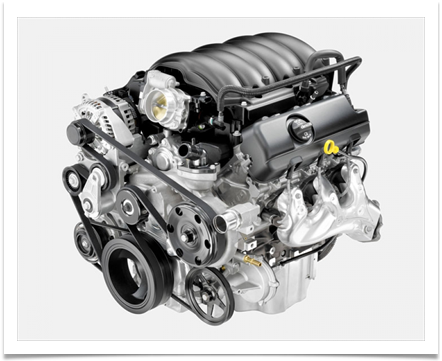
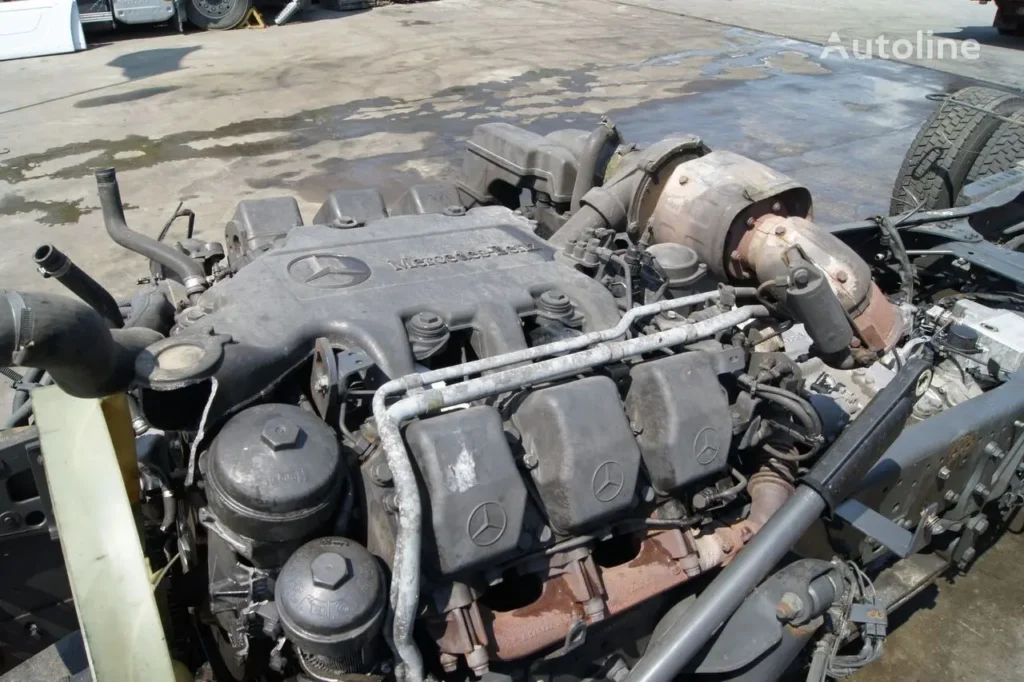
Anyone shopping for a Mercedes-Benz 410 engine for sale is usually dealing with one of two situations: a work van that’s finally worn out after decades of deliveries, or a T1-based camper conversion that’s too good to scrap over a tired motor. Either way, you’re looking at one of the most enduring diesel engines Mercedes ever put into a light commercial chassis, and it’s still worth rebuilding or replacing rather than walking away from the vehicle.
We’ve supplied these engines to mechanics, van converters, and fleet operators on more continents than we can list on one page, so this guide covers what we actually get asked before someone buys — what the engine is, what breaks, and what to expect from the swap.
What Is the Mercedes-Benz 410 Engine?
The “410” isn’t an engine family name in the way “OM602” is — it’s the vehicle designation. The Mercedes-Benz 410D was part of the T1 (also called TN or TN1) van and chassis-cab range built from the late 1970s through the early 1990s, and the 410D variant carried the 2.9-litre OM602 inline-five diesel, the same naturally-aspirated or turbocharged five-cylinder block Mercedes used across several passenger and commercial lines of the era.
When people ask us for a Mercedes-Benz 410 engine for sale, they’re almost always asking for this OM602 unit out of a 410D van, chassis cab, minibus, or ambulance conversion. The T1 range covered a wide payload spread — 207 through 410, roughly — and the 410 badge sat at the top of that range, meaning it typically came with the larger, more powerful five-cylinder rather than the smaller four-cylinder units fitted lower in the lineup.
What makes this engine worth rebuilding rather than replacing with something modern is simple: mechanical simplicity. No electronic engine management, no complex sensor network, and a fuel system a competent diesel mechanic can service with hand tools and a factory manual. That’s exactly why so many of these vans are still working forty years later, and why campervan converters specifically seek this engine out over anything newer.
Mercedes-Benz 410 Engine Specifications
Here’s what you’re actually buying when you order a Mercedes-Benz 410 engine for sale from us:
- Engine Code: OM602
- Configuration: Inline-5, diesel
- Displacement: 2.9 litres (2,874 cc)
- Aspiration: Naturally aspirated or turbocharged, depending on the specific 410D build
- Power Output: Roughly 94–123 hp depending on configuration
- Torque: Approximately 172–210 Nm
- Fuel System: Mechanical (Bosch) fuel injection
- Valve Train: SOHC (single overhead camshaft)
- Cooling: Water-cooled
- Block Material: Cast iron
These figures move a little depending on which market your 410D was originally sold into and whether it left the factory turbocharged, so if precision matters for your paperwork or import declaration, send us the chassis number and we’ll confirm the exact factory rating for your specific Mercedes-Benz 410 engine for sale before it ships.
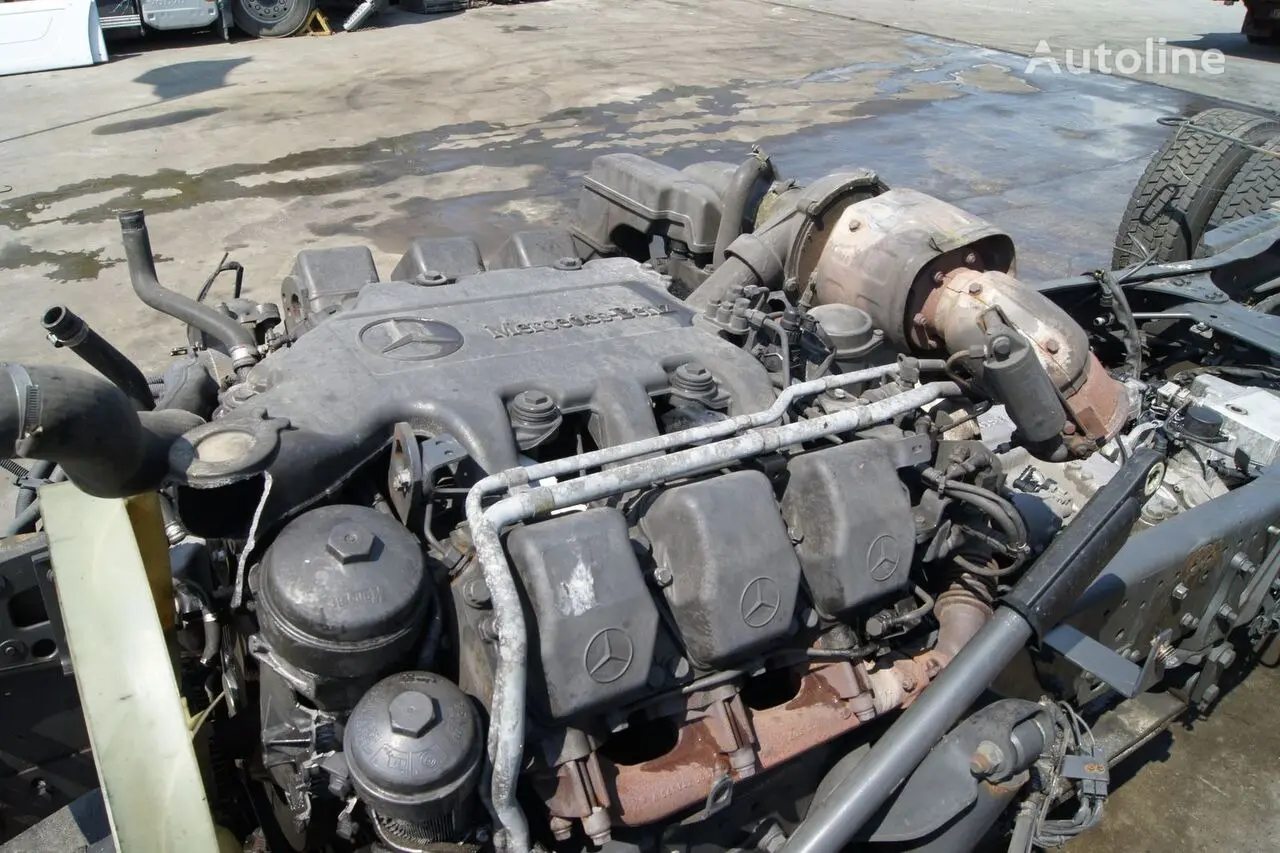
Where This Engine Was Used
The OM602-powered 410D turned up across a genuinely wide range of vehicle bodies, because Mercedes sold the T1 chassis to third-party converters as often as it sold complete vans:
- Mercedes-Benz 410D panel vans
- 410D chassis cabs and flatbed trucks
- 410D minibuses and people-movers
- 410D ambulance conversions
- Camper van and motorhome conversions built on the 410D base
This is part of why the 410D shows up so often in overland and expedition vehicle builds today — the combination of a torquey, simple diesel and a genuinely go-anywhere chassis made it a favorite for exactly the kind of long-term ownership where an engine eventually needs replacing rather than the whole vehicle being scrapped.
It’s also why demand for a Mercedes-Benz 410 engine for sale has stayed steady rather than dropping off the way it has for most other engines this age — the vehicles built on this chassis are still doing useful work decades after they left the factory, and their owners would rather replace a worn engine than replace a chassis and body that still has years of service left in it. Right-hand-drive and left-hand-drive 410D variants both used the same core OM602, though some ancillary brackets and steering-linked components differ, so always confirm your market variant when ordering.
Why the 410D Is a Favorite in the Overland and Camper Community
If you spend any time around expedition vehicle builders, you’ll notice the 410D keeps showing up as a donor chassis long after most of its contemporaries have been scrapped. There’s a reason for that beyond nostalgia.
The combination of a torquey, low-stress diesel and a boxy, easily-insulated body shell makes the 410D an unusually good starting point for a self-built camper. Owners appreciate that the OM602 can be serviced almost anywhere in the world with basic tools, which matters a great deal when you’re several borders away from the nearest Mercedes dealer. That same simplicity is exactly why so many of these builds eventually need a Mercedes-Benz 410 engine for sale rather than a full vehicle replacement — the chassis and body outlast the drivetrain, and swapping the engine is the sensible way to keep a build on the road for another decade.
We’ve shipped engines to more than one long-term overland build over the years, and the pattern is consistent: owners who’ve already sunk months into insulation, plumbing, and a bed platform have zero interest in starting over on a different chassis just because the original engine finally wore out.
Common Problems With the OM602 in a 410D
This engine earns its reliability reputation, but four decades of service reveals the same weak points across most surviving units:
Injection pump wear. The mechanical Bosch pump on these engines can lose calibration over very high mileage, showing up as harder starting, uneven idle, or a slight loss of power. It’s rebuildable, but parts and specialist labor for a pump this old aren’t always cheap or quick to source.
Glow plug and cold-start issues. As a naturally aspirated or lightly boosted diesel with mechanical injection, the 410D depends on healthy glow plugs for reliable cold starts. Worn glow plugs are a common, cheap-to-diagnose cause of hard starting that people sometimes mistake for a bigger engine problem.
Head gasket and cooling system age. At this vehicle age, rubber hoses, gaskets, and seals have usually degraded regardless of how well the internals have held up, and overheating from a neglected cooling system will eventually take its toll on any engine this old.
Oil leaks from aged seals. Rear main seals, valve cover gaskets, and front crank seals on an engine this old are frequently the source of oil seepage rather than any internal wear — usually a straightforward fix rather than a sign the engine itself is failing.
None of these issues are surprising on a diesel engine of this age, and none of them are reasons to give up on an otherwise solid 410D. They’re exactly the kind of wear a properly tested replacement or reconditioned engine eliminates in one step.
Signs Your 410D Actually Needs a New Engine
Plenty of people start looking at a Mercedes-Benz 410 engine for sale before they’ve confirmed the original is genuinely done, so it’s worth running through the warning signs first.
Persistent white or black smoke that doesn’t clear once the engine’s warmed up usually points to worn rings, a failing injector, or an injection pump that’s lost its calibration — all things that get progressively worse rather than better. Grey smoke at idle that clears under load is more often just an old, slightly worn engine that’s still fundamentally sound.
Dropping oil pressure at idle, especially on a warm engine, is one of the more serious signs on a unit this old, since it usually points to worn bearings rather than anything you can service your way out of cheaply. Combine that with a noticeable knock and you’re looking at an engine near the end of its service life rather than one that needs a tune-up.
Excessive oil consumption between changes, with no visible external leak, points toward worn piston rings or valve seals letting oil into the combustion chamber — common on an engine that’s covered genuinely high mileage, and one of the clearer signs that a rebuild or replacement makes more sense than another patch job.
If you’re seeing two or more of these together, you’re past the point where individual repairs make financial sense, and that’s exactly when a tested replacement earns its price.
Comparing the OM602 to the OM616 and OM617
The T1 range didn’t only use the five-cylinder OM602 — smaller badges in the lineup ran the four-cylinder OM616, and some markets saw the related OM617 as well. If you’re cross-shopping engines for a T1 project, it’s worth knowing how they differ.
The OM616 is a 2.4-litre four-cylinder, simpler and lighter than the OM602, but with noticeably less power and torque — it suits the lighter end of the T1 range rather than a fully loaded 410. The OM617, best known from Mercedes passenger cars of the same era, is a 3.0-litre five-cylinder that shares architecture with the OM602 but isn’t a direct factory fit for most 410D applications without adapting mounts and ancillaries.
For a 410D specifically, the OM602 is almost always the correct match, both for power delivery and for a straightforward like-for-like swap that doesn’t require re-engineering your mounts, driveline, or cooling system. If you’re not sure which engine your specific 410D chassis originally carried, send us the chassis number and we’ll confirm before you order.
Shipping and Import Considerations
Because a large share of our Mercedes-Benz 410 engine for sale customers are converters and fleet operators outside the country the vehicle was built for, it’s worth covering what international buyers need to plan for.
Many destination countries treat a used diesel engine differently from a new one for duty and emissions purposes, and some ask for an age or specification declaration before customs releases the shipment. We prepare the commercial invoice and supporting documentation on our end, but check with your local customs broker about country-specific duties before the engine ships.
Given the weight of a complete engine, most international orders ship either as palletized air freight for speed or in a shared sea freight container for a lower cost over a longer transit window — often six to ten weeks depending on the route. We’ll quote both options with realistic timing for your specific country.
Maintenance Tips Once Your Replacement Is Installed
A little discipline after the swap goes a long way on an engine this mechanically simple.
Stick to the recommended oil change interval and use a diesel-rated oil, since the mechanical injection pump and internal bearings depend on clean lubrication more than a modern engine with tighter tolerances might. Bleed the fuel system properly after any filter change — mechanical injection systems are unforgiving of air in the lines and will run poorly or refuse to start until it’s fully purged.
Keep an eye on coolant condition and hose age given how many decades this platform has typically been in service — rubber degrades regardless of how well the internals have held up, and a burst hose on the road is a bigger inconvenience than a scheduled replacement in your driveway.
Restoring the Original vs. Buying a Replacement
If you’re converting or restoring a 410D, you’ll eventually face the choice between rebuilding the original numbers-matching engine or dropping in a tested replacement. There’s no universally right answer, but here’s how we’d frame the decision.
If the vehicle has real collector value tied to its original drivetrain, a full rebuild of your existing OM602 — new pistons, rings, bearings, injection pump service, and a machined head — preserves that value, even though it usually costs more and takes longer than sourcing a replacement.
If you’re building a working vehicle, a camper conversion, or a fleet truck where originality doesn’t matter, a tested Mercedes-Benz 410 engine for sale from an existing donor vehicle gets you back on the road faster and typically for less money than a full rebuild of a worn original.
Either path is valid. What we’d steer you away from is patching a worn OM602 piecemeal for years, spending rebuild money in small increments that eventually add up to more than a full replacement would have cost upfront.
Long Block, Complete Engine, or Rebuild Kit?
We supply this engine a few different ways depending on what your project actually needs.
A long block gives you the block, crank, pistons, and cylinder head assembled, ready for you to transfer your injection pump, manifolds, and accessories across from the old engine. This suits a builder who already has good ancillaries and just needs sound internals.
A complete engine comes with the injection pump, manifolds, and most ancillaries already fitted, which is the faster route for most van conversions and fleet swaps since it minimizes the parts-matching guesswork.
For owners doing their own rebuild, we can also source individual components — pistons, bearings, gaskets — if you just need the parts rather than a full assembled engine.
What’s Actually Included in the Box
Because ancillary parts vary so much between individual 410D builds — conversions especially — we’re specific about what ships with each unit rather than leaving you to guess. A typical complete engine order includes the block, head, injection pump, intake and exhaust manifolds, and the accessories bolted directly to the block, such as the alternator mount and water pump. It does not automatically include the radiator, starter motor, or clutch assembly unless you specifically request them, since these are frequently reused from the original vehicle and swapping them unnecessarily just adds cost.
If you’re not sure what your specific conversion needs, tell us what you’re working with and we’ll put together a parts list before you commit to an order, so there are no surprises when the crate arrives.
Why Buy Your Mercedes-Benz 410 Engine for Sale From Us
We ship a Mercedes-Benz 410 engine for sale to customers worldwide, and here’s what that actually involves:
Every engine gets tested. Compression and leak-down testing happen before anything is listed, and we log the results so you know exactly what you’re buying.
We know this engine’s quirks. Given how many decades these have been in service, we can usually tell you which wear points to check first based on your specific vehicle’s history and mileage.
Worldwide shipping, handled properly. We’ve shipped to converters and fleet operators across Europe, Africa, the Caribbean, and beyond, and we handle the export paperwork so customs isn’t a surprise on your end.
Warranty included. Both used and reconditioned units carry a warranty, and we’re upfront about what it covers.
How to Order Your Mercedes-Benz 410 Engine for Sale
Ordering a Mercedes-Benz 410 engine for sale from us works like this:
- Send us your chassis details. VIN or chassis number, plus the year, so we confirm exactly which OM602 variant your 410D needs.
- Get a firm quote. Covering the engine, any core charge, and freight to your location.
- Place your order. Card, bank transfer, or PayPal, with financing available for qualifying buyers.
- We crate and ship. Palletized and secured, with tracking provided from dispatch.
- Install with support. We’re available if questions come up during the swap.
Frequently Asked Questions
What does a Mercedes-Benz 410 engine for sale typically cost?
Pricing depends on whether you’re buying a tested used unit or a fully reconditioned one, with reconditioned engines priced higher to reflect the rebuild work. Send us your vehicle details for a firm number.
Do you ship this engine internationally?
Yes — we regularly ship to Europe, Africa, the Caribbean, and other regions where the T1 range saw heavy service. Freight cost and timing depend on destination.
Is the naturally aspirated version different from the turbocharged version?
Yes, meaningfully. Power output and some ancillary components differ, so we confirm which version your 410D originally carried before shipping a replacement.
Do I need to return my old engine?
For reconditioned units, a core return is typically part of the deal. Used engine purchases usually don’t require one.
How long does the swap usually take?
A mechanic familiar with this chassis can typically complete the swap in one to two days, depending on what ancillary work is needed.
Can this engine run on biodiesel or other alternative fuels?
Many owners run these mechanical injection diesels on biodiesel blends without issue, though we’d recommend checking your fuel lines and seals for compatibility if you’re switching from standard diesel, since rubber components on an engine this old may need updating regardless of fuel type.
Will a Mercedes-Benz 410 engine for sale from you include the wiring harness?
Since this engine uses mechanical injection rather than an electronic engine management system, there’s minimal wiring involved beyond the starter, alternator, and glow plug circuit — we’ll confirm exactly what’s included based on the specific unit you order.
Get Your Mercedes-Benz 410 Engine Today
If your 410D still has good bones but a tired engine, get in touch with your chassis details and we’ll match you with a tested Mercedes-Benz 410 engine for sale, ready to ship wherever your project is located. Check current stock on our Mercedes-Benz 410 engine for sale listing.
For more on the wider engine family this unit belongs to, see Wikipedia’s overview of the Mercedes-Benz OM602 engine, which covers its use across multiple Mercedes model lines.
If the OM602 isn’t the right fit, we also stock the Mercedes M271 and Mercedes M273 for newer Mercedes-Benz applications.