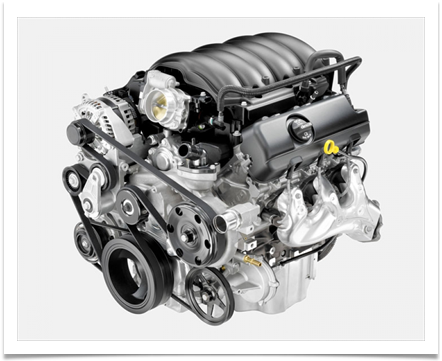
If you’re shopping for a Nissan VQ40DE Engine for sale, you’re probably staring at a truck or SUV with a dead 4.0L V6 and trying to figure out whether it’s worth fixing. Good news: the VQ40DE is one of the more forgiving engines Nissan has ever built, and a used or rebuilt unit is almost always cheaper than what a dealer will quote you for labor alone on a full teardown. This guide walks through what the engine actually is, what it’s worth paying for, and what to check before money changes hands.
We sell these engines every week, so this isn’t theory. It’s the same rundown we give someone on the phone who’s trying to decide between a used pull, a remanufactured long block, or just buying another truck.
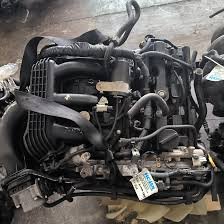
What Is the Nissan VQ40DE Engine?
The VQ40DE is a 3,954cc (4.0-liter) naturally aspirated V6, built with a 60-degree bank angle, dual overhead cams, and four valves per cylinder. It’s part of the larger Nissan VQ engine family, a lineup that includes everything from the 2.0L VQ20 to the high-strung VQ37VHR in the 370Z. The VQ40 is the truck-and-SUV member of that family — bigger bore, longer stroke, tuned for torque instead of redline.
Nissan introduced it for the 2005 model year as the replacement for the older VG33E, and it stuck around for well over a decade in various forms across the lineup. It uses continuously variable valve timing on the intake side (Nissan calls this CVTC), a variable-length intake manifold, hollow lightweight camshafts, and a silent timing chain setup instead of a belt — which matters a lot when you’re evaluating a used one, because there’s no scheduled belt replacement to worry about, just chain wear over very high mileage.
Fueling is straightforward port injection with platinum-tipped plugs and Nissan’s direct ignition system, one coil per cylinder. There’s nothing exotic here — no direct injection carbon buildup issues, no turbo plumbing, no dual-clutch nonsense. It’s a mechanically simple engine that was designed in the mid-2000s and it shows, in a good way.
How the VQ40DE Replaced the Older VG33E
Before the VQ40 showed up, Nissan’s trucks and SUVs ran the VG33E, a 3.3L V6 with roots going back to the late 1980s. It was fine for its era but it was down on power, down on torque, and getting harder to justify against competitors. The VQ40DE wasn’t a mild update — it was a clean-sheet engine from the VQ family, and the jump in both output and refinement was noticeable the moment it landed in the 2005 Frontier and Xterra.
That’s part of why the engine has aged so well. It wasn’t a rushed stopgap; it was Nissan’s real answer for mid-size truck and SUV duty, built with the same engineering family that powered the 350Z and Infiniti’s sedans. You’re not getting a stripped-down economy engine when you buy a VQ40 — you’re getting the truck-tuned version of a platform Nissan trusted across a big chunk of its lineup.
VQ40DE Specs at a Glance
Here are the numbers that actually matter when you’re comparing a listing against factory specs. Output varied a bit by application and model year, so treat the horsepower and torque figures as a range rather than one fixed number.
| Spec | Value |
|---|---|
| Displacement | 3,954cc (4.0L) |
| Configuration | 60° V6, DOHC, 24-valve |
| Bore x Stroke | 95.5mm x 92mm (3.76 in x 3.62 in) |
| Compression Ratio | 9.7:1 |
| Horsepower | 261–275 hp @ 5,600 rpm (varies by application) |
| Torque | 281–290 lb-ft @ 4,000 rpm |
| Fuel System | Multi-point port fuel injection |
| Valvetrain | CVTC variable intake cam timing, silent timing chain |
| Block/Head Material | Aluminum block and heads |
| Production Years | 2005 through the mid-2010s and beyond, market-dependent |
One thing worth calling out: the 9.7:1 compression ratio is on the lower side for a naturally aspirated engine, which is part of why the VQ40 tolerates regular fuel and mediocre maintenance better than a lot of high-strung imports. It’s not a performance engine in the traditional sense — it’s a torque engine, and that’s exactly what it’s supposed to be.
Weight is reasonable for an iron-free V6 — both the block and heads are aluminum, which keeps front axle loading down compared to the cast-iron truck V6s Nissan’s competitors were still building in the mid-2000s. That matters more than people expect for steering feel and front suspension wear over a couple hundred thousand miles.
Why the VQ40 Is a Genuinely Good Engine for a Truck or SUV
Torque curve is the whole story here. Nissan tuned peak torque to arrive at 4,000 rpm rather than making you chase it near redline, which is exactly what you want in something that’s supposed to tow a boat or climb a grade with four people and a cooler in the back. Compare that to a lot of modern turbocharged 2.0L and 2.5L trucks — they’ll match or beat the VQ40’s numbers on paper, but they do it with a turbo that has to spool, more heat in the engine bay, and a lot more that can go wrong ten years down the road.
The VQ40 is basically bulletproof if the timing chain guides were addressed at some point in the truck’s life — ask about that specifically before you buy anything with over 150,000 miles on it, because it’s the one item that can turn a good deal into a bad one. Assuming that’s been handled, or the mileage is low enough that it hasn’t become an issue yet, these things run forever. We’ve pulled them out of wrecked trucks with 220,000+ miles that still had good compression across all six cylinders and no smoke on startup.
Part of the reliability comes down to simplicity. No direct injection means no carbon buildup on the intake valves, which is the single biggest long-term headache on newer engines. No turbo means no wastegate, no intercooler piping, no boost leaks. It’s a naturally aspirated V6 doing a job it was overbuilt for, and that’s a big part of why a Nissan VQ40DE Engine for sale is still worth buying today instead of chasing a newer, more complicated replacement.
None of this means the engine is perfect — nothing with 150,000+ miles on it is — but relative to its era and its class, it holds up better than most. That reputation is exactly why demand for a used or rebuilt Nissan VQ40DE Engine for sale has stayed steady for years instead of drying up the way it does for less-liked engines once a vehicle goes out of production.
Which Vehicles Use the VQ40DE
The VQ40DE saw duty across several Nissan platforms and one Suzuki, since GM’s short-lived Equator was a badge-engineered Frontier built at the same Nissan plant. Here’s where you’ll find it:
- Nissan Frontier (D40) — 2005 through the 2019/2020 model years, the most common home for this engine and usually the easiest to source parts and harnesses for.
- Nissan Xterra — 2005–2015, same basic drivetrain package as the Frontier of the same era.
- Nissan Pathfinder (R51) — 2005–2012, before Nissan moved the Pathfinder to a unibody platform with a V6 from a different family.
- Nissan Navara — the D40-generation Navara sold in a number of international markets used the same 4.0L V6 as the North American Frontier.
- Suzuki Equator — 2009–2013, mechanically a Frontier with different badges and trim.
Beyond factory applications, the VQ40 shows up in a fair number of swap projects — old-school Land Cruisers, Samurai and Sidekick off-road builds, and the occasional Datsun truck restomod. If that’s your plan, budget extra time for the wiring and mounts, because none of those platforms were designed around this engine and you’ll be adapting things instead of bolting in a direct fit.
Between the Frontier, Xterra, and Pathfinder alone, there were roughly a decade’s worth of model years running this exact engine in the U.S. market, which is why parts availability and shared knowledge on the VQ40 is so much better than it is for a lot of other discontinued truck engines. If you’re cross-shopping a Nissan VQ40DE Engine for sale against something rarer, that parts and knowledge base is worth factoring into the decision — it’s a lot easier to find a shop that’s comfortable working on this engine than something with a two-year production run.
Used vs. Remanufactured: Picking the Right Condition
When people ask us for a Nissan VQ40DE Engine for sale, the first question we ask back is what kind of budget and timeline they’re working with, because “used” and “remanufactured” mean genuinely different things and the price gap reflects that.
Used, Low-Mileage Pulls
A used VQ40 is typically pulled from a donor vehicle that was totaled, flooded, or had unrelated damage — a bad transmission, frame damage, something that made the whole truck not worth fixing but left the engine fine. Good used engines get compression tested, get a leak-down check, and get inspected for the timing chain issue before they’re listed. Mileage varies a lot; anything under 100,000 miles is considered strong for a used pull, and we’ll tell you straight if a unit we have is higher than that and why we still think it’s a good buy.
Remanufactured and Rebuilt Long Blocks
A remanufactured VQ40 has been fully disassembled, cleaned, and rebuilt with new wear parts — rings, bearings, gaskets, and often a fresh timing chain kit with updated guides, which solves the number one weak point right out of the box. Cylinder heads get resurfaced or replaced if needed. You’re paying more, but you’re also resetting the clock on the parts most likely to fail, and most remanufactured units carry a longer warranty than a used pull.
If your plan is to keep the vehicle for another 100,000+ miles, a remanufactured engine is usually the better financial call even though the sticker price is higher. If you’re trying to get a work truck running again on a tight budget and you’re realistic about a shorter remaining lifespan, a solid used pull does the job for a lot less money.
What to Check Before You Buy a Used VQ40DE
This is the section to actually read before you send anyone money, whether you’re buying from us or off a classifieds listing from someone you’ve never met.
Timing Chain Tensioner and Guides
This is the VQ40’s most talked-about weak point. The plastic timing chain guides wear over time, and on higher-mileage units the tensioner can’t take up the slack fast enough, which shows up as a rattle on cold start that quiets down after a few seconds. It’s a known enough issue that aftermarket companies sell upgraded guide kits specifically for this engine. A rattle on startup isn’t necessarily a dealbreaker, but it’s a real cost to factor in, and it’s the first thing we check on every used core before it goes back out the door.
Exhaust Manifold Cracking
Some VQ40 owners run into cracked exhaust manifolds, usually after years of heat cycling rather than from any one dramatic failure. It’s not universal, and it’s not usually catastrophic, but it can cause a ticking noise under load and a check-engine light from an exhaust leak throwing off the oxygen sensor readings. Worth a listen and a visual check before you buy, and not a reason to walk away from an otherwise good engine — just something to budget for down the line if it isn’t already an issue.
Wiring Harness and ECU Matching
Nissan changed sensor placement, harness connectors, and ECU calibration across model years and even across trims in the same year. If you’re swapping in a used VQ40, get the harness and ECU from the same donor vehicle whenever possible, or confirm with whoever you’re buying from that the electronics are matched to your application. Mismatched wiring is the single most common reason a “good” engine swap turns into a frustrating troubleshooting project, and it has nothing to do with the engine itself being bad.
We match harness and ECU to the application on everything we ship, and we’ll tell you upfront if something doesn’t have a full electronics set so you’re not surprised later.
Oil Consumption and Maintenance History
Ask whatever you can about maintenance history before you buy. A VQ40 that had its oil changed on schedule with a decent conventional or synthetic blend will almost always outlast one that sat between changes for 8,000 or 10,000 miles at a time. Some minor oil consumption between changes is normal on a higher-mileage unit and isn’t automatically a red flag — a quart every couple thousand miles is common and not something to panic over. What you want to avoid is an engine that’s clearly been run low on oil in the past, which usually shows up as varnish buildup or a burnt smell on the dipstick.
Nissan VQ40DE Engine for Sale: Realistic Price Ranges
Prices swing based on mileage, condition, whether you’re buying a bare long block or a complete drop-in setup with accessories, and whether it’s used or remanufactured. Here’s a realistic range to set expectations before you start shopping around.
| Condition | Typical Price Range | Notes |
|---|---|---|
| Used, higher mileage (150k+) | $900 – $1,600 | Budget option, verify timing chain condition first |
| Used, low-mileage pull (under 100k) | $1,600 – $2,600 | Best value for most buyers |
| Remanufactured long block | $2,800 – $4,200 | New wear parts, longer warranty |
| Complete drop-in with accessories | $3,200 – $4,800 | Includes harness, intake, accessory brackets |
If a listing looks dramatically cheaper than these ranges, ask why. Sometimes it’s a legitimately good deal from someone offloading inventory. Sometimes it’s a core with no compression testing, no warranty, and no return policy. Always ask what testing was done and what happens if it doesn’t run right when it shows up.
Ordering and Worldwide Shipping
We ship engines worldwide, not just domestically, and the process is the same whether you’re a few hours away or on another continent. Once you place an order, the engine is inspected one more time, crated properly for freight, and handed off with tracking. International orders take longer for obvious customs and freight reasons, but we handle the documentation on our end so you’re not the one figuring out tariff codes.
Before you commit, have your VIN or at least your exact model year and trim ready — that lets us confirm you’re getting the right accessory bracket configuration and harness connector type, since those details vary more than people expect across a decade-plus of production. If you’re not sure what you have, reach out through our contact page and we’ll walk through it with you before you order anything.
Every engine we send out gets a written condition report and a warranty that matches its condition tier — used pulls get a shorter warranty than remanufactured units, and we’re upfront about that difference before you pay rather than burying it in fine print.
Freight damage is rare but it happens, so every crate is photographed before it leaves and the carrier information gets sent to you along with tracking. If anything looks off when it arrives — a cracked crate, a shifted engine, anything — document it with photos before you sign for delivery. That paperwork makes a freight claim straightforward instead of a headache, and it’s the same advice we’d give a friend buying a Nissan VQ40DE Engine for sale from any seller, not just us.
Common Questions About the VQ40DE
Is the VQ40DE a reliable engine?
Yes, generally. It’s a naturally aspirated V6 with a straightforward valvetrain and no direct injection carbon issues to worry about. The main thing that shortens its life is neglected timing chain guides on high-mileage units, which is a known and fixable issue rather than a fundamental design flaw.
Can I put a VQ40DE in a vehicle that didn’t come with one?
People do it, mostly in older 4×4 platforms and off-road builds. It’s not a bolt-in job outside of the factory applications, so plan on custom mounts, wiring work, and probably a different transmission adapter depending on what you’re pairing it with.
How much horsepower does a VQ40DE make?
Factory output ranges from about 261 to 275 horsepower and 281 to 290 lb-ft of torque, depending on the model year and which vehicle it was installed in. The Suzuki Equator version and later Frontier revisions sit at the higher end of that range.
What should I budget for a Nissan VQ40DE Engine for sale?
Plan on roughly $900 to $2,600 for a used pull depending on mileage and condition, or $2,800 and up for a remanufactured long block with new wear parts and a longer warranty. Add labor on top of that if you’re not installing it yourself.
Bottom Line
The VQ40DE earned its reputation honestly. It’s not flashy, it doesn’t make headlines, and it’s not the engine anyone brags about at a car show — but it starts, it pulls, and it keeps doing that for a very long time if the timing chain issue gets handled and the basics get maintained. For a Frontier, Xterra, Pathfinder, Navara, or Equator that’s otherwise a good, straight vehicle, dropping in a solid VQ40 is almost always cheaper and more sensible than replacing the whole truck.
If you’re ready to move forward, check our current Nissan VQ40DE Engine for sale listing for available inventory, pricing, and condition details, or browse the rest of our shop if you need other parts for the same build. And if you’ve got questions about fitment, harness compatibility, or shipping to your location before you buy, get in touch — we’d rather answer questions upfront than deal with a return later.