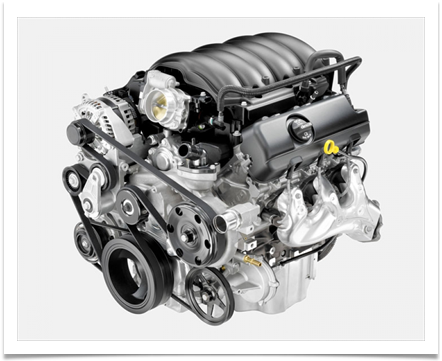
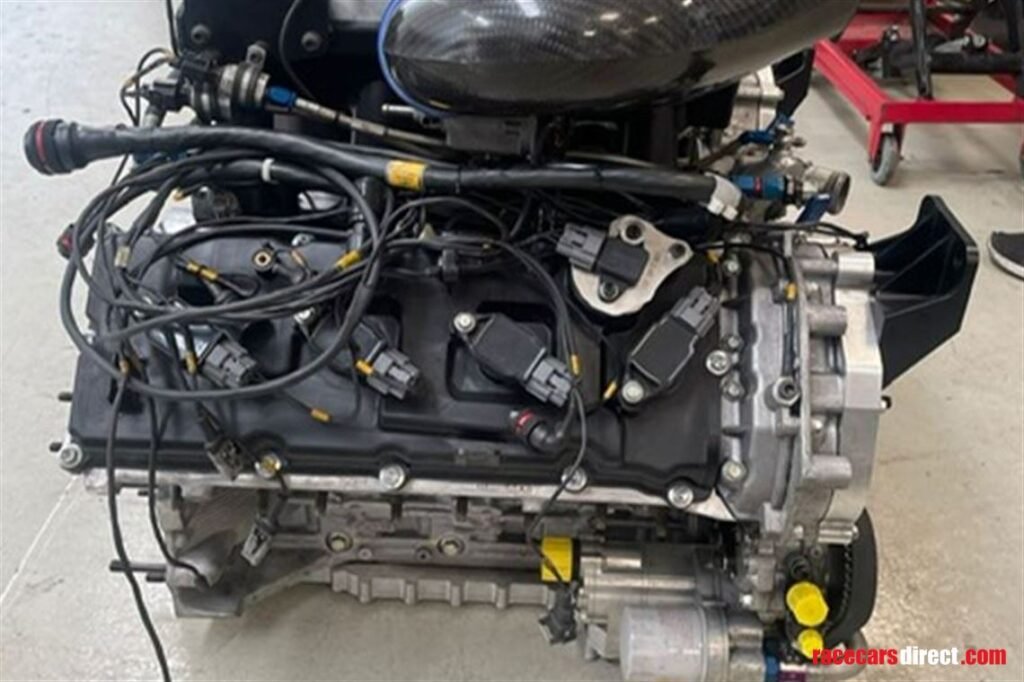
Nissan VK56DE Engine for Sale: A Straight Answer for Titan, Armada, and Patrol Owners
When a Nissan Titan, Armada, Infiniti QX56, or Patrol starts knocking, burning oil, or throwing a code that points to internal engine damage, most owners go through the same mental math: repair it, or replace it. If you’ve ended up here comparing a Nissan VK56DE engine for sale against a quote for machine work and parts, this page is meant to help you make that call with actual information rather than guesswork. We stock tested VK56DE units and ship them worldwide, and below is everything we think you need to know before you commit to either path.
What the VK56DE Is
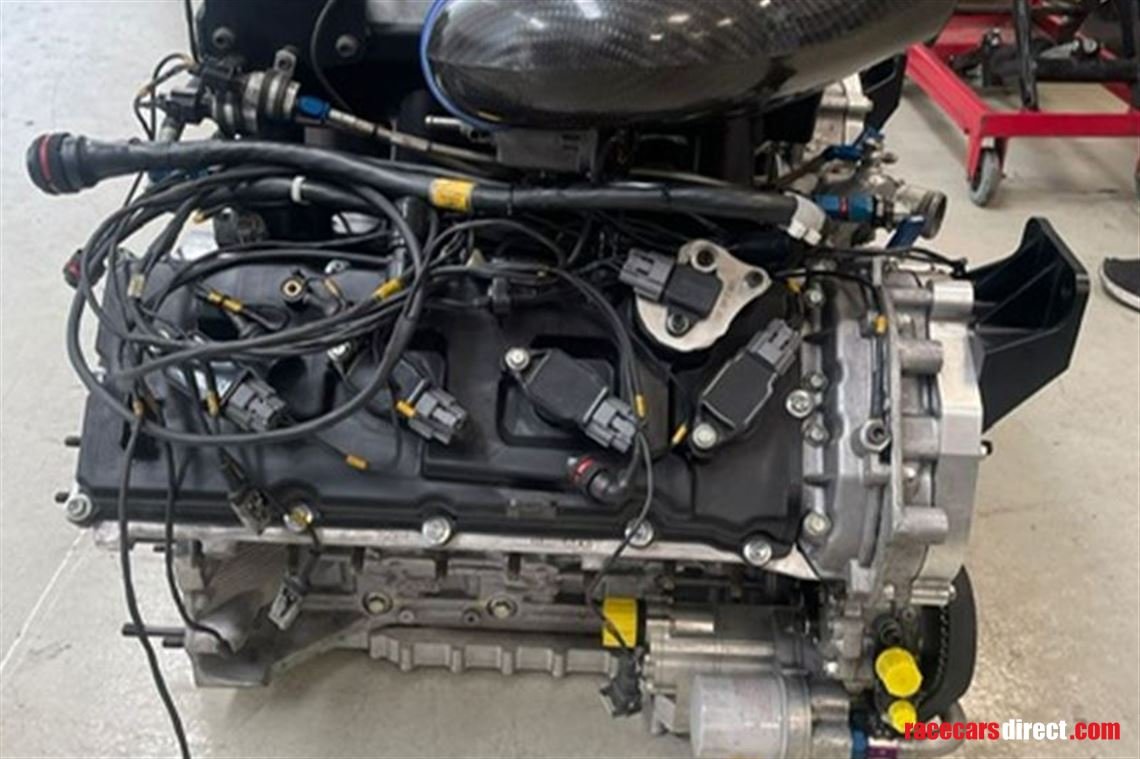
The Nissan VK56DE is a 5.6-litre, naturally aspirated V8 that Nissan introduced in 2003 as part of its VK engine family, built around an aluminium block and heads to keep weight down despite the displacement. It’s a DOHC design with four valves per cylinder and continuously variable valve timing on the intake side, and it was Nissan’s answer to the full-size V8 trucks and SUVs coming out of Detroit at the time — big, torquey, and built to tow.
Depending on the model year and application, Nissan tuned the VK56DE anywhere from around 305 hp up to 320 hp, with torque in the 385–393 lb-ft range. That’s a genuinely strong output for a naturally aspirated engine of this size, and it’s a big part of why the Titan, Armada, and Patrol built a reputation for towing capacity that punched above their weight class.
Nissan VK56DE Specifications
- Displacement: 5,552 cc (5.6 litres)
- Configuration: 90° V8, DOHC, 4 valves per cylinder
- Bore x Stroke: 98.0 mm x 92.0 mm
- Block/head material: Aluminium block and cylinder heads
- Valvetrain: Continuously Variable Valve Timing Control System (CVTCS) on intake
- Pistons: Low-friction, molybdenum-coated
- Power output: approx. 305–320 hp (227–239 kW) at approx. 4,900 rpm
- Torque: approx. 385–393 lb-ft (522–533 Nm) at approx. 3,600 rpm
- Fuel system: Multi-point sequential fuel injection
Every Nissan VK56DE engine for sale on our lot gets checked against these baseline figures during testing, because a tired or previously-repaired unit that’s lost compression won’t come close to matching factory output even if it starts and idles fine on a test stand.
Where This Engine Was Fitted
The VK56DE had a long production run and found its way into more than one badge. The core lineup includes the Nissan Titan (2004–2015), Nissan Armada (2004–2015), Infiniti QX56 (2004–2010), Nissan Patrol (2010–2016 in markets outside North America), Nissan Pathfinder (2008–2012), and the NV2500/NV3500 HD passenger and cargo vans (2012–2016). It even saw motorsport use in GT-R GT1 racing and V8 Supercars, though that’s a long way from the trucks most of our customers are trying to keep on the road.
Because the same basic engine spans trucks, SUVs, and vans across a decade-plus, mounting points, accessory brackets, and wiring harness connectors vary more than you’d expect. We match engines to your specific chassis and year rather than treating “VK56DE” as one interchangeable part number, so double-check your VIN or engine code with us before ordering if you’re not sure.
The Failures That Usually Bring Owners to Us
The VK56DE has a solid reputation overall, but no engine is bulletproof once it’s covered 150,000-plus miles. Here’s what actually shows up on the units we see.
Exhaust manifold cracking
This is probably the single most common complaint on early VK56DE trucks. Heat cycling causes the manifolds to crack, which shows up as a ticking or popping noise, especially noticeable on a cold start that fades as the engine warms up. It’s not usually a sign of internal engine damage, but a lot of owners chase other problems before someone finally traces it back to the manifold.
Timing chain guide and tensioner wear
High-mileage examples can develop a rattle on startup as the timing chain guides wear and the tensioners struggle to keep pace. Left unaddressed for long enough, worn guides can shed plastic material into the oil pan or, in worse cases, let the chain skip timing, which is a much more serious repair. A cold-start rattle that clears up after a few seconds is worth having checked sooner rather than later.
Oil consumption at high mileage
As with most aluminium V8s of this era, ring and valve seal wear past the 150,000–200,000-mile mark can lead to oil consumption between changes. It’s usually gradual rather than sudden, and by the time an owner notices it, compression across the cylinders has often already dropped enough to affect performance.
Knock sensor and wiring issues
Not always a sign of engine damage, but VK56DE knock sensors and their wiring are known to fail or corrode over time, triggering codes and pulling timing that hurts both power and fuel economy. Worth ruling out with a proper diagnostic before assuming the worst about the engine itself.
Catastrophic bottom-end failure
Less common, but it’s the reason most people end up buying a full replacement rather than repairing in place — a spun bearing or a rod knock, usually from a missed oil change interval or running low on oil for too long. Once you hear a deep knock that changes with engine speed, that’s typically the point where a used or reconditioned VK56DE engine for sale becomes the more sensible option over an in-vehicle rebuild.
What We Check Before an Engine Leaves Our Warehouse
Every VK56DE we sell goes through the same process before it’s crated:
- Compression tested on all eight cylinders
- Timing chain and guides inspected for wear or play
- Exhaust manifolds checked for cracks and replaced if needed
- Oil pan and pickup inspected for debris that would indicate prior bearing wear
- Visual inspection of the block and heads for cracks, prior gasket work, or overheating damage
- Where our facility allows it, a bench run to confirm oil pressure and a clean idle
We record mileage where it’s verifiable and give you an honest estimate where it isn’t, rather than guessing a number that sounds better. If you want the compression figures or photos before you buy, ask — we’d rather send them upfront than have you second-guessing the purchase after payment.
Complete Engine vs Long Block
We sell the VK56DE both ways. A complete engine comes with the intake manifold, accessory brackets, and in most cases the harness and sensors already attached, which is the simpler option if your original engine’s accessories are also worn or damaged. A long block — just the short block plus heads — makes sense if your intake, alternator, and sensors are still good and you’d rather transfer them across to save money. Tell us which you need and we’ll quote accordingly rather than defaulting to whichever is more profitable for us to sell.
Shipping Worldwide
We regularly ship VK56DE engines to customers across North America, the Caribbean, South and Central America, the Middle East, and beyond. Each engine is drained, sealed at the intake and exhaust ports, and bolted to a wooden pallet before crating, which is the same process whether it’s headed two states away or across an ocean. We’ll give you a realistic delivery estimate for your country and handle the export paperwork on our end.
Warranty
Every engine we sell carries a standard warranty period from the date of delivery, with extended cover available if you’d like additional protection — particularly worth considering if the Titan or Armada is a work vehicle you can’t afford to have off the road twice. If an issue traces back to something we should have caught during testing, we make it right; that’s not a marketing line, it’s just the standard we hold ourselves to.
Related Engines Worth Comparing
If you’re cross-shopping platforms rather than sticking with a factory match, it’s worth reading about the Nissan ZD30 diesel for load-hauling applications, or our page on the Nissan TD42 if you’re restoring an older Patrol. For most Titan, Armada, and QX56 owners though, matching your original VK56DE is the simplest and most reliable route, since it avoids ECU and wiring compatibility issues entirely.
Repair vs Replace: How to Actually Decide
An in-vehicle rebuild on a V8 like this means pulling the heads at minimum, and often the whole engine, to properly address bearing or ring wear — by the time a shop has quoted machine work, new bearings, gaskets, and the labour to do it twice (out and back in), the total often lands close to, or above, the price of a tested replacement engine that’s ready to drop straight in.
The maths tips further in favour of replacement once you factor in that a shop-rebuilt engine using your original, already-worn block doesn’t come with the same kind of independent verification a pre-tested replacement does. That’s not a knock on good machine shops — it’s just that rebuilding around 150,000-plus miles of wear on the original casting is a different proposition to starting with a unit that’s already been assessed as sound.
Where repair still wins is when the damage is contained to a bolt-on component — a manifold, a knock sensor, an accessory bracket — and the bottom end itself has tested clean. There’s no reason to replace a fundamentally healthy engine over a problem that a few hundred dollars in parts will fix.
Before You Assume You Need a Full Replacement
A cracked exhaust manifold, a failed knock sensor, or a timing chain that hasn’t yet caused damage are all things worth having properly diagnosed before you commit to sourcing a replacement engine — those are comparatively inexpensive repairs on an engine that’s otherwise sound. Where replacement genuinely makes sense is low compression across multiple cylinders, a confirmed rod or main bearing knock, or oil consumption that’s reached the point of needing a top-up between every fill.
If you’re not sure which camp your truck falls into, tell us the symptoms and any diagnostic codes you’ve pulled and we’ll give you our honest read rather than just trying to sell you an engine you might not need yet.
Where Our VK56DE Stock Comes From
A lot of our VK56DE inventory comes from vehicles retired out of the Middle East and North America — regions where the Patrol, Titan, and Armada were sold in high numbers and where fleet vehicles or accident-damaged trucks get parted out well before the engine itself has reached the end of its useful life. That’s a very different source pool from someone pulling a random engine off a scrap heap and hoping the internals are fine. Every donor gets assessed before the engine is pulled, and the engine itself is re-checked once it’s on our bench, so what you’re buying has been looked at twice, not once.
Getting the Installation Right
A few things are worth doing at the same time as the swap rather than after. Fresh motor mounts are cheap compared to the labour of pulling the engine back out later if the old ones were already sagging. If your original engine failed from a cooling issue, flush the radiator and replace the thermostat and water pump rather than reusing parts that may already be compromised.
And if oil starvation played any part in the failure, check the oil pump pickup and pan for debris before bolting the new engine in — sending contaminated oil straight into a good engine is one of the more avoidable ways a replacement ends up back on a lift within months.
VK56DE vs VK56VD — Don’t Mix These Up
Nissan later replaced the VK56DE with the VK56VD, a direct-injection version used in the redesigned Armada, Patrol Y62, and Titan XD. They share a family name and displacement, but they are not interchangeable — different fuel system, different intake, different ECU, and different wiring entirely. If your vehicle is a pre-2016 Titan or Armada, or an early Patrol, you almost certainly have the VK56DE covered on this page. If you’re not sure, send us your VIN rather than guessing from the model year alone, since there was some overlap during the transition years depending on the market.
What Real Owners Actually Get Out of This Engine
Fuel economy was never the VK56DE’s strong point — expect somewhere in the low-to-mid teens (mpg) in mixed driving, worse when you’re towing, which is roughly in line with every other naturally aspirated full-size V8 from the same era. What owners consistently point to instead is how the engine pulls: towing capacity on the Titan and Armada landed at the upper end of the half-ton class, and the Patrol built a name for itself in markets where sustained high-speed desert driving and heavy loads are the norm, not the exception.
If a properly maintained VK56DE has a weakness, it’s less about the engine’s inherent design and more about how forgiving it is of neglect — stretched oil change intervals and ignored cooling system issues are what tend to shorten its life, not any fundamental flaw in the engineering.
Mistakes Buyers Make When Sourcing a Replacement
The biggest one is buying on price alone without confirming what’s included. A VK56DE listed cheap and without a stated mileage or compression figure is a gamble, not a bargain — you may find out later that the manifolds are already cracked or that oil consumption starts up again within a few thousand miles. The second is not confirming whether you’re getting the DE or the VD variant, which as covered above are not interchangeable despite the shared engine family name.
The third is underestimating freight and import costs when comparing suppliers — a well-packed engine with clear, predictable shipping to your country is often better value overall than a slightly cheaper unit from a seller who’s vague about how or when it’ll actually arrive.
We’d rather spend the time answering your questions up front — mileage, compression numbers, what’s included, realistic shipping timelines — than have you find out something was missing after the crate’s already open. If you’re not sure what to ask, just describe the problem with your current engine and we’ll tell you what you actually need.
Frequently Asked Questions
How do I know my truck needs a Nissan VK56DE engine for sale and not a different engine?
Check your engine code on the block itself or provide your VIN and we’ll confirm it for you. The Titan and Armada also offered smaller V8 options in some years, so it’s worth verifying rather than assuming.
What mileage are your used VK56DE engines typically at?
It varies by what’s currently in stock, but we always disclose an honest mileage estimate or verified figure before you buy, along with the compression test results.
Do you ship to my country?
We ship worldwide. Send us your delivery location and we’ll confirm freight options, cost, and an estimated transit time.
Can I buy just the long block and reuse my own intake and accessories?
Yes, that’s a common option for customers whose ancillaries are still in good shape. Let us know when you order.
Is the VK56DE a good engine to keep running long-term, or should I look at a swap?
If your vehicle is otherwise in good condition, a replacement VK56DE is almost always the more practical choice over swapping to a different engine family. It keeps your existing wiring, transmission pairing, and emissions setup intact, which avoids a whole category of compatibility headaches that a cross-platform swap would introduce.
Will you help confirm compatibility before I pay?
Yes. Send your VIN or engine code and we’ll confirm the exact match before you commit to an order, including flagging anything about your specific model year that’s worth knowing.
Ready to Order
If your Titan, Armada, Patrol, or QX56 needs a replacement engine, send us your VIN or engine code and we’ll confirm current stock, condition, and a shipping quote for your location. We keep a rotating supply of tested Nissan VK56DE engines for sale and we’d rather answer every question you have now than leave you guessing once it’s already on its way.