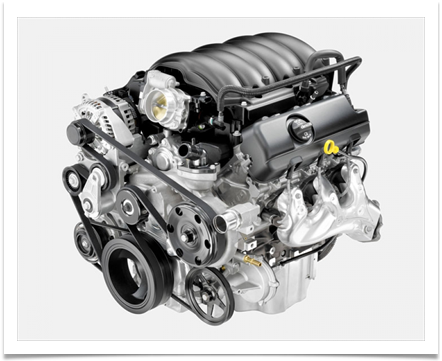
The VR30DDTT is Nissan’s 3.0 litre twin turbo V6, the engine behind the Infiniti Q50 and Q60 3.0t, the Red Sport 400 and the new Nissan Z. Straight out of the box it makes 300 or 400 horsepower, and with a tune it makes a lot more. That is why people love it. It is also why a fair number of these engines end up hurt. If you are searching for Nissan VR30DDTT engine problems, you probably have a warning light, a noise, or a car that suddenly feels down on power.
We are NJ Global Auto Parts, and we sell replacement engines. The VR30DDTT is one we source and ship to owners and workshops all over the world, complete or as a long block. We also see the engines that come out of cars, which gives us a fairly honest view of Nissan VR30DDTT engine problems: what fails, what is just noise on the forums, and when a replacement makes more sense than another repair.
If you need an engine now, read our page on the VR30DDTT engine for sale or send your VIN through our contact page.
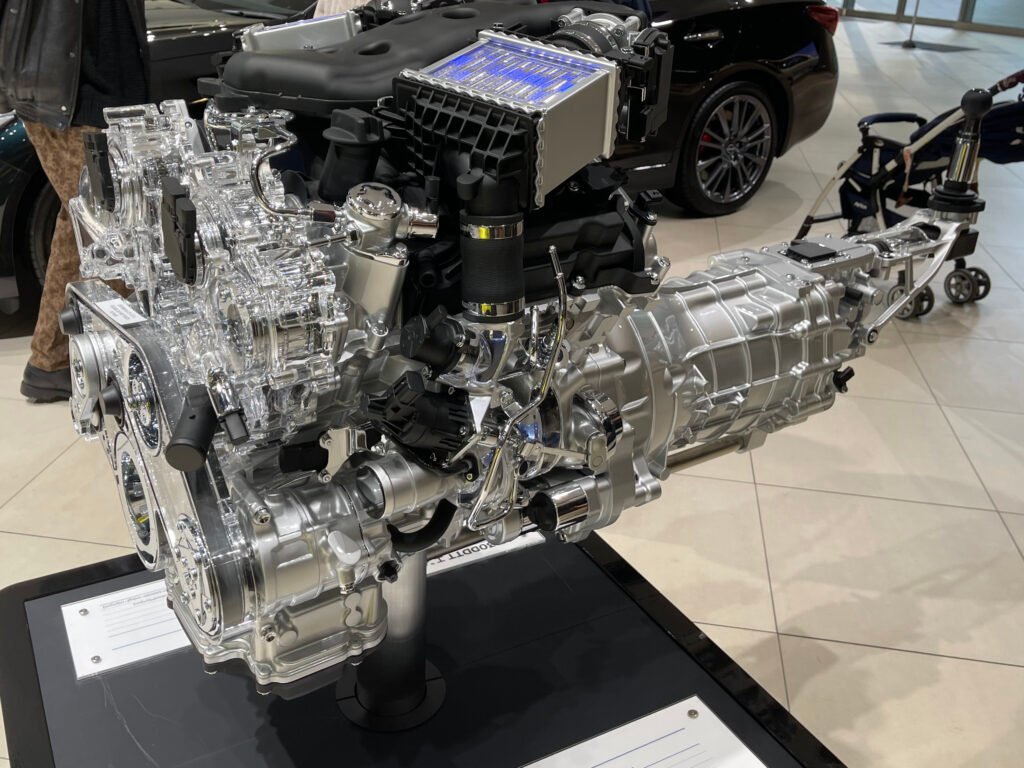
Nissan VR30DDTT Engine Problems: Where to Start
Most Nissan VR30DDTT engine problems sit in a few places: the turbochargers on early cars, the water to air intercooler system, carbon on the intake valves, ignition parts, and anything stressed by tuning. The block and rotating parts are strong for the stock power level. Trouble usually starts at the edges and works inwards.
The early cars, built around 2016 and 2017, had more turbo complaints than later ones. Tuned cars have more of everything. A stock car that has been serviced on time is usually a good, long lasting engine. Keep that in mind before you panic over one bad story online.
VR30DDTT Engine Specifications
| Specification | Nissan VR30DDTT |
|---|---|
| Layout | 60 degree V6, twin turbocharged |
| Displacement | 2,997 cc (3.0 L) |
| Bore x stroke | 86.0 mm x 86.0 mm |
| Valve train | DOHC, 4 valves per cylinder, 24 valves, chain driven |
| Valve timing | Variable on intake and exhaust, electric control on the intake side |
| Fuel system | Direct injection |
| Block | Aluminium with coated cylinder bores, no iron liners |
| Compression ratio | About 10.3:1 |
| Intercooling | Water to air, with its own pump and radiator |
| Power, standard tune | 300 hp (224 kW), 400 Nm |
| Power, Red Sport 400 and Nissan Z | 400 hp (298 kW), 475 Nm |
The 400 horsepower version adds things like turbo speed sensors and an extra water pump for intercooler cooling. It also runs more boost. More boost means more heat, and more heat is behind many of the Nissan VR30DDTT engine problems covered below.
Which Cars Use the VR30DDTT
- Infiniti Q50 3.0t and Red Sport 400
- Infiniti Q60 3.0t and Red Sport 400
- Nissan Skyline V37, including the 400R
- Nissan Z (RZ34) and Fairlady Z
The 300 hp and 400 hp versions share the core engine but differ in turbos, sensors, cooling hardware and software. When you shop for a replacement after Nissan VR30DDTT engine problems, match the version as well as the engine code.
Problem 1: Turbocharger Failure on Early Cars
This is the one that gave the engine a bad name for a while. Some early VR30 cars, mostly from the first couple of model years and especially the 400 hp ones, lost turbos earlier than they should have. Owners reported loss of power, whistling or grinding noises, smoke, and boost related fault codes.
On the Red Sport cars the turbo speed sensors can also throw codes. Sometimes it is the sensor, sometimes it is the turbo telling you something real. A good tech will check both before replacing anything.
Turbos on a V6 like this sit low and tight in the engine bay, so replacing them is a big labour job. If a turbo fails badly and sends bits into the intake, you may be looking at engine damage too. Of all the Nissan VR30DDTT engine problems, this is the one that most often ends with someone calling us for a whole engine.
Problem 2: Intercooler Pump and Water to Air Cooling
The VR30 does not use a big front mounted intercooler. Instead the charge air passes through water cooled intercoolers built into the intake, with a separate coolant loop, pump and small radiator. When the pump stops working, or the loop is low on coolant, intake air temperature climbs fast. The engine pulls timing, power drops, and in hot weather the car can feel like it has a problem nobody can find.
Owners also report the intercooler units themselves leaking coolant in some cases. Coolant in the intake is never good. Watch the level in the intercooler reservoir as well as the main engine coolant. This is one of the cheaper Nissan VR30DDTT engine problems to fix, if you catch it before it causes others.
Problem 3: Carbon Build Up on Intake Valves
With direct injection, fuel no longer washes over the back of the intake valves. Oil vapour from the crankcase ventilation sticks there instead and bakes into carbon. Over tens of thousands of kilometres it builds up, restricts airflow and can cause rough idle, cold start misfires and slow, gradual power loss.
It is not unique to this engine, but it does show up, especially on cars that do a lot of short trips. Walnut blasting the valves is the usual fix for this part of Nissan VR30DDTT engine problems. An oil catch can helps slow it down. Carbon is one of the slower Nissan VR30DDTT engine problems. It does not leave you stranded, it just takes the edge off the engine bit by bit.
Problem 4: Ignition Coils, Plugs and Misfires
Boost is hard on ignition parts. Plugs wear faster, and coils that are fine at stock boost can start to break down when the engine is tuned. Misfires under load, a flashing check engine light and a stutter at high revs are the usual signs.
Running a colder plug, gapped correctly, is common on tuned cars. On stock cars, just change plugs on time. Do not drive on a flashing misfire light, because unburnt fuel overheats the catalysts and a dead cylinder under boost can damage a piston. Small Nissan VR30DDTT engine problems turn into big ones that way.
Problem 5: Tuning and Overboost Damage
This needs saying plainly. The VR30 responds so well to tuning that a lot of owners go there. Many run fine. Some do not, and they make up a lot of the Nissan VR30DDTT engine problems people post about. Aggressive tunes, poor fuel, too much timing and high intake temperatures can lead to detonation. Detonation cracks ring lands and damages pistons. Once that happens the engine burns oil, loses compression and usually has to come out.
A big share of the cores we see with serious Nissan VR30DDTT engine problems came from tuned cars. If you tune, use a known tuner, good fuel, upgrade the intercooler pump and heat exchanger, and log the car. If you buy a used VR30 car, ask if it has been tuned. Many sellers will not volunteer it.
Problem 6: Oil Consumption and Oil Leaks
Some engines use a little oil, and turbocharged direct injection engines tend to use more than old style engines. A small amount between changes is normal. A lot, plus blue smoke, points to worn turbo seals, ring damage from detonation, or a crankcase ventilation fault.
Leaks from the valve cover gaskets, timing cover area and oil cooler lines show up as cars age. Check the dipstick often. Running low on oil kills turbos first, and dead turbos lead to the worst Nissan VR30DDTT engine problems on our list.
Problem 7: Sensors, Fuel System and Electrics
- High pressure fuel pump faults bring lean codes and power loss, most often on tuned cars.
- Turbo speed sensors on 400 hp cars can fail and set codes.
- Charge pipes and couplers can pop off or crack, causing boost leaks.
- Electric intake cam timing faults can set timing codes.
- Water pump and thermostat wear on higher mileage cars.
These are not the scariest Nissan VR30DDTT engine problems, but they are the ones most likely to put your car in the workshop. A proper scan tool and some patience usually find them.
Warning Signs to Watch For
- Check engine light, even if it clears itself
- Power that comes and goes, worse in hot weather
- Whistle, siren or grinding from the turbos
- Blue or grey smoke on start up or under boost
- Oil level dropping between changes
- Coolant level dropping in the intercooler tank
- Stutter or misfire under load
Write down when each sign started and in what conditions. It helps your mechanic a lot, and it helps you tell whether Nissan VR30DDTT engine problems are getting worse.
Stock vs Tuned: A Real Difference
We cannot stress this enough. A stock VR30 with regular oil changes and good fuel is a good engine. The horror stories mostly come from early turbo issues, which were largely dealt with on later cars, and from tuned cars pushed hard. When people ask us if the engine is reliable, our answer is: it depends a lot on what the last owner did with it.
If you are buying a used Q50, Q60 or Z, a pre purchase check that includes a scan, a look for tuning, compression or leakdown test, and an oil check will rule out most Nissan VR30DDTT engine problems before you hand over money.
Things That Get Misdiagnosed
A lot of money gets spent on the wrong parts with this engine. Here are the mix ups we hear about most:
- Power loss blamed on turbos when the real fault is a dead intercooler pump or a low coolant loop.
- Misfires blamed on coils when the plugs are worn or the gap is wrong for the boost level.
- Turbo speed sensor codes leading to new turbos when only the sensor or its wiring had failed.
- Rough idle blamed on injectors when it is carbon on the intake valves.
- Boost codes blamed on the engine when a charge pipe coupler has simply slipped off.
Before you spend big on Nissan VR30DDTT engine problems, ask the workshop how they confirmed the fault. Live data, a smoke test and a proper look at the intercooler loop cost far less than a pair of turbos.
What Repairs Usually Cost, Relatively Speaking
Labour rates vary hugely around the world, so here is how jobs compare rather than exact prices.
| Job | Relative cost |
|---|---|
| Spark plugs | Low |
| Ignition coils, full set | Low to medium |
| Intercooler pump | Low to medium |
| Intake valve carbon clean | Medium |
| High pressure fuel pump | Medium |
| One turbo | High |
| Both turbos | Very high |
| Replacement engine | High, but fixed and known |
The pattern is the same as with most modern turbo engines. The cheap Nissan VR30DDTT engine problems stay cheap if you act early. The expensive ones usually started as cheap ones that were left too long.
Buying a Used Q50, Q60 or Z With This Engine
These cars are good value used, and plenty of people buy them as a cheap route into 400 horsepower. Here is what we would check before buying one:
- Get a full scan for stored and pending codes, not just the dash lights.
- Look for signs of tuning: a handheld tuner, aftermarket intake, downpipes or a changed exhaust.
- Check both coolant reservoirs and the oil level and condition.
- Listen to the turbos from cold and under boost.
- Do a compression or leakdown test if the seller allows it.
- Ask for service records with oil change dates.
A car that passes those checks has dodged the worst Nissan VR30DDTT engine problems so far. A car that fails them can still be a good buy if the price allows for a replacement engine. We are happy to quote one before you commit, so you know the real cost of the car.
What Nissan Changed Over the Years
Like most new engines, the VR30 got quiet updates during production. Turbo complaints dropped after the first couple of years, and software and parts were revised along the way. Later cars, including the Nissan Z, benefit from that. This does not make a later engine immune, but it does mean the early turbo stories should not scare you off a later car on their own.
When we quote engines, we tell you the build year of the donor so you can decide. For some customers facing Nissan VR30DDTT engine problems on an early car, a later engine is worth the small extra cost.
Shipping and Fitting a Replacement VR30
We crate VR30 engines on pallets, seal the openings, and ship by sea or air with tracking. When it arrives, your mechanic should check it against the photos and engine code, transfer any parts your old engine had that the replacement does not, fit new gaskets and fluids, and follow the warranty fitting conditions. Many owners also replace the plugs and check the intercooler loop on fitting, so the new engine starts without any of the old Nissan VR30DDTT engine problems carried over.
How Serious Are Nissan VR30DDTT Engine Problems?
| Fault | How common | Risk if ignored |
|---|---|---|
| Early turbo failure | Mostly early cars | High, debris can damage engine |
| Intercooler pump or leaks | Fairly common | Medium |
| Carbon on intake valves | Common with age | Low to medium |
| Coils and plugs | Common, more on tuned cars | Medium |
| Detonation from tuning | Tuned cars | Very high |
| Oil consumption and leaks | Varies | Medium to high |
| Sensors and fuel pump | Occasional | Low to medium |
Repair or Replace the Engine?
Most VR30 faults are repairs, not reasons to give up on the engine. Not all Nissan VR30DDTT engine problems are fatal. A pump, a set of coils, a carbon clean, even a pair of turbos on a healthy engine. The engine only needs replacing when the inside of it is hurt. These are the cases where we usually step in:
- Cracked pistons or ring lands from detonation
- Turbo failure that sent debris into the cylinders
- Low compression on one or more cylinders
- Bearing damage from oil starvation
- Coolant in a cylinder from an intercooler leak that went too far
- Damage to the coated cylinder bores, which cannot simply be bored oversize like an iron liner
That last point matters. Because the bores are coated rather than lined with iron, a damaged block is hard and costly to repair. For many owners facing internal Nissan VR30DDTT engine problems, a good used or rebuilt engine is the realistic fix.
Buying a Replacement VR30DDTT: What to Check
- Engine code and version. 300 hp or 400 hp, and the model year range.
- Donor car and mileage. Ask what it came out of.
- Tuning history. A stock donor is worth paying more for.
- Compression or leakdown test on all six cylinders.
- Turbos. Included or not, and their condition.
- Oil condition. No metal, no coolant.
- Warranty in writing.
We send engine codes, photos and test results with every quote. If you are replacing an engine because of Nissan VR30DDTT engine problems, you should not have to guess about the next one.
Keep Your VR30 Healthy
- Change oil more often than the long factory interval, especially if you drive hard.
- Use good fuel, and the right octane for your tune.
- Let the engine warm up before using full boost.
- Check both coolant reservoirs at every fill up or two.
- Replace plugs on time, sooner if tuned.
- Consider an oil catch can to slow carbon build up.
- Fix boost leaks and misfires straight away.
Do these and most Nissan VR30DDTT engine problems stay small and cheap.
Why Buy From NJ Global Auto Parts
We are an engine supplier. When a VR30 needs replacing, we can offer:
- Used VR30DDTT engines from known donor cars
- Complete engines or long blocks
- 300 hp and 400 hp versions matched to your car
- Photos and test details before you buy
- Worldwide shipping, crated and tracked
- A written warranty
Have a look at our Nissan engines or the guide to used Nissan engines for sale.
Other Nissan Performance Engines We Supply
- Nissan VR38DETT from the GT-R, with our VR38DETT buying checklist
- Nissan RB26DETT
- Nissan VQ40DE V6
- Nissan VK56DE V8
- Mitsubishi 4B11T for Evo owners
Or browse everything in the shop.
For Workshops and Tuners
If you build or service VR30 cars, you will see Nissan VR30DDTT engine problems more often than most. When a customer’s engine is done, the fastest route back on the road is a known good engine. We do trade pricing and can source engines for builds, including stock low mileage engines that make a good base for a tuned setup.
How to Order
- Send your VIN, engine code and delivery country.
- We confirm the version and send details and photos.
- You get a written quote with engine, warranty and shipping.
- Once confirmed, we crate and ship with tracking.
Start on our contact page.
Nissan VR30DDTT Engine Problems FAQ
Is the VR30DDTT reliable?
In stock form and serviced properly, yes. Most Nissan VR30DDTT engine problems are early turbo issues, intercooler cooling faults, carbon build up and damage from aggressive tuning.
Which years had turbo problems?
Complaints were most common on early cars from around 2016 and 2017, especially the 400 hp versions.
Does the VR30 have a timing belt?
No, it uses timing chains.
Can a VR30 block be rebored?
Not in the normal way. The bores are coated, not lined with iron, so a damaged block is usually replaced rather than machined.
Is a 400 hp engine a direct swap for a 300 hp car?
Not simply. Turbos, sensors, cooling hardware and software differ. Talk to us before buying.
How much power can a stock VR30 take?
Many run well past stock with tuning, but the risk of Nissan VR30DDTT engine problems rises with every step. Heat control and good fuel matter more than the number on the dyno sheet.
Do you ship worldwide?
Yes.
Fix Nissan VR30DDTT Engine Problems Before They Grow
The VR30 is a great engine with a short list of known weak points. Keep it cool, keep the oil fresh, keep the tune sensible, and most Nissan VR30DDTT engine problems will never reach the inside of the engine. If yours already has, we can get a good replacement to you wherever you are.
Send your details on the contact page, browse our used engines, or read more on the blog. For background, see the Nissan VR engine family and this explainer on gasoline direct injection.