If you have been shopping for a replacement engine, you have probably seen the words long block and short block on every quote and listing, and nobody stops to explain them. The long block vs short block engine question matters more than people think. Pick the wrong one and you either pay for parts you did not need, or you get an engine on the shop floor that cannot go in the car until you buy another pile of parts.
We are NJ Global Auto Parts. We sell complete used engines, long blocks and short blocks for Toyota, Nissan, Mercedes, BMW, Isuzu, Mitsubishi, Cummins and more, and we ship them worldwide. This guide is the same talk we have with buyers on the phone every week. By the end you will know what comes with each, what it costs you in labour, and which one makes sense for your car.
If you already know what you need, browse our used engines for sale and send us your engine code.
Long Block vs Short Block Engine: The Short Answer
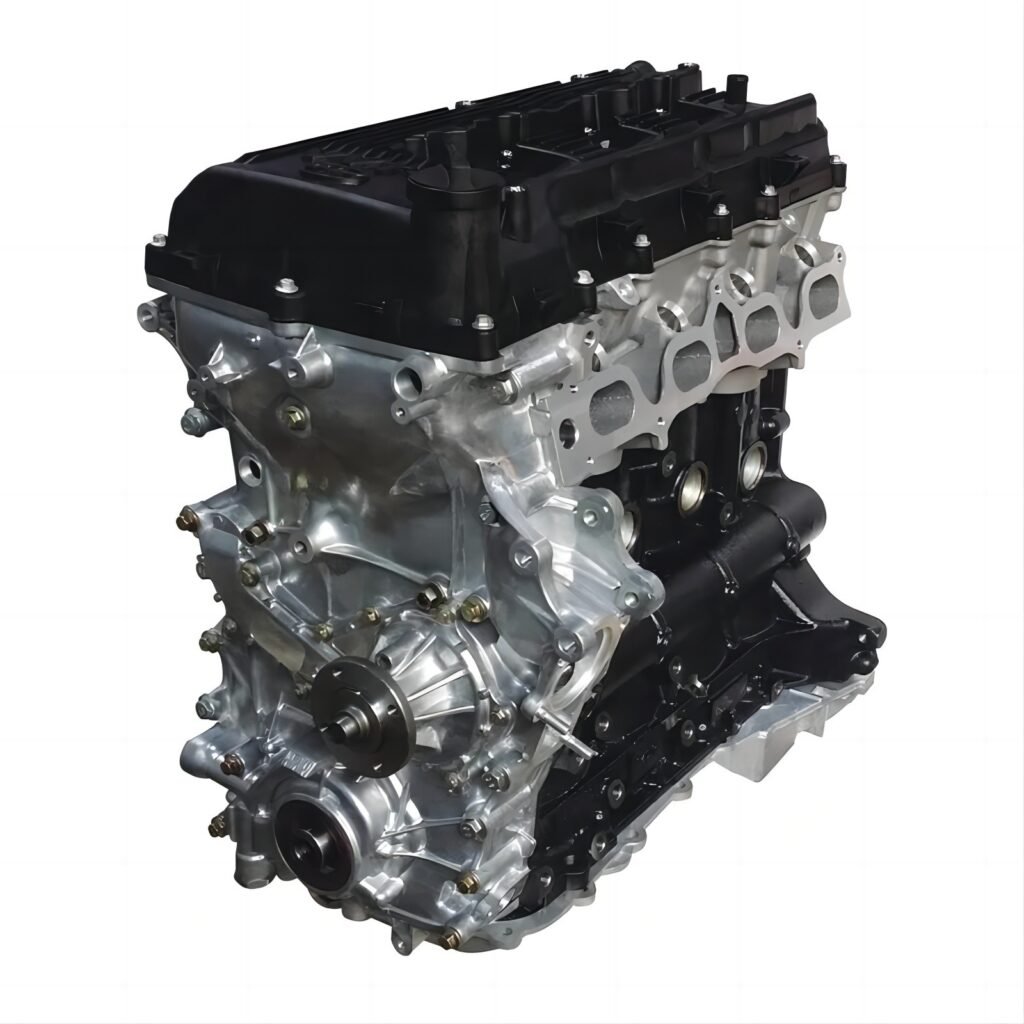
A short block is the bottom half of the engine. A long block is the bottom half plus the top half. That is really it. Everything else in the long block vs short block engine debate comes down to how much work you want to do yourself and how much of your old engine you can trust.
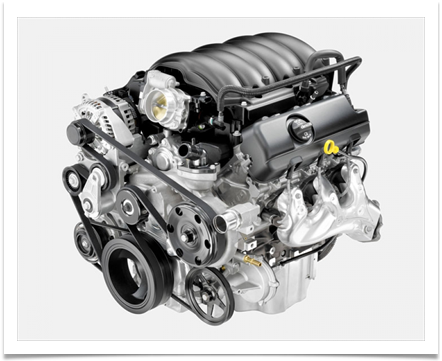
Think of it like a house. The short block is the foundation and the walls. The long block adds the roof. A complete engine, which we also sell, is the whole house with the furniture already inside: intake, exhaust manifolds, injectors, sensors, alternator and the rest.
Most of our customers end up choosing between a long block and a complete engine. Short blocks make sense for a smaller group of buyers, mostly engine builders and workshops with good heads already on the bench. We will get to why.
What Is a Short Block?
A short block is the engine block with the rotating assembly fitted inside it. On most engines that means:
- Cylinder block (cast iron or aluminium)
- Crankshaft and main bearings
- Connecting rods and rod bearings
- Pistons, piston rings and wrist pins
- Sometimes the oil pump, depending on the supplier
- Sometimes the timing cover and oil pan, but often not
What you do not get is the cylinder head, the camshafts, the valves or the valve train. You also do not get the timing chain or belt in most cases. Every supplier draws the line a little differently, so always ask for a parts list. When we quote a short block we write down exactly what is on it, because a vague quote is where most arguments start.
A short block is the right choice when the bottom end of your engine is finished but the head is fine. A spun rod bearing, a cracked piston, a scored cylinder wall or a broken crank are all bottom end problems. If the head was checked and it is flat with good valves, a short block can save you money.
What Is a Long Block?
A long block is the short block with the cylinder head or heads already bolted on and timed. A typical long block includes:
- Everything in the short block
- Cylinder head or heads, with valves, springs and seals
- Camshafts and lifters or rockers
- Head gasket, fitted and torqued
- Timing chain or belt, with guides and tensioner
- Timing cover, oil pan and valve covers on most units
A long block normally does not include the intake manifold, exhaust manifolds or turbo, the fuel injectors, the wiring harness, the sensors, the water pump on some engines, or the alternator, starter and AC compressor. You move those over from your old engine.
When people come to us asking about the long block vs short block engine choice, a long block is what we recommend most of the time. It removes the part of the job most likely to go wrong, which is setting up the head and timing, and it still lets you reuse your good external parts.
Long Block vs Short Block Engine: Side by Side
Here is a simple long block vs short block engine comparison of what you get and what you take on with each option.
| Item | Short Block | Long Block | Complete Engine |
|---|---|---|---|
| Block, crank, rods, pistons | Yes | Yes | Yes |
| Cylinder head(s) and valves | No | Yes | Yes |
| Camshafts | No | Yes | Yes |
| Timing chain or belt | Usually no | Yes | Yes |
| Oil pan and valve covers | Sometimes | Usually | Yes |
| Intake and exhaust manifolds | No | No | Yes |
| Injectors, sensors, harness | No | No | Yes |
| Turbo (diesel or turbo petrol) | No | No | Usually |
| Labour to install | Highest | Medium | Lowest |
| Price of the part | Lowest | Medium | Highest |
| Risk of fitting mistakes | Highest | Low | Lowest |
The table makes the long block vs short block engine trade off pretty clear. The cheaper the part, the more work and risk sits on your side of the bench.
Specifications to Check on Any Long Block or Short Block
Whatever side of the long block vs short block engine choice you land on, the numbers have to match your old engine. Not close. Match. Here are the main specifications we confirm before any long block or short block leaves our yard:
- Engine code. Stamped on the block. 1GR-FE, YD25DDTi, M276 and so on.
- Displacement. In cc or litres.
- Bore and stroke. These tell you the piston and crank match.
- Compression ratio. Different versions of the same engine family can have different pistons.
- Timing type. Chain or belt, and which generation of guide.
- Head type. DOHC, SOHC, number of valves, variable valve timing on one or both cams.
- Sensor and mounting points. Knock sensor location, crank sensor, engine mount bosses.
Here are real specs for some of the engines we stock most often as long blocks or complete units:
| Engine | Layout | Displacement | Bore x Stroke | Valvetrain | Common Vehicles |
|---|---|---|---|---|---|
| Toyota 1GR-FE | V6 petrol | 3,956 cc | 94.0 x 95.0 mm | DOHC 24v, chain | Prado, 4Runner, Hilux, FJ Cruiser, Tacoma |
| Toyota 2TR-FE | I4 petrol | 2,694 cc | 95.0 x 95.0 mm | DOHC 16v, chain | Hilux, Hiace, Prado, Tacoma |
| Toyota 1KD-FTV | I4 turbo diesel | 2,982 cc | 96.0 x 103.0 mm | DOHC 16v, belt | Hilux, Prado, Fortuner, Hiace |
| Toyota 2UZ-FE | V8 petrol | 4,664 cc | 94.0 x 84.0 mm | DOHC 32v, belt | Land Cruiser 100, Tundra, Sequoia, 4Runner |
| Nissan YD25DDTi | I4 turbo diesel | 2,488 cc | 89.0 x 100.0 mm | DOHC 16v, chain | Navara, Pathfinder, Urvan |
| Isuzu 4JJ1 | I4 turbo diesel | 2,999 cc | 95.4 x 104.9 mm | DOHC 16v, gear/chain | D-Max, MU-X, N-Series |
If you want a deeper look at any of these, we have full guides on the Toyota 1GR-FE engine and the 2AR engine, plus product pages for the Toyota 2TR engine and the Toyota 1KD engine.
Long Block vs Short Block Engine Cost: Where the Money Really Goes
On price tags alone, the short block always looks like the bargain. That is where a lot of buyers get caught. The real cost of the long block vs short block engine choice is the part plus the labour plus the parts you did not expect to buy.
With a short block, your mechanic has to:
- Strip your old head, check it for flatness and cracks, and often send it to a machine shop
- Replace valve stem seals, maybe valves and guides
- Buy a new head gasket set and new head bolts (many are torque to yield and cannot be reused)
- Buy a new timing kit, because nobody should put an old chain on a fresh bottom end
- Set up cam timing correctly, which on some twin cam V6 and V8 engines is a long job
Machine shop work alone can cost more than the long block vs short block engine price gap. Add the hours and the long block often comes out cheaper in the end. That is the honest answer most of the time.
Here is a rough way to think about it. These are general proportions, not quotes, because prices change with the engine, the market and shipping:
- Short block part: the lowest price, but expect head work, gaskets and timing parts on top
- Long block part: usually somewhere in the middle, with less extra spending
- Complete engine: the highest part price, but the fewest extra parts and the fastest install
Send us your engine code and we will price all three so you can compare properly. That is the only way to settle the long block vs short block engine question with real numbers.
When a Short Block Makes Sense
We do sell short blocks. For some buyers they win the long block vs short block engine comparison. A short block is worth it when:
- Your cylinder head has already been inspected and passed, or was recently rebuilt
- You are an engine builder or workshop with a machine shop you trust
- You are building a performance engine and want to choose your own head work
- The failure was clearly in the bottom end: rod knock, piston failure, low compression on one cylinder from a cracked piston
- You have time. The car can sit in the shop a little longer
If two or more of these sound like you, the long block vs short block engine choice may lean toward the short block. If none of them do, it probably does not.
When a Long Block Is the Better Choice
For most drivers and most workshops, a long block is the sweet spot in any long block vs short block engine comparison. Pick a long block when:
- The engine overheated. Heat warps heads and cracks them. Reusing an overheated head on a new bottom end is a gamble
- The timing chain or belt jumped or broke. On interference engines that bends valves
- You do not know the history of your head
- You want the car back on the road quickly
- You want the top and bottom of the engine to wear in together
That first point is a big one. Many engines come to us dead from overheating, especially diesels like the 1KD-FTV and the Nissan ZD30. In those cases the head is often the first thing to go, and that settles the long block vs short block engine debate straight away.
What About a Complete Engine?
Some buyers skip the long block vs short block engine debate altogether. They want to drop in a running engine and go. A complete engine, sometimes called a drop out or a full assembly, comes with most of the bolt on parts already fitted.
A complete used engine is the most common thing we sell. Workshops like them because the install is faster and the mechanic can see the engine was running as a unit. Importers like them because they can sell straight to the customer with no extra parts hunting.
The only catch with a complete engine is that you need the exact version. Sensors, harness plugs, injectors and manifolds can change by year and market. We match by engine code and by your vehicle details to get that right. If you want the background on buying used, our rebuilt vs used engine guide is a good read.
Long Block vs Short Block Engine: 7 Proven Checks Before You Buy
Whether you go long block, short block or complete, these are the checks we tell every buyer to make. They come from years of watching long block vs short block engine orders go wrong.
1. Confirm the Engine Code From the Block, Not the Car
Engines get swapped. The car might say 4.0 V6 but the engine in it might be a different version. Read the code stamped on the block and send us a photo. This one step clears up half of all long block vs short block engine mix ups.
2. Ask for a Written Parts List
What is on the block? Oil pan? Timing cover? Oil pump? Water pump? A written list protects both sides. We send one with every quote.
3. Ask How It Was Tested
For used long blocks and complete engines, ask about compression or leak down figures, oil pressure if it was run, and photos inside the oil filler and spark plug holes. For short blocks, ask if the crank turns freely and whether the bores were checked.
4. Check the Mileage Claim Against the Condition
Low mileage is nice, but condition is what matters. A clean inside the valve cover, no sludge and no milky oil tell you more than a number.
5. Plan Your Gasket and Timing Parts
With a short block you will need a full gasket set, head bolts and timing parts. With a long block you still need intake and exhaust gaskets, a rear main seal check and fresh fluids. Put these in the budget before you compare prices.
6. Understand the Warranty
Read what is covered and what voids it. Most warranties need proof of a correct install, new filters and fluids, and a working cooling system. Our terms are on the refund and returns policy page.
7. Check Shipping and Import Costs
A long block is lighter than a complete engine, and a short block is lighter again. That can matter for air freight. Sea freight is usually the cheapest for any long block vs short block engine order going overseas. See our shipping policy for how we pack and send.
Common Mistakes With a Long Block or Short Block
We have seen most long block vs short block engine mistakes. These are the ones that cost people real money:
- Reusing torque to yield head bolts. They stretch on first use. Reuse them and the head gasket can fail.
- Not finding why the old engine failed. If it died from a blocked radiator, a dead fan or a bad oil pump pickup, the new engine will die the same way.
- Skipping the oil cooler and lines. Metal from a spun bearing hides in the cooler and goes straight into the new engine.
- Wrong cam timing on twin cam engines. Off by one tooth and you get poor running at best, bent valves at worst.
- Mixing parts from different engine versions. Pistons, heads and sensors can look the same and still not match.
- Not priming the oil system. Crank it with the fuel and ignition off until you have oil pressure before the first start.
None of these are hard to avoid. They just need someone to slow down. A good workshop will do all of this whatever side of the long block vs short block engine choice you land on.
Diesel vs Petrol: Does It Change the Answer?
A bit. Diesel changes the long block vs short block engine maths. Diesel engines run higher compression and put more load on the head gasket and head bolts. Many diesel heads also have injector sleeves, glow plugs and precombustion chambers that need checking. Reusing an old diesel head is more work than reusing a petrol head.
So for diesels like the Isuzu 4JK1, Mitsubishi 4M40 or Cummins 4BT, we usually point buyers to a long block or a complete engine. On large petrol V8s with two heads and four cams, like the Toyota 1UZ, 2UZ and 3UZ, the labour saved by a long block is big as well.
On simple four cylinder petrol engines with one head, the long block vs short block engine call is closer, and a short block is easier to live with. Even then, a long block still wins on time.
Used, Rebuilt or Remanufactured Long Blocks
The long block vs short block engine choice is one decision. Used, rebuilt or remanufactured is another one, and it sits on top. You can buy:
- Used long block or complete engine. Pulled from a vehicle, inspected and tested. The best price.
- Rebuilt long block or short block. Worn parts replaced by a machinist. Middle price, more confidence.
- Remanufactured long block. Brought back to factory specification with all wear parts new. The highest price, the longest expected life.
We explain the difference properly in our new guide on remanufactured vs rebuilt engine options. If you are still unsure, call it a two step choice. First decide how much of the engine you need. Then decide what condition you want it in.
How We Prepare a Long Block or Short Block for Shipping
Engines get damaged in transit more than people think, so every long block vs short block engine order gets the same packing. Here is what we do before anything ships:
- Drain all fluids and fog the cylinders with oil to stop rust
- Cap every open port: intake, exhaust, water, oil and vacuum
- Bolt the engine to a pallet or crate so it cannot roll
- Wrap it to keep out water and dust
- Label it with the engine code, order number and your details
- Send you photos before it leaves
We ship to workshops, importers and private buyers worldwide, by sea or air. Payment and billing details are on our billing terms page.
Installation Tips Your Mechanic Will Thank You For
Whatever you choose in the long block vs short block engine match up, a clean install is what makes it last. Pass these to your mechanic:
- Flush or replace the radiator, and fit a new thermostat and hoses
- Replace the water pump if it is not already new
- Clean or replace the oil cooler
- Fit a new oil filter and the correct grade of oil, and change it again after the first 1,000 km
- Check the engine mounts. Old soft mounts let the engine move and stress hoses
- Clear old fault codes and check for new ones after the first drive
- Drive gently and vary the speed for the first few hundred kilometres
If you want to read up on how blocks and heads are built, the engine block and cylinder head pages give a good overview of the parts we have been talking about.
Which Engines Can We Supply as a Long Block or Short Block?
For any long block vs short block engine order, most of the engines on our site can be supplied as a complete unit, and many as a long block. Short blocks depend on stock. Popular requests include:
- Toyota: 1GR-FE, 2AR, 2GD-FTV, 1VD-FTV, 3UR-FE, 2JZ
- Nissan: YD25, TD42, VK56DE
- Mercedes: M276, M278, M272
- BMW: N63, M57
- Isuzu and Mitsubishi: 4HK1, 4D56
Do not see yours? Ask anyway. Our shop only shows part of what we can find.
Long Block vs Short Block Engine FAQ
Is a long block a complete engine?
No. A long block has the block and head together, but not the manifolds, sensors, injectors and accessories. A complete engine has those.
Is a short block cheaper overall?
The part is cheaper. In the long block vs short block engine sum, the job often is not, once you add head work, gaskets, timing parts and labour.
Can I put my old head on a new short block?
Yes, if the head is checked, flat and in good order. If the engine overheated, get it tested first.
Do you sell long blocks with a warranty?
Yes. Terms depend on the engine and condition. We put them in writing with the quote.
Do you ship worldwide?
Yes. We ship to most countries by sea and air.
What details do you need for a quote?
Engine code, vehicle make, model and year, VIN if you have it, and your delivery country. Tell us whether you want a long block, short block or complete engine and we will price the long block vs short block engine options side by side.
Get a Long Block vs Short Block Engine Quote Today
You do not have to settle the long block vs short block engine question alone. Tell us what happened to your old engine and what your mechanic found, and we will tell you plainly which option makes sense and what it will cost delivered.
Send your engine code and delivery country through our contact page. You can also browse Toyota engines, read more about us, or find more buying guides on our blog.