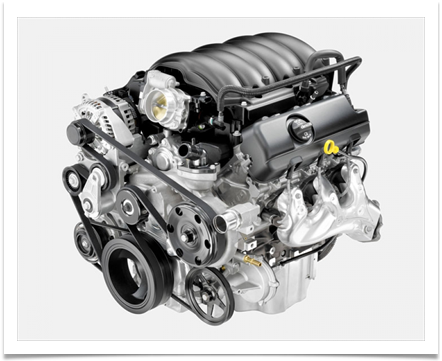
Finding a genuine Mercedes-Benz M159 for sale isn’t like shopping for a used family car engine — this is a hand-built, dry-sump AMG V8 that only ever went into one model, and the supply of good used and rebuildable cores gets thinner every year. If you’re rebuilding an SLS AMG, restoring a track car, or sourcing a donor engine for a serious build, you need a supplier who actually understands what makes this engine different from the M156 it’s based on, not just a parts lister who’s copied a spec sheet.
We source, test, and ship M159 engines to collectors, specialist shops, and SLS AMG owners around the world, and this guide covers everything we get asked before someone commits to buying one.
What Is the Mercedes-Benz M159 Engine?
The M159 is AMG’s 6.2-litre naturally aspirated V8, built specifically for the Mercedes-Benz SLS AMG from 2010 through 2015. It shares its basic architecture and displacement with the M156 V8 found in other AMG models of the same era, but the M159 isn’t just a rebadged M156 — AMG made over a hundred individual changes to the design, most notably switching to a dry-sump lubrication system to keep the engine fed with oil under the extreme cornering loads a mid-front-engine supercar generates.
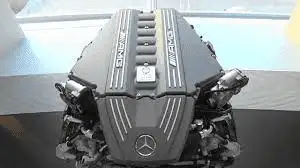
Every M159 is hand-assembled at AMG’s engine facility in Affalterbach, Germany, by a single technician who signs a plaque on the engine cover — a detail AMG enthusiasts take seriously, and one worth confirming when you’re buying a used unit, since the signature plate is part of what verifies authenticity.
If you’re hunting for a Mercedes-Benz M159 for sale specifically because you want the SLS AMG’s exact engine rather than a related AMG V8, that dry-sump system and the SLS-specific mounting and accessory layout are the details that separate it from the M156 — they’re not interchangeable without significant adaptation.
Mercedes-Benz M159 Engine Specifications
Here’s what you’re actually getting with this engine, depending on which SLS AMG variant it came out of:
- Displacement: 6.2 litres (6,208 cc)
- Configuration: Naturally aspirated V8
- Lubrication: Dry-sump system
- Power Output: 563 hp (standard SLS AMG) up to 622 hp (Black Series)
- Torque: Approximately 479 lb-ft (650 Nm), up to 502 lb-ft on the GT3 variant
- Redline: Around 7,200 rpm on standard variants, 8,000 rpm on the Black Series
- Assembly: Hand-built, one engine per technician, signed plaque
- Applications: SLS AMG Coupe, Roadster, GT, GT3, and Black Series
- Production Years: 2010–2015
Because AMG built several distinct performance tiers on this same basic engine, always confirm which specific variant you’re being quoted before comparing prices for a Mercedes-Benz M159 for sale — a standard SLS unit and a Black Series unit are not the same engine internally, even though they share a block casting.
Where the M159 Was Used
Unlike most engines on our site, the M159 has an unusually short and specific list of applications, since AMG built it for one model family only:
- Mercedes-Benz SLS AMG Coupe (2010–2014)
- Mercedes-Benz SLS AMG Roadster (2011–2015)
- Mercedes-Benz SLS AMG GT and GT Roadster (2012–2015)
- Mercedes-Benz SLS AMG Black Series (2013–2015)
- Mercedes-Benz SLS AMG GT3 (racing variant, 2011–2014)
That narrow application list is exactly why demand for a genuine Mercedes-Benz M159 for sale stays strong — there’s no badge-engineered version in a cheaper, more common car to pull parts from. Every one of these engines came out of a car that was expensive when new and is now a genuine collector’s item.
The SLS AMG’s Place in AMG History
It’s worth understanding why a Mercedes-Benz M159 for sale commands the kind of attention it does among collectors and specialist shops, rather than just treating it as another used V8.
The SLS AMG was AMG’s first from-scratch, in-house-developed gullwing supercar, built as a modern tribute to the original 300 SL. Every SLS came with a naturally aspirated engine at a time when the rest of the industry was already moving toward turbocharging for efficiency reasons, and AMG built the M159 specifically to make that naturally aspirated approach work at supercar performance levels — high compression, dry-sump lubrication for sustained high-g cornering, and a bespoke intake and exhaust system tuned for both power and the engine note AMG wanted the car known for.
That combination of purpose-built engineering and a strictly limited production run is exactly why values for both complete cars and standalone engines have held up so well, and why a genuine, verifiable Mercedes-Benz M159 for sale is worth paying a premium for over an unverified or salvage-sourced alternative.
Common Issues Owners Run Into
The M159 is a fundamentally well-engineered engine, and outright failures are rare compared to a lot of turbocharged performance engines of the same era. That said, here’s what actually comes up:
Carbon buildup on intake valves. Like most direct-injection engines, the M159 doesn’t wash fuel across the back of the intake valves the way older port-injected engines did, so carbon deposits build up over time and can eventually affect idle quality and throttle response. Periodic walnut-blasting or chemical cleaning keeps this in check.
Spark plug fouling on short trips. An engine this highly strung doesn’t love a life of short errands — spark plugs can foul prematurely if the car isn’t regularly driven hard enough to burn off deposits cleanly.
Rod bearing wear on abused examples. Track-driven or aggressively launched cars can show earlier bearing wear than a gently driven example. This is exactly the kind of thing a proper compression and oil-analysis check reveals before you buy.
Cost of parts. This isn’t a defect so much as a reality of ownership — because so few of these engines exist, individual components can be expensive and sometimes slow to source compared to a mainstream AMG V8.
None of these are reasons to avoid the engine. They’re reasons to buy from a supplier who actually tests before listing, rather than gambling on an untested pull from a salvage auction.
Signs an M159 Needs Rebuilding or Replacing
Because so few of these engines change hands, most buyers looking at a Mercedes-Benz M159 for sale are doing so because their own unit has a specific, identified problem rather than a vague suspicion. Still, it’s worth knowing the warning signs.
A knock audible under load, especially one that changes pitch with rpm, points toward bearing wear and should be taken seriously on an engine that spins this high and this hard. Persistent oil pressure warnings, particularly under sustained cornering loads, can indicate a dry-sump pickup or pump issue rather than a bearing problem — worth diagnosing carefully given how different this lubrication system is from a conventional wet-sump V8.
A rough idle that doesn’t resolve after a proper carbon cleaning and plug service usually points to something more serious, whether that’s a compression issue on one or more cylinders or a wiring or sensor fault that needs proper diagnostic time rather than guesswork.
The GT3 Variant and Track Use
Worth a special mention: the GT3 racing variant of the M159 differs meaningfully from the road cars, with a different state of tune, revised torque output around 502 lb-ft, and components built to endurance racing standards rather than road-car service intervals. If you’re sourcing a Mercedes-Benz M159 for sale specifically for a track build or a GT3 restoration, confirm you’re being offered the correct racing-spec unit and not a road-going block being represented as something it isn’t. We can verify this distinction from casting numbers and documentation before you commit to a purchase.
For owners running road cars on track days rather than full competition, the standard road-going M159 handles this reasonably well thanks to the dry-sump system’s resistance to oil starvation under sustained lateral g-force, but it’s still worth having oil temperature monitored on a car doing repeated track sessions, since sustained high-rpm running generates more heat than the car will typically see on the street.
Shipping and Import Considerations for a High-Value Engine
Because a Mercedes-Benz M159 for sale represents a meaningfully larger investment than a typical replacement engine, international shipping gets handled differently than it would for a common production unit.
We insure these shipments for their full value, not just a nominal freight insurance amount, and we provide the detailed documentation many countries require for importing a high-value performance component, including provenance and, where available, service history. Customs treatment varies significantly by country for a component this specialized, so we’d recommend checking with your local import agent about duties and any special declarations before the engine ships, particularly if it’s headed somewhere with strict rules around performance or racing parts.
Transit is almost always air freight for an engine at this value, given how much sea freight’s longer transit window and higher handling risk matters when the cargo is effectively irreplaceable.
Maintenance Tips for a Dry-Sump AMG V8
Once you’ve sourced and installed your engine, a few habits matter more here than they would on a conventional wet-sump V8.
Use only the oil specification AMG calls for, and don’t stretch oil change intervals on a dry-sump system — the additional plumbing and external tank mean there’s more surface area for degraded oil to cause problems, not less. Warm the engine properly before pushing it hard, since the dry-sump pump needs a moment to fully prime cold, and give it a similarly gentle cool-down after hard driving rather than shutting down immediately after a spirited run.
Stay on top of carbon cleaning intervals given the direct-injection design, and don’t ignore a rough idle or hesitation on throttle tip-in — on this engine, catching carbon buildup early is far cheaper than diagnosing a problem that’s been left to develop into something else.
Buying Used vs. a Fully Rebuilt M159
Given how few of these engines exist, the used-versus-rebuilt decision looks a little different here than it does for a mass-produced engine.
Used M159 engines we source are typically pulled from SLS AMG donor vehicles that were written off in accidents rather than mechanical failure, then compression tested and inspected before listing. This is usually the more accessible option and preserves the original hand-built unit rather than replacing internals.
Fully rebuilt M159 engines go through a complete teardown with new bearings, seals, and gaskets, machined back to factory tolerances. Given the cost and rarity of parts, a rebuild on this engine is a bigger undertaking than on a common production V8, and we’ll walk you through realistic timelines if that’s the route you need.
Verifying Authenticity Before You Buy
Given the price point involved, it’s worth spending extra time confirming exactly what you’re being offered before you send a deposit on any Mercedes-Benz M159 for sale, from us or anyone else.
Start with the signature plaque on the engine cover — every genuine M159 carries the name of the AMG technician who hand-assembled it, and a missing or clearly non-original plaque is an immediate red flag. Cross-reference the casting numbers on the block against the documentation you’re given, and ask specifically whether you’re looking at a standard road-car unit, a Black Series engine, or a GT3 racing block, since these command very different prices and aren’t interchangeable in value even though they look similar at a glance.
Ask for photos of the dry-sump tank and lines as installed, not just the block on a stand, since a reputable seller will have no reason to avoid showing you the complete unit. If a seller can’t answer basic questions about which SLS variant the engine came from, or can’t produce a casting number, treat that as a reason to keep looking rather than a minor gap in paperwork — engines at this value are exactly where scams and misrepresented parts show up most often, and a few extra questions upfront save a lot of grief later.
We provide full documentation and photos before you commit to any Mercedes-Benz M159 for sale from our inventory, precisely because we understand how much this verification matters to serious buyers.
Long Block or Complete Engine?
We supply the M159 in a couple of configurations depending on what your project needs.
A long block includes the block, crank, pistons, rods, and heads assembled, with the dry-sump tank, intake, and accessories transferred from your original engine. This suits a builder who has good ancillaries already and just needs sound internals.
A complete engine includes the dry-sump system, intake, and wiring harness section already fitted, which minimizes the parts-matching work on a car where getting the dry-sump plumbing wrong has real consequences for lubrication.
What’s Actually Included When You Order
Because this engine’s dry-sump plumbing and accessory layout are so specific to the SLS chassis, we’re precise about what ships with each unit. A complete engine order includes the block, heads, dry-sump tank and lines, intake manifold, and the accessories bolted directly to it. It does not automatically include the transmission, driveshaft, or the car’s specific wiring harness beyond the engine-side connectors, since these are typically reused from the original vehicle.
If your project needs additional components beyond the engine itself, tell us what you’re working with and we’ll quote a complete package rather than leaving you to source ancillary parts separately.
Why Buy Your Mercedes-Benz M159 for Sale From Us
Sourcing a Mercedes-Benz M159 for sale isn’t like sourcing a common engine, and we treat it accordingly:
Every engine is compression tested. Given how expensive a bad surprise is on this engine, we don’t skip testing to move inventory faster.
We verify the specific variant. Standard SLS, GT, Black Series — we confirm exactly which version you’re getting and disclose known history where we have it.
Worldwide shipping for high-value engines. We’ve shipped M159 units to specialist shops and collectors across Europe, the Middle East, and Asia, with the insurance and documentation a unit this valuable actually needs.
Warranty on tested units. We’ll talk through exactly what’s covered rather than leaving you guessing.
How to Order Your Mercedes-Benz M159 for Sale
Ordering a Mercedes-Benz M159 for sale from us works like this:
- Tell us the specific SLS variant. Coupe, Roadster, GT, or Black Series, plus the VIN if you have it.
- Receive a detailed quote. Covering the engine, any documentation needed for a high-value shipment, and freight.
- Place your order. Wire transfer is common for engines at this price point, though card and financing are available too.
- We arrange secure shipping. Crated, insured, and tracked from dispatch to delivery.
- Installation support. We’re available for questions from a shop unfamiliar with the dry-sump system’s specific requirements.
Frequently Asked Questions
How much does a Mercedes-Benz M159 for sale typically cost?
Pricing varies significantly by variant and condition, with Black Series and GT3 units commanding a premium over standard SLS units. Send us your specifics for an accurate quote.
Is the M159 the same as the M156?
No — they share a basic architecture and displacement, but the M159 has a dry-sump lubrication system and other AMG-specific revisions not found on the M156.
Do you ship this engine internationally?
Yes, with appropriate insurance and documentation given the engine’s value. We’ve shipped to buyers across Europe, the Middle East, and Asia.
Can I verify the engine is genuine before buying?
Yes — every M159 carries AMG’s signature plaque from the technician who assembled it, and we can provide photos of this and any other identifying marks before you commit.
Do I need to return my old engine?
For a full rebuild service using your own core, yes. For an outright replacement purchase, typically not, though terms vary by order.
What’s the difference between a standard SLS engine and a Black Series unit?
The Black Series version of the M159 runs a higher state of tune, revised internals, and a higher redline, producing meaningfully more power than the standard SLS engine. We’ll confirm exactly which spec you’re being quoted before you order.
Can a specialist shop unfamiliar with AMG dry-sump systems install this engine safely?
A shop experienced with performance V8 installations can generally handle it, but we strongly recommend working with someone who has specific dry-sump experience, since incorrect priming or plumbing on this system can cause oil starvation that a conventional wet-sump mechanic might not anticipate.
Get Your Mercedes-Benz M159 Today
If you’re restoring or maintaining an SLS AMG and need a genuine, tested engine, get in touch with your vehicle’s specifics and we’ll match you with the right Mercedes-Benz M159 for sale, wherever you’re located. Check current availability on our Mercedes-Benz M159 and M156 engine listing.
For more background on this engine family, see Wikipedia’s overview of the Mercedes-Benz M156/M159 engine, which covers the full development history across AMG models.
If you’re working on a different AMG model, we also carry the Mercedes-Benz M157 and the M178/M177/M176 family.