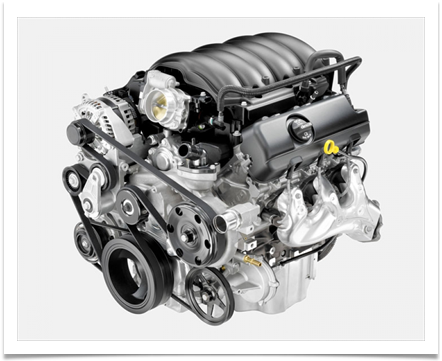
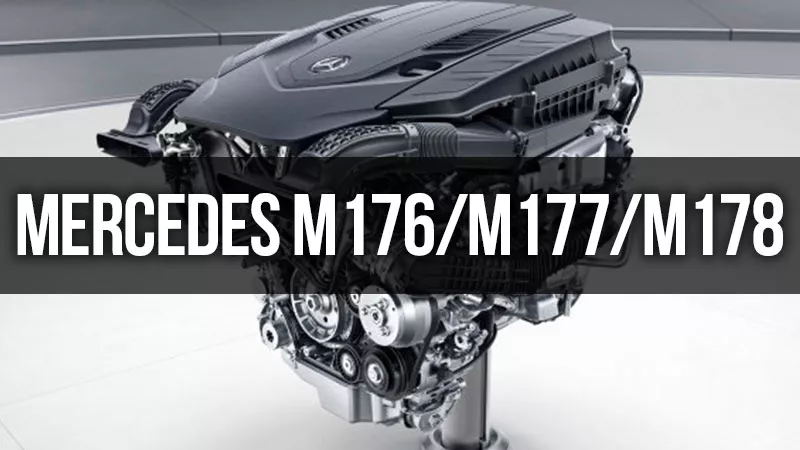
If you’re searching for a Mercedes-Benz M178, M176, or M177 engine for sale, you’re not shopping for something you can pick up at any parts counter. This is the twin-turbo 4.0L V8 family that powers everything from the AMG G-Class and S-Class down to the C63, E63, and the AMG GT sports car, and finding a properly tested used or remanufactured unit takes more than a quick search and a credit card. We keep these engines in stock, we test what we sell, and we ship worldwide, so wherever your AMG or performance build is sitting, we can get a real, verified M178, M176, or M177 engine to you without the guesswork you get from an auction listing with three blurry photos and no history.
This page covers what separates the M176, M177, and M178 from each other, the actual specifications behind this engine family, what we check before calling one ready to ship, and how buying and shipping works. If you’ve been hunting for a Mercedes-Benz M178, M176, or M177 engine for sale and want facts instead of a sales pitch, this is it.
What Are the M176, M177, and M178 Engines?
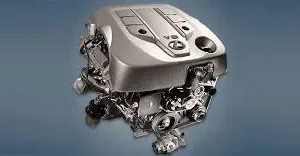
These three engine codes all describe the same basic architecture: a 4.0-liter, twin-turbocharged V8 that Mercedes-AMG introduced starting around 2014 and has kept refining ever since. It’s what enthusiasts call a “hot-V” design, meaning the twin turbochargers sit in the valley between the two cylinder banks instead of hanging off the outside of the engine. That layout shortens the exhaust path to the turbos, which sharpens throttle response and lets the engine breathe better than the old outside-mounted setup on earlier AMG V8s.
The three codes exist because Mercedes uses this same core block across a wide range of vehicles with different performance targets and different lubrication needs. The M176 is the version built for everyday AMG performance SUVs and sedans. The M177 is the higher-output version found in AMG’s dedicated performance cars. The M178 is the motorsport-flavored version built specifically for the AMG GT sports car, with a dry-sump oiling system so it can handle sustained high-G cornering without starving for oil. If you’re not sure which code your vehicle actually needs, tell us the chassis and model year and we’ll confirm before anything ships, because these engines aren’t interchangeable without checking.
Mercedes-Benz M178, M176, and M177 Engine Specifications
Here’s what’s actually under the hood across this engine family. All three share the same fundamental architecture, with differences mainly in tuning, oiling system, and output.
| Spec | Detail |
|---|---|
| Engine family | Mercedes-AMG M176 / M177 / M178 |
| Configuration | 90-degree V8, twin-turbo “hot-V” layout |
| Displacement | 4.0L (3,982cc) |
| Bore | 83 mm (3.27 in) |
| Stroke | 92 mm (3.62 in) |
| Compression ratio | 10.5:1 |
| Valvetrain | DOHC, 4 valves per cylinder |
| Max engine speed | 7,200 rpm |
| Block material | Cast aluminum, closed-deck |
| Cylinder head | Cast aluminum (M178 uses a zirconium alloy head) |
| Fuel system | Direct injection, piezo-electric injectors, up to 5 injections per combustion cycle |
| Lubrication | Wet-sump (M176, M177), dry-sump (M178) |
| Horsepower range | Roughly 456 to 740 hp across the family, depending on model and rating |
| Torque range | Roughly 443 to 664 lb-ft, depending on model and rating |
| Production years | 2014 to present |
That’s a wide spread because Mercedes tunes this same core block differently for a G-Class, a C63 sedan, and a track-focused AMG GT. Tell us the exact model and trim you’re working on and we’ll confirm which specific engine code and rating fits, rather than guessing off a general search for M178, M176, or M177 engine parts.
M176 vs M177 vs M178: What’s the Real Difference?
The M176 is the version you’ll find in the AMG G-Class, and in S-Class and GLE/GLS 580 models starting around 2019. It’s tuned more for smooth, sustained power delivery than outright track performance, runs a wet-sump oiling system, and on the newer versions adds a 48-volt mild hybrid system that helps fill in low-end torque and smooths out stop-start behavior.
The M177 is the one most people mean when they say “AMG V8.” It’s in the C63, E63, S63, GT63, GLC63, GLE63, and GLS63, and it’s also been used by Aston Martin in models like the DB11, Vantage, DBX, and DB12. Like the M176, it runs a wet-sump system and picked up the same 48-volt hybrid assist on later production. This is the version tuned hardest for outright horsepower and torque in a road car package, and it’s the one you’ll see most often when people search for a Mercedes-Benz M177 engine for sale for a C63 or E63 build.
The M178 is the odd one out, and it’s built specifically for the AMG GT sports car. Because the GT is a dedicated performance car that sees sustained high-lateral-G cornering on track days, Mercedes gave the M178 a dry-sump oiling system instead of the wet-sump setup on the other two. A dry sump keeps oil pressure stable under hard cornering and braking in a way a conventional oil pan can’t, which matters a lot more in a car built to be driven hard on a track than it does in an SUV. If your car is a GT-based chassis, you need the M178 specifically, not an M176 or M177, because the oiling system and mounting aren’t a direct swap.
Why Buyers Choose a Tested Engine From This Family
Most people looking for a Mercedes-Benz M178, M176, or M177 engine for sale have already priced a factory remanufactured unit or a full rebuild through an AMG specialist and landed on used and tested for one simple reason: cost. These are complex, expensive engines to rebuild properly. Between the piezo injectors, the turbo hardware sitting in the hot-V valley, and the aluminum block and head work if anything’s damaged, a full rebuild on this platform can run well into five figures before labor is even finished. A tested used engine that’s already proven it runs clean, holds boost, and doesn’t have metal in the oil gets a car back on the road for a fraction of that, and a lot faster too.
There’s also the reality that AMG-specific machine shops and dealer parts departments aren’t cheap or fast. If your car is down and you need it back, sourcing a verified used M176, M177, or M178 and having a competent shop drop it in is usually the quickest path to actually driving the car again, instead of waiting weeks on a parts order and a full teardown.
A lot of our repeat customers are independent AMG and Mercedes shops who’ve been burned once by a “tested” engine from somewhere else that turned out to be a smoker with a cracked turbo housing hidden under a fresh coat of engine paint. We don’t do that. If an engine doesn’t check out, it doesn’t get sold as a running unit.
What a Used Engine Inspection Actually Catches
Before any M176, M177, or M178 in our inventory gets listed as tested and ready, it goes through a real inspection, not a wipe-down and a photo. That means a compression check across all eight cylinders to confirm the rings and valves are sealing properly, a look at oil condition and the drain plug or filter for metal that would point to bearing or piston wear, a check of the turbos for shaft play and oil leaks since the hot-V layout makes turbo failures on this family expensive and hard to spot from the outside, and a check of coolant for any sign of oil or exhaust contamination that would flag a head gasket problem.
Where possible, we also run the engine and listen for knock, check for smoke under load, and confirm boost builds properly without any hesitation or fault codes tied to the turbo or injection system. An engine that doesn’t pass doesn’t go out labeled as a running M178, M176, or M177. It gets repaired first, or it’s sold honestly as a core or parts unit and marked as exactly that. That difference is the whole reason to buy from a seller who actually tests instead of one who just lists whatever comes in.
Common Issues to Know About
No performance engine this complex is issue-free, and it’s worth knowing what to watch for before you buy from anyone. Carbon buildup on the intake valves is common on direct-injection engines like this one, since there’s no fuel washing over the valves the way there is on port injection, and it shows up as a rough idle or slight power loss over time. Turbo wear and oil leaks around the hot-V turbo housings are a real consideration on higher-mileage units, which is why we specifically check turbo shaft play before anything ships. Timing chain tensioner wear has been a known issue on early production years of this family, and it’s worth confirming service history on that point if you’re buying from anyone, us included. Oil leaks from valve cover gaskets and the oil cooler lines are common cosmetic-level issues that don’t affect running condition but are worth knowing about going in.
None of this makes the M176, M177, or M178 a bad engine to buy used, it just means the inspection has to be real. That’s exactly why we test before we list instead of just cleaning an engine up for photos.
Comparing a Used Engine to a Remanufactured or New Option
A lot of buyers searching for a Mercedes-Benz M178, M176, or M177 engine for sale started out pricing a dealer remanufactured unit first and backed off once they saw the number, especially once labor and ancillary parts got added in. Going new or factory remanufactured makes sense if the car is going to be a long-term keeper and the budget supports it. But for a lot of owners and independent shops, that math doesn’t pencil out, particularly on a car that’s already got some age and mileage on the rest of the drivetrain.
A tested used engine from this family sits in the middle ground. You’re not paying dealer markup for machine work and parts you can’t verify, and you’re not gambling on an untested core either, since we’ve already run compression and functional checks before listing it. For most AMG owners weighing a repair against the value of the car, that’s the option that actually makes financial sense.
How We Source Our Inventory
We don’t build our stock of M176, M177, and M178 engines by buying blind and hoping for the best. These come out of vehicles being parted for reasons that have nothing to do with the engine, collision damage, electrical or body issues, or a fleet or dealer moving inventory. When one comes in, it goes through our inspection process before it’s ever listed, and we keep notes on what we found so we can give you a straight answer instead of a guess when you call.
The market for AMG engines has its share of sellers who repaint a valve cover, snap a photo, and list an engine as tested without ever actually running it. We’d rather sell fewer engines to customers who trust what we tell them than move volume on units we haven’t verified ourselves.
Installation Notes for Your Shop
If your shop is handling the swap, a few things are worth confirming up front. Match the exact engine code, M176, M177, or M178, to your chassis, since the dry-sump M178 in particular has different mounting and oil system requirements than the wet-sump M176 and M177. Confirm your wiring harness and ECU compatibility, since AMG models often run chassis-specific tuning and immobilizer pairing that needs to be addressed during the swap. Replace turbo oil feed and drain lines, valve cover gaskets, and any accessory belt hardware during install rather than reusing worn parts, since a clean engine can still develop a leak from old gaskets that weren’t replaced. And budget time for proper ECU adaptation and a post-install road test before calling the job finished, since these engines rely heavily on correct sensor calibration to run and boost properly.
Signs Your Current Engine Needs Replacing
If you’re trying to decide between a repair and a full replacement, a few signs point clearly toward replacement. Persistent low compression on multiple cylinders that isn’t tied to one bad component usually means the block or heads have worn past a point where patch repairs make sense. Metal in the oil, especially fine metal collecting on a magnetic drain plug, points to bearing or piston wear that’s only going to get worse with more miles. A turbo that’s smoking, whining, or showing excessive shaft play, combined with boost-related fault codes, often means the turbo hardware and possibly the engine internals have taken real damage. And persistent coolant loss with no visible external leak usually points to a head gasket or internal crack that’s more cost-effective to solve with a proven replacement engine than another round of repairs on a tired one.
If any of that sounds familiar, it’s worth getting a straight quote on a tested M176, M177, or M178 before sinking more money into a repair that might not hold.
Payment and How Shipping Actually Works
Once we’ve confirmed the exact engine code and fitment for your vehicle, we take payment, crate the engine properly, and ship it out. We ship worldwide, so no matter where you or your shop is located, we can quote freight to your door or to a freight terminal near you, whichever works best. These engines ship on a pallet or in a crate depending on the shipping method, and we photograph the engine before it goes out so you have a clear record of its condition at the time of shipment.
We’re upfront about lead times and freight costs before you pay, not after. If something about the quote doesn’t fit your timeline or location, tell us and we’ll work out the best option together.
More Frequently Asked Questions
How do I know which engine code my car actually needs?
Give us your exact model, trim, and VIN if you have it, and we’ll confirm whether you need an M176, M177, or M178 before you buy anything.
Do you sell the engine complete with turbos and accessories?
Each listing specifies exactly what’s included. Ask us directly if you need the turbos, wiring harness, or accessories, and we’ll tell you what’s on the specific unit we have in stock.
What kind of mileage or history do these engines typically have?
It varies by unit, and we disclose what we know about hours and history when it’s available. Compression and inspection results matter more than a mileage number nobody can verify anyway.
Is a warranty available?
Ask us about the current warranty terms on the specific engine you’re considering. We stand behind what we test and sell.
Do you ship outside the United States?
Yes. We ship worldwide, so wherever your shop or project is located, reach out and we’ll work out freight to get the engine to you.
Where This Engine Family Sits in AMG’s V8 Lineup
It helps to know what came before this engine family and why Mercedes moved on from it. The naturally aspirated 6.2L M156, and the supercharged and later turbocharged M159 that followed it in the SLS AMG, were the last of AMG’s big-displacement, high-revving V8s before emissions and efficiency targets pushed the brand toward smaller, turbocharged displacement. The M176, M177, and M178 replaced that approach entirely: smaller 4.0L displacement, twin-turbocharging, and the hot-V layout that lets AMG extract more power and torque from less swept volume while meeting modern emissions rules.
That shift is part of why this engine family has stayed in production and in constant refinement since 2014, longer than most previous AMG V8 generations. It’s a proven, actively supported platform rather than a short-lived design, which matters when you’re sourcing a used engine and want confidence that parts and knowledge around it aren’t going away. If you’re cross-shopping this family against an older M156 or M159, or a completely different engine for a swap project, tell us what you’re working with and we can help you figure out which route actually makes sense for your build.
Bottom line
If you need a Mercedes-Benz M178, M176, or M177 engine for sale that’s actually been checked before it ships, not just cleaned up and photographed, that’s what we do. Compression tested, inspected for the failure points common to this hot-V turbo family, and shipped worldwide with a clear answer about condition and lead time. Contact us with your exact model and we’ll confirm the right engine code and get you a quote. You can also browse our other Mercedes-AMG offerings, including our Mercedes M278 engine for sale and our Mercedes-Benz M279 engine for sale, or view the full Mercedes Engines category. For general background on this engine family’s history and design, see Mercedes-Benz’s M176/M177/M178 engine history. Ready to move forward? Contact us and we’ll get your engine on the way.

Reviews
There are no reviews yet.