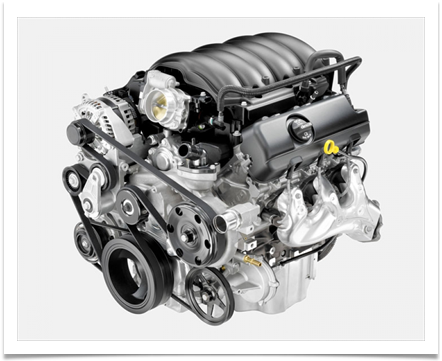
When a Cummins B-series diesel starts knocking, losing oil pressure, or eating coolant, most owners don’t want a lecture about rebuild kits – they want to know where to find a tested Cummins ISB Engine for sale and get their truck, bus, or equipment back to work. That’s exactly why we keep this engine in stock and why we wrote this guide the way we did: real numbers, real fitment info, and no filler.
We’ve sold these to pickup truck owners, fleet managers, school district maintenance shops, and RV owners, and the questions are almost always the same. So let’s answer them all in one place.
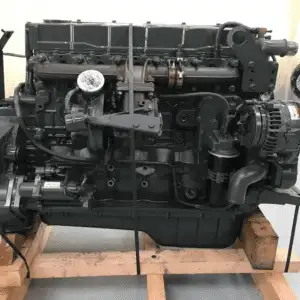
What Is the Cummins ISB Engine?
ISB stands for Industrial Series B, Cummins’ designation for the medium-duty B-series diesel once it moved beyond just pickup truck duty into buses, motorhomes, agricultural equipment, generators, and marine applications. The platform started at 5.9 liters and later grew to 6.7 liters, but when people search for a Cummins ISB Engine for sale, they’re most often talking about the 5.9L inline-six that powered the Dodge Ram 2500 and 3500 from the late 1990s through 2007, along with its industrial and vocational siblings built on the same block.
What earned this engine its reputation is simple: it’s an inline-six, cast-iron block, overbuilt diesel that was never really designed to be fragile. Compare that to a lot of modern emissions-heavy diesels with more sensors, more plastic, and more things to fail, and you can see why so many people specifically hunt down an older ISB instead of buying something newer.
Cummins ISB Specifications
Numbers vary by year and application, since Cummins tuned this engine differently for a school bus than for a one-ton pickup. Here’s a realistic overview covering the common 5.9L ISB range:
| Engine type | Inline-6, cast-iron block, turbocharged diesel |
| Displacement | 5.9 liters (359 cu in), later versions up to 6.7L |
| Valvetrain | 24-valve OHV (early 12-valve on the oldest units) |
| Fuel system | VP44 rotary pump (1998.5–2002) or Bosch common rail (2003 and later) |
| Power output | Roughly 160–325 hp depending on year and tune |
| Torque | Roughly 400–610 lb-ft depending on configuration |
| Compression ratio | Approximately 17.2:1 to 18:1 |
| Cooling system | Water-cooled, factory intercooler on turbo variants |
| Fuel type | Diesel |
If you’re buying for a Ram pickup, matching the fuel system type to your transmission and model year matters – a VP44 engine and a common rail engine aren’t drop-in interchangeable without also swapping fuel lines, injectors, and in some cases the ECM. We’ll walk you through that when you call, but it helps if you already know your production date going in.
Where the ISB Shows Up
This engine has one of the widest application ranges of anything we sell. On the automotive side, it’s the heart of the Dodge Ram 2500 and 3500 from roughly 1998.5 through 2007. On the vocational side, it powers school buses from Blue Bird and Thomas Built, along with a long list of motorhomes and Class C RVs built on Cummins-powered chassis. Beyond that, you’ll find ISB variants running irrigation pumps, standby generators, construction equipment, and small to mid-size boats, because a reliable inline-six diesel is just as valuable bolted to a generator skid as it is under a truck hood.
If you’re not sure whether the engine in your equipment is technically an ISB or one of Cummins’ other B-series designations, check the tag riveted to the side of the block – it lists the CPL number and engine family, and we can help you decode it over the phone if you read it out to us.
Why Shops and Fleets Keep Choosing This Engine
Ask any diesel mechanic why the Cummins ISB has such a loyal following and you’ll hear some version of the same answer: it’s simple, it’s strong, and parts are everywhere. The cast-iron block shrugs off the kind of heat and vibration that would crack a lighter alloy design. The inline-six layout is inherently smoother than a V-configuration, which matters for engine longevity and NVH in a bus or RV where passengers are sitting right over the drivetrain. And because so many of these were built, the aftermarket and used parts supply is deep, so you’re never stuck waiting months for a single sensor.
None of that makes it immortal, though. High-mileage ISB engines do wear out, and knowing what failure actually looks like saves you money before you commit to buying a replacement.
There’s also a practical reason so many independent diesel shops keep a soft spot for this platform: it’s mechanically straightforward compared to what came after it. Fewer emissions components means fewer failure points, and a good technician can diagnose most ISB issues with a compression gauge, a boost gauge, and some experience, rather than needing a laptop plugged in for every little symptom. That’s not a knock on newer diesels – they have their own strengths – it’s just part of why the ISB specifically keeps showing up on used-engine wish lists.
Signs Your ISB Needs to Be Replaced
A knock that gets louder under load and doesn’t go away after warm-up often points to worn rod bearings, which on this engine is usually a sign it’s time to replace rather than nurse along. White smoke on startup that clears up after a minute can be normal in cold weather, but persistent white smoke combined with coolant loss usually means a cracked head or failed head gasket. Excessive blow-by – that’s oily vapor coming out of the breather tube under load – points to worn rings or cylinder glazing. Metal flakes in the oil filter at your next change is one of the clearest signs of internal damage and shouldn’t be ignored.
If your truck, bus, or equipment is showing two or more of these signs, it’s usually time to start pricing out a Cummins ISB Engine for sale rather than sinking more money into diagnosis on the old one.
Used vs. Rebuilt ISB Engines
We carry both, and which one makes sense depends on your use case. A used ISB pulled from a running donor vehicle, compression tested and inspected, is the budget-friendly option and works well for owners who need the truck or equipment back in service without a huge outlay. A rebuilt ISB has been torn down, machined where needed, and rebuilt with new bearings, rings, gaskets, and seals, which costs more but gets you closer to a fresh-engine lifespan – a good call if this is a commercial vehicle that needs to be reliable every single day, or if you’re keeping the truck long term.
For fleet and school district buyers specifically, we can talk through a rebuilt option with extended service intervals in mind, since downtime on a bus route or delivery truck costs a lot more than the difference in price between used and rebuilt.
One more thing worth mentioning: mileage alone doesn’t tell the whole story on a diesel like this. A 250,000-mile highway truck engine that saw mostly steady interstate driving can be in better internal shape than a 120,000-mile engine that spent its life idling and towing in stop-and-go conditions. That’s exactly why we run a compression test and oil analysis on every unit instead of just listing an odometer number and calling it done – the number on the dash only tells part of the story.
How to Verify You’re Buying a Genuine ISB
Every Cummins engine carries a data plate riveted to the block with the CPL (Control Parts List) number, serial number, and engine family designation stamped on it. Before you buy from anyone, ask for a clear photo of that tag. It’s the fastest way to confirm you’re actually getting an ISB rated the way it’s being advertised, rather than a lower-output industrial variant being sold as something it isn’t. We photograph the data plate on every Cummins ISB Engine for sale we list, so you’re never guessing.
It also helps to know the donor source. An ISB pulled from a low-hour generator or irrigation pump can have dramatically fewer operating hours than one pulled from a high-mileage pickup, even if both look similar on paper. We keep this information on file for every unit and we’ll tell you straight if we don’t have full history on something – which, honestly, is rare, but we’d rather be upfront than oversell a unit.
Repair vs. Replace: Doing the Math
This is the question that decides most purchases, so let’s actually run through it. A single failed component – a water pump, an injector, a sensor – is almost always worth just repairing. But once you’re looking at a rod knock, a cracked block, or a head gasket combined with other wear, the labor alone to pull a diesel engine, diagnose it fully, and reassemble it can run well past 20 hours at most shop rates, before parts are even factored in. For a fleet vehicle or a bus that needs to be back on the road on a schedule, that downtime often costs more than the engine itself.
We tell customers to get a real labor quote from their mechanic before deciding, then compare that total – parts plus labor plus downtime – against a tested replacement engine installed on the same timeline. More often than not, especially on higher-mileage trucks and equipment, a tested Cummins ISB Engine for sale from us ends up being the faster and cheaper path back to work.
What Happens to Your Old Engine
We don’t run a mandatory core exchange program, so what you do with your old block is up to you. Some customers scrap it, some sell it to a rebuilder who specializes in parting out B-series engines, and some hand it to their mechanic as a trade-in toward installation labor. If you want a rough sense of what your old engine’s components might be worth before you make that call, ask us – we deal with B-series parts often enough to give you a realistic ballpark.
How We Test Every ISB Before Listing It
Every Cummins ISB Engine for sale in our inventory gets a compression check across all six cylinders, a cooling system pressure test, an oil analysis for metal content, and a visual inspection of the injection pump or common rail components depending on the fuel system. We also check the turbocharger for shaft play and boost leaks. If an engine doesn’t check out clean, it doesn’t get listed as a running unit – we’ll either rebuild it first or part it out instead of passing a problem along to you.
We take real photos of the actual engine you’d receive, not a generic catalog picture, so you know exactly what’s showing up on the truck.
Shipping Worldwide
These are heavy engines, and we ship them properly – crated and strapped to handle freight without shifting. Domestic orders in the U.S. typically move within a few business days of cleared payment. International orders, which make up a good share of our ISB sales given how common Cummins power is globally in agriculture, marine, and commercial trucking, go out via freight forwarders with full tracking. If you’re importing into a country with specific emissions or engine-swap regulations, it’s worth checking with your local authority before you order, since we can advise on paperwork but the final rules are set locally.
Common Questions About the Cummins ISB
What’s the difference between the ISB and the ISC or ISX? They’re different displacement classes in the Cummins lineup. The ISB is the smaller, medium-duty B-series covering 5.9L to 6.7L, while the ISC and ISX are bigger engines built for heavier trucks and equipment. Don’t assume parts interchange between them.
Will a used ISB come with the turbo and injection pump? That depends on the specific listing, so check before ordering. Some units are sold complete with accessories, others as long blocks. Tell us what you need and we’ll confirm what’s included.
Can I put a common rail ISB in an older VP44 truck? It’s possible but not simple – you’re looking at a different wiring harness, ECM, and fuel system, so most owners find it easier to source an engine matching their existing fuel system type unless they’re planning a bigger overhaul anyway.
How long do these engines typically last? With regular oil changes and clean fuel, it’s common to see these engines pass 300,000 miles in truck service, and even longer in lower-RPM industrial or generator applications, which is a big part of why the used market for this engine stays strong.
Do you sell the ISB for marine or generator use, not just trucks? Yes – we regularly ship these for stationary and marine applications, not only automotive swaps. Just let us know the intended use and duty cycle when you contact us, since it affects which specific unit in stock is the best fit.
Is a rebuilt ISB worth the extra cost for a work truck? If that truck earns you money every day, the extra upfront cost of a rebuilt engine is usually worth it for the added reliability and longer interval before you’re back in this position again. For a personal vehicle you might sell in a year or two, a well-tested used engine is often the more sensible spend.
Buying From Outside the United States
A large share of our Cummins ISB orders ship internationally, which makes sense given how widely this engine is used in agriculture, marine work, and commercial trucking around the world. We handle export documentation and can give you a general sense of what to expect with customs and import duties, though you’ll want to confirm the exact figures with your local customs broker since regulations vary by country. Every export order is crated to handle ocean or air freight securely, and you’ll get tracking information the moment it leaves our warehouse.
Maintenance Tips Worth Following
Once your replacement ISB is installed, a few habits keep it running for the long haul. Change oil on schedule with a quality diesel-rated oil, and don’t stretch intervals just because the engine “feels fine” – diesel oil breaks down from soot loading well before it looks obviously dirty. Keep an eye on fuel filter changes too, since contaminated fuel is one of the fastest ways to damage an injection pump or common rail injectors on this platform. Watch coolant condition closely, especially if you’re running the older configuration, since cylinder liner cavitation has been a known issue on some B-series builds when coolant additive levels aren’t maintained. None of this is complicated, it just needs to happen on a real schedule instead of “whenever I remember.”
Matching the Engine to Your Transmission
One detail that trips up a surprising number of buyers: the engine is only half the equation. If you’re replacing an ISB in a Dodge Ram, pay close attention to whether your truck runs a manual or automatic transmission, since the flywheel, bellhousing bolt pattern, and in some cases the flexplate differ between the two. Automatic-equipped trucks from the 47RE, 48RE, and later 68RFE era also have specific torque converter and TCM pairing considerations if you’re jumping between a VP44 and common rail engine generation. If any of this sounds unfamiliar, that’s completely normal – just tell us your transmission type and model year when you order, and we’ll confirm you’re getting a matching setup rather than finding out about a mismatch after the engine’s already on your shop floor.
For vocational and industrial buyers, the same logic applies to PTO setups, cooling packages, and mounting brackets, which can vary between a bus chassis, a motorhome chassis, and a straight truck even when the base engine is functionally the same ISB.
Ordering Your Cummins ISB Engine for Sale
When you’re ready, check out our current Cummins ISB Engine for sale listing for pricing, mileage, and photos of available units. If you’re not sure which configuration matches your truck or equipment, reach out with your VIN, CPL number, or chassis details first and we’ll confirm fitment before you spend a dollar. We accept card payment and bank transfer for larger commercial and fleet orders, and we can set up standing account terms for shops or fleets that order regularly.
For readers who want a deeper technical breakdown of how the B-series family evolved from the 5.9L into the 6.7L, the Cummins B Series engine page on Wikipedia is a good next stop.
More Engines Currently in Stock
While you’re here, take a look at what else we’ve got tested and ready to ship: a Toyota 3GR-FE engine for sale for Crown and Mark X owners, a Mitsubishi 6G74 engine for sale for Pajero and 3000GT builds, a Nissan VR38DETT engine for sale for GT-R projects, and a Howo WD618 engine for sale if you’re running heavy trucks alongside your Cummins-powered fleet. Give us a call if you’d rather just describe what you’re working on.