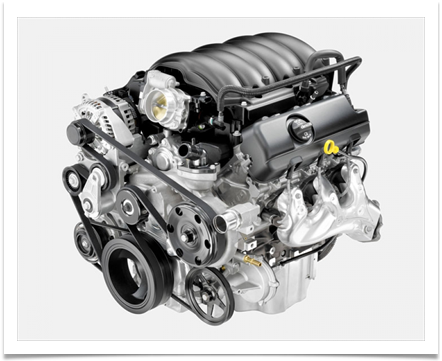
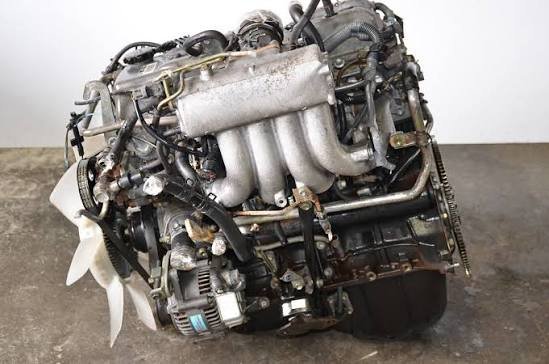
Search for a Toyota 3RZ engine for sale long enough and you’ll notice most listings tell you the same three things — displacement, horsepower, “runs great” — and none of the things that actually determine whether it’ll bolt into your truck without a fight. We’ve sold enough of these engines to know that fitment questions are where most buyers actually get stuck, so that’s what this page is built around: which trucks take which version, what changed across the model years, and what tends to fail once one of these has real miles on it.
NJ Global Auto Parts pulls, tests, and ships 3RZ engines to Tacoma, 4Runner, and Hilux owners worldwide, along with a fair number of T100 and HiAce owners who have a harder time finding parts locally. If you’re trying to figure out whether the engine in front of you actually matches what your truck needs, read through the compatibility section before you order anything.
What the Toyota 3RZ Actually Is
The 3RZ-FE is a 2.7-liter inline-four that Toyota built through the mid-90s into the mid-2000s as the step up from the smaller 2.4-liter 2RZ-FE, aimed at trucks and SUVs that needed more low-end pull than a compact four could offer without jumping all the way to a V6. It’s a DOHC 16-valve design with twin balance shafts, which is part of why it runs smoother than you’d expect from a four-cylinder this size — Toyota clearly built it to be lived with daily, not just tolerated.
It’s also a genuinely well-supported engine at this point. Parts are everywhere, every independent Toyota shop has seen dozens of them, and the failure points are well documented instead of being a mystery. That’s a big part of why it’s still a common swap and replacement choice decades after Toyota moved on to newer four-cylinder designs.
Toyota 3RZ Engine Specifications
| Specification | Detail |
|---|---|
| Engine code | 3RZ-FE |
| Configuration | Inline 4-cylinder, DOHC, 16-valve |
| Displacement | 2.7 L (2,693 cc) |
| Bore x Stroke | 95 mm x 95 mm |
| Compression ratio | 9.5:1 |
| Fuel system | Electronic fuel injection (EFI) |
| Power output | Approx. 150 hp @ 4,800 rpm |
| Torque | Approx. 177 lb-ft @ 4,000 rpm |
| Valve adjustment | Shim-over-bucket |
| Notable design features | Twin chain-driven balance shafts, timing chain (interference engine) |
Those numbers are consistent across most of the truck applications this engine went into, though your exact output can shift a little depending on emissions equipment, altitude calibration, and which market the truck was originally sold in. For a broader look at where the 3RZ sits inside Toyota’s four-cylinder truck engine lineup, the Toyota RZ engine page on Wikipedia covers the full family history if you want the background.
3RZ-FE vs 2RZ-FE — Don’t Buy the Wrong Displacement
These two engines share a family and a lot of the same architecture, which is exactly why people occasionally order the wrong one. The 2RZ-FE is the smaller 2.4-liter version, and while it looks similar sitting in an engine bay and shares plenty of parts, it makes noticeably less torque — a real difference if you’re towing or running a loaded truck regularly. The 3RZ-FE’s extra displacement comes from a longer stroke, and Toyota used both engines side by side in the same truck lineups depending on trim and market, so you can’t assume a Tacoma or 4Runner automatically came with one over the other.
Check the engine code stamped on the block, or the ID plate if it’s still attached, before you order. If you’re not sure which one you’re replacing, send us photos and your VIN if you have it — we’ll confirm the exact engine your truck left the factory with rather than you guessing based on displacement badges that may have been swapped or removed somewhere along the line.
Toyota Models Using the 3RZ Engine — And What Changes Between Them
The 3RZ-FE showed up across a wide spread of Toyota trucks and vans between 1995 and 2004, but the installation isn’t identical across every one of them, which is exactly where fitment problems come from:
| Model | Years | Fitment Notes |
|---|---|---|
| Toyota Tacoma | 1995-2004 | Most common application; engine mounts and wiring harness are the baseline reference for most swaps |
| Toyota 4Runner | 1996-2000 | Shares most mounting points with Tacoma but check accessory bracket differences for A/C and power steering |
| Toyota T100 | 1994-1998 | Larger frame changes some accessory clearances; confirm radiator hose routing before ordering |
| Toyota Hilux (export markets) | Various | RHD and LHD variants exist; wiring harness connector layout can differ by market |
| Toyota HiAce / Granvia | 1995-2002 | Van applications use different engine mounts and exhaust routing than truck applications |
| Toyota Land Cruiser Prado | 1996-2004 (2001-2009 in some markets) | Export-market application; confirm transmission bellhousing pattern matches your specific transmission |
The engine block and head are the same core hardware across all of these, but engine mounts, accessory brackets, wiring harness connectors, and in some cases the oil pan shape (front-sump vs rear-sump depending on 2WD or 4WD) all vary. If you’re doing a like-for-like replacement in the same model and year, fitment is close to plug-and-play. If you’re cross-shopping between models — say, pulling a 4Runner engine for a Tacoma — budget time for adapting mounts and double-checking accessory clearances.
Manual vs Automatic, 2WD vs 4WD — What Else to Confirm
Beyond the model and year, two more things determine whether an engine bolts straight in. First, transmission pairing: manual and automatic transmissions use different bellhousing bolt patterns and different flywheel or flexplate configurations, so an engine pulled from a manual-transmission truck needs the flywheel swapped (or sourced separately) before it’ll mate to an automatic, and vice versa. Second, 2WD versus 4WD changes oil pan clearance and, on some model years, the accessory drive layout, since a 4WD truck’s front differential and driveline packaging leaves less room under the engine than a 2WD truck has.
Tell us your transmission type and drivetrain configuration when you order, and we’ll match the engine’s flywheel/flexplate and oil pan configuration to what you actually need instead of shipping you a mismatch you’d have to source parts to correct.
Common Toyota 3RZ Engine Problems
None of these are secrets to anyone who’s owned one long enough, but they’re exactly what our inspection process is built to catch before an engine goes up for sale. Head gasket failure is the one most owners eventually run into, usually showing up as coolant loss or a slight milkiness in the oil — we pressure-test the cooling system on every engine specifically to rule this out before listing it.
Timing chain guides and the tensioner wear over high mileage, and because this is an interference engine, a chain that jumps time doesn’t just stall the engine — it can bend valves, so we check chain slack and listen for the telltale rattle on cold start before an engine leaves our shop.
Oil consumption creeps up on higher-mileage units, generally tied to valve stem seals hardening with age rather than anything catastrophic — worth knowing about up front rather than being surprised by it later. Knock sensor failure is common enough on these that we always check for a stored code, since a bad knock sensor can pull timing and rob power in a way that feels like a bigger problem than it actually is. And cooling system components — the radiator, water pump, and hoses — are usually original-age on an unmolested engine, so we flag anything that looks like it’s due regardless of whether it caused a problem yet.
Used, Rebuilt, or Remanufactured — Picking the Right 3RZ for Your Budget
A tested used engine with good compression and documented history is the right call for most straightforward replacements, and it’s the option that gets your truck back on the road fastest without paying rebuild-shop labor rates. If your original engine failed from something internal — a spun rod bearing, a cracked block from severe overheating — a rebuilt long block makes more sense, since you’re not gambling on whatever caused that failure showing up again in a used replacement.
Remanufactured units go further, with new timing components, a fresh water pump, and reconditioned accessories, aimed at buyers who want the closest thing to new without paying prices that, for an engine this age, usually aren’t even available through Toyota anymore. Tell us how the truck gets used and what your budget looks like, and we’ll point you toward the option that actually makes sense instead of the most expensive one on the shelf.
Is the 3RZ a Good Engine Swap Choice Outside Its Original Chassis
We get this question a lot from the off-road and overland crowd — people building a rig around a chassis that never came with a 3RZ from the factory. The honest answer is that it can work, but it’s more involved than a like-for-like replacement. You’re dealing with a different wiring harness and ECU pinout than whatever the donor chassis expects, a transmission bellhousing pattern that may not match your existing gearbox, and mounting points you’ll likely need to fabricate or adapt rather than bolt straight to existing crossmembers.
Where we see this done successfully, it’s usually someone swapping a 3RZ into an older Toyota chassis that originally ran a smaller or less reliable engine — a first-generation 4Runner or an older Hilux, for instance — where the wiring and mounting are close enough that an experienced shop can adapt them without reinventing the whole front clip. Cross-brand swaps are a bigger undertaking and really depend on what fabrication support you have access to. If you’re planning a swap rather than a factory replacement, tell us the donor chassis up front so we can flag anything about the specific engine we’re shipping that might affect your plan — harness connector style, accessory bracket layout, that sort of thing.
Maintenance Tips for Long-Term Reliability
Once the engine’s installed, a few habits go a long way toward getting real longevity out of it. Timing chain condition depends heavily on oil change intervals — dirty oil accelerates guide and tensioner wear, and because this is an interference engine, that’s not a repair you want to defer. Stick to the interval Toyota specified and don’t stretch it because the engine seems to be running fine; chain wear doesn’t always announce itself until it’s already a problem.
Cooling system maintenance matters more on this engine than owners tend to expect, since head gasket failure is the most common serious issue it develops. Flush the coolant on schedule, watch for any sign of overheating even if it seems minor, and don’t ignore a coolant level that’s dropping slowly — that’s usually the head gasket giving early warning before it fails outright. Keep the accessory belt and tensioner in good shape too, since a slipping belt affects both the water pump and alternator output, and a knock sensor code shouldn’t be ignored even if the engine seems to run fine with it present, since retarded timing from an unaddressed knock code costs you both power and fuel economy over time.
How We Prepare Every 3RZ Before It’s Listed
Every 3RZ that comes through our shop gets compression tested across all four cylinders first, since that number tells us more than almost anything else about real engine condition. From there we pressure-test the cooling system, check timing chain slack and listen for chain noise on cold start, inspect for oil leaks at the valve cover and oil pan gaskets, and pull codes to check for stored knock sensor or other fault history. If something needs attention, we handle it before the engine gets photographed and listed — not after you’ve already paid freight to get it home.
Shipping This Toyota 3RZ Engine for Sale Worldwide
We ship 3RZ engines internationally on a regular basis — crated, secured, and set up so freight handlers on either end can move them with standard equipment. Whether you’re in North America, South America, Africa, the Middle East, Australia, or Southeast Asia, we can get a Toyota 3RZ engine for sale to your door or your nearest freight terminal.
We handle export paperwork ourselves and coordinate directly with your freight forwarder if you have one lined up. If you don’t, we can point you toward companies we’ve worked with before who know how to move an engine crate without damaging anything in transit. Every engine gets photographed again right before crating, so you have a clear record of condition at the point of shipment.
What to Check Before You Buy Any Used 3RZ
If you’re comparing us against another seller, ask for compression numbers across all four cylinders, not just a claim that “it ran fine.” Ask whether the timing chain and tensioner have been inspected, since a chain problem on this engine is a much bigger deal than on a non-interference design. Ask for photos of the actual engine you’d be buying, and confirm the transmission bellhousing pattern and drivetrain configuration match your truck before you commit to freight costs.
Pricing, Warranty, and Getting One Shipped
Pricing on our Toyota 3RZ engine for sale reflects mileage, documented condition, and the inspection and repair work already completed — current listing and pricing are on the product page linked below. Every engine we ship carries a warranty covering the components we’ve inspected and the work we’ve done, so you know exactly what’s backed before paying for anything.
Once you’re ready to order, we handle crating, freight quotes, and export paperwork on our end. Most orders ship within a week or two of payment clearing, depending on freight scheduling to your destination. If you need documentation for insurance or financing, we can put together whatever your lender needs.
Frequently Asked Questions
Is this Toyota 3RZ engine for sale tested before it ships?
Yes. Every engine is compression tested, checked for timing chain wear, and pressure-tested for cooling system leaks before it’s listed, let alone before it ships.
Will the engine include the wiring harness and ECU?
Listings specify exactly what’s included. Tell us your truck’s model and year and we’ll confirm before you order so nothing’s missing on arrival.
How do I know if I need a 2RZ-FE or 3RZ-FE?
Check the code stamped on your block or send us your VIN, and we’ll confirm the exact engine your truck came with before you buy anything.
Does the engine come with the flywheel or flexplate for my transmission?
Tell us whether your truck is manual or automatic and we’ll match the flywheel or flexplate configuration to your transmission.
Can you ship to a freight forwarder instead of my home address?
Yes — that’s actually the most common way these engines move internationally. Give us your forwarder’s details and we’ll coordinate delivery directly.
What if I’m not sure this engine fits my specific truck?
Send us your VIN or model, year, and drivetrain details, and we’ll confirm fitment before you commit to buying anything.
If you’re ready to move forward, check out our current Toyota 3RZ Engine For Sale listing, or read our earlier coverage on 3RZ reliability and power output for more background before you order. Get in touch and we’ll help you land the right Toyota 3RZ engine for sale for your specific truck.