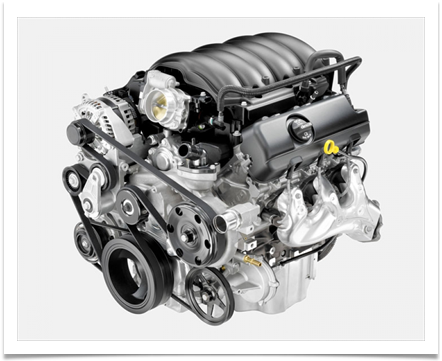
If you’re searching for an Isuzu 4JB1TCH engine for sale worldwide, chances are you’re not shopping for a car — you’re trying to keep a forklift moving product, a genset running a job site, or a truck fleet from sitting idle. That’s the world this engine actually lives in, and it’s a different world than most engine listings are written for. Most sellers copy-paste a spec sheet and call it a day. We’re not going to do that here.
NJ Global Auto Parts pulls, tests, and ships these engines to buyers all over the world — fleet operators, equipment rental yards, marine and industrial shops, and plenty of individuals swapping a tired 4JB1TCH out of a forklift or light truck. This page is built around the questions those buyers actually ask us: what fits, what to check, and what tends to go wrong on a high-hour unit before we ever list it for sale.
What the Isuzu 4JB1TCH Actually Is
The 4JB1TCH is the turbocharged and intercooled version of Isuzu’s 4JB1 diesel family — a 2.8-liter inline-four that Isuzu built for exactly the kind of duty-cycle work where an engine either holds up or it doesn’t. The “TCH” designation separates it from the naturally aspirated 4JB1 and the turbo-only 4JB1T: the charge-cooling is what lets this version put out meaningfully more power without cooking itself on a hot day under sustained load, which matters a lot more on a genset running eight hours straight than it does on a car that idles in traffic half the time.
It’s mechanical, not drive-by-wire. No engine computer to throw a code nobody can diagnose in the field, no sensor web that fails in a way that strands a piece of equipment three states from the nearest dealer. That simplicity is exactly why this block is still in demand decades after Isuzu moved on to newer platforms — parts houses stock for it, independent diesel shops know it cold, and a shade-tree mechanic with a torque wrench can actually work on one.
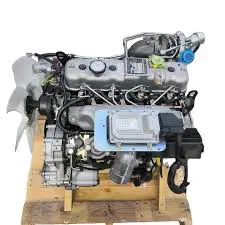
Isuzu 4JB1TCH Engine Specifications
Here’s what you’re actually buying, in real numbers instead of marketing language:
| Specification | Detail |
|---|---|
| Configuration | Inline 4-cylinder, SOHC, 8-valve diesel |
| Displacement | 2.8 L (2,771 cc) |
| Bore x Stroke | 93.0 mm x 102.0 mm |
| Aspiration | Turbocharged, air-to-air intercooled |
| Fuel system | Mechanical rotary injection pump (Denso/Zexel), indirect injection |
| Compression ratio | Approx. 21:1 |
| Power output | Roughly 100-120 hp depending on pump calibration and application |
| Torque | Approx. 220-250 lb-ft (300-340 Nm) |
| Dry weight | Approx. 585 lb (265 kg) |
| Common applications | Forklifts, generator sets, light-to-medium trucks, ag and construction equipment |
Those output numbers move around more than you’d expect from one 4JB1TCH to the next, because Isuzu and the equipment manufacturers who bought this block in bulk — Toyota, Hyster, Yale, and a handful of generator OEMs among them — each had their own injection pump calibration for their own duty cycle. A forklift-spec pump isn’t tuned the same way as a genset-spec pump. If the exact output number matters for your application, tell us what it’s going into and we’ll pull the right unit instead of guessing. For the manufacturer’s own account of where this engine family sits in Isuzu’s diesel lineup, the List of Isuzu engines on Wikipedia is a decent reference point.
4JB1 vs 4JB1T vs 4JB1TCH — Know Which One You’re Actually Looking At
This trips up more buyers than anything else on the listing page, so it’s worth spelling out plainly. The base 4JB1 is naturally aspirated, no turbo at all, and it’s the weakest of the three by a wide margin. The 4JB1T adds a turbocharger but no intercooler, which gets you more power than the base engine but leaves it more heat-soaked under continuous load. The 4JB1TCH adds the intercooler on top of the turbo, and that’s the difference that actually matters if your equipment runs for hours at a stretch instead of short bursts.
If you’re replacing an engine that’s already a 4JB1TCH, stick with a 4JB1TCH — the turbo plumbing, intercooler piping, and pump calibration are matched to that setup, and swapping in a 4JB1T means either fabricating intercooler routing yourself or accepting less power and more heat than the original spec. We get calls from people who bought a “4JB1” off a classified ad assuming all three variants are interchangeable, and they’re not — check your engine tag or the stamped code on the block before you order anything, and send us a photo if you’re not sure what you’ve actually got.
Where the 4JB1TCH Actually Gets Used
This is the part most engine listings skip entirely, and it’s the part that matters most if you’re trying to confirm fitment before you spend money on freight.
Forklifts and material handling. This is probably the single biggest use case we see. Toyota, Hyster, Yale, and Komatsu all specified 4JB1-family engines in mid-size IC forklifts built through the 1990s and 2000s, and the TCH variant shows up in the higher-capacity models where a naturally aspirated engine just doesn’t have the pulling power. If your forklift is rated 5,000 lb or higher and runs on diesel, there’s a decent chance this is what’s under the hood plate.
Generator sets. Prime and standby gensets in the 40-80 kW range used this block heavily because it’s simple, cheap to maintain, and tolerant of running flat-out for days during an outage. If you’re repowering a genset that originally shipped with a 4JB1TCH, matching the exact variant keeps your existing radiator, alternator bracket, and control panel wiring bolt-compatible.
Light and medium trucks. Isuzu used this engine across several generations of NPR-badged trucks sold under different names worldwide — Chevrolet LUV, GMC W-series, and various rebadged versions depending on the market. If you’re in a country where Isuzu trucks were sold under a GM nameplate, this is very likely the same block under a different name on the dash.
Agricultural and irrigation equipment. Water pumps for irrigation, PTO-driven implements, and smaller ag equipment used the 4JB1TCH where operators needed diesel reliability without the size and cost of a bigger industrial block. These setups usually run a mechanical PTO off the flywheel rather than an alternator-driven accessory, so double-check what your implement actually needs before ordering.
Construction equipment. Mini excavators, compactors, and towable light towers in the 3-6 ton class specified this engine for the same reasons the forklift makers did — enough torque to do real work, small enough to package into compact equipment, and cheap enough to keep total machine cost down.
Equipment Compatibility Checklist Before You Order
Because this engine lands in such a wide range of equipment, fitment isn’t automatic just because the engine code matches. Before you order, confirm these five things:
| Check | Why It Matters |
|---|---|
| Bellhousing/flywheel housing pattern | Forklift, genset, and truck applications often use different bellhousing bolt patterns even on the same block |
| Flywheel and PTO configuration | Ag and pump applications may need a specific flywheel for PTO drive rather than a standard clutch flywheel |
| Injection pump calibration | Forklift, genset, and truck pumps are calibrated differently — governed speed matters a lot more on a genset than a truck |
| Cooling system interface | Radiator hose sizes and water pump pulley offsets vary between OEM installations |
| Wiring and gauge senders | Oil pressure and temp sender threads aren’t always identical across applications |
Send us photos of your current engine’s tag, bellhousing, and flywheel before you order, and we’ll confirm the exact variant you need instead of you finding out something doesn’t line up after freight’s already been paid.
Why Buy a Used 4JB1TCH Instead of New
Isuzu doesn’t sell this engine new anymore in most markets — it’s been out of production for years, replaced by newer common-rail diesels in current equipment lineups. That means your realistic options are a used engine, a rebuilt long block from a machine shop, or keeping your existing engine running with parts, and for a lot of operators, a tested used 4JB1TCH costs a fraction of what a full rebuild runs once you add up machine work, injectors, and labor.
We’re not selling a forklift-yard engine with no history. Every 4JB1TCH we list has been pulled, inspected, and documented — what we found, what we fixed, and what condition it left our shop in. You’re not betting on a private seller’s word that “it ran fine when we parked it.”
Common Issues We Find on High-Hour 4JB1TCH Engines
Nobody flipping engines out of a yard wants to talk about failure points, but we do, because it’s exactly what our inspection process is built around. The mechanical injection pump is the first thing we check — these pumps can lose calibration over time, and a pump that’s drifted out of spec shows up as hard starting, uneven idle, or smoke that shouldn’t be there. We bench-test pump output rather than just listening to the engine run.
Turbo shaft play is the second item on the list, especially on units that sat unused for a long stretch before we got them — a turbo that’s been sitting can stick or develop play that wasn’t there when it was last run regularly. Head gasket condition matters too, since these engines run high compression and a marginal gasket will show itself under sustained load exactly when you can least afford it to fail. And on units that spent their life outdoors, we check the glow plug system carefully, since cold-start performance depends on all four plugs actually working, not just enough of them to limp the engine over.
How We Prepare Every Engine Before It’s Listed
Every 4JB1TCH that comes through our shop gets a compression check across all four cylinders first, because that number tells us more about real engine health than anything else we can measure without tearing it down. From there we inspect the turbo for shaft play, bench-test the injection pump, check glow plug function, and look over the block and head for any sign of coolant intrusion or oil leaks. If something needs attention, we handle it before the engine gets photographed and listed — not after you’ve already paid to ship it home.
Shipping This Isuzu 4JB1TCH Engine for Sale Worldwide
We ship 4JB1TCH engines internationally on a regular basis — crated, secured to a pallet, and built to move through standard freight handling without getting knocked around. Whether you’re ordering into North America, Central or South America, Africa, the Middle East, or Southeast Asia, we can get an Isuzu 4JB1TCH engine for sale to your door or your freight forwarder’s dock.
We handle export documentation ourselves and coordinate directly with your forwarder if you already have one lined up. If you don’t, we can point you toward companies we’ve shipped through before that know how to move an engine crate without damaging it. Every unit gets photographed again right before it goes on the truck, so you have a clear record of condition at the point of shipment.
Used, Rebuilt, or Remanufactured — Which 4JB1TCH Fits Your Budget
Not every buyer needs the same thing, so we keep a mix of options moving through the shop rather than pushing everyone toward whatever happens to be sitting on the shelf. A tested used engine with solid compression numbers and reasonable hours is the right call for most fleet and equipment operators — it’s the cheapest way back to running equipment and, with our inspection behind it, not a gamble the way a random yard pull would be.
A rebuilt long block makes more sense if your current 4JB1TCH failed internally — a spun bearing, a cracked head, something that would have wrecked a used replacement’s resale value too if it happened to that unit. We machine the block, replace bearings and rings, and put in new gaskets throughout, so you’re getting fresh internals on a proven design instead of paying rebuild-shop labor rates on your own core. Remanufactured units go a step further with new or reconditioned ancillaries — injection pump, turbo, water pump — for buyers who want the closest thing to a fresh engine without paying new-Isuzu pricing that, again, mostly isn’t available anymore in this displacement and configuration.
Tell us your budget and how the equipment is used — daily heavy-duty work versus occasional light use changes which option actually makes sense — and we’ll steer you toward the right one instead of upselling you on more engine than your application needs.
Maintenance Tips for Keeping a 4JB1TCH Running Long-Term
Once you’ve got the right engine installed, a handful of habits go a long way toward getting another decade out of it. Oil and filter changes matter more on a mechanical diesel than people expect, since the injection pump itself is lubricated by engine oil in most configurations — dirty or degraded oil doesn’t just wear the bottom end, it wears pump internals that are expensive to replace. Stick to a diesel-rated oil at the interval Isuzu specified, and don’t stretch it because the engine “seems fine.”
Fuel filtration is the second thing worth taking seriously, especially if your equipment runs on fuel that’s been sitting in a tank for a while — water and sediment in diesel fuel are what kill injection pumps and injectors, not normal wear. A cheap fuel filter change on schedule is a lot less painful than a pump rebuild because contaminated fuel got through.
Keep an eye on the intercooler piping and clamps too, since a boost leak on the cold side robs power and can throw off the air-fuel balance in a way that looks like a fueling problem when it’s really just a loose clamp. And if the engine sits unused for extended stretches between jobs — common with backup gensets and seasonal equipment — start it and run it under load periodically rather than letting it sit completely idle for months, which is exactly the condition that lets turbo shaft play and stuck rings develop in the first place.
What to Check Before You Buy Any Used Diesel for an Equipment Swap
If you’re comparing us against another seller, ask the questions that actually separate a tested engine from a guess: compression numbers across all cylinders, whether the injection pump has been bench-tested rather than just run briefly, and whether the turbo has been checked for shaft play. Ask for photos of the actual unit you’d be buying, not a stock photo pulled from a catalog somewhere. If a seller can’t answer those questions with specifics, that usually means the engine hasn’t actually been opened up and looked at.
Pricing, Warranty, and Getting One Shipped
Pricing on our Isuzu 4JB1TCH engine for sale worldwide reflects hours, documented condition, and the work that’s already gone into the unit — current listing and pricing details are on the product page linked below. Every engine we ship comes with a warranty covering the components we’ve inspected and the work we’ve done, so you know exactly what’s backed before you pay for anything.
Once you’re ready to order, we handle crating, freight quotes, and export paperwork on our end, and most orders ship within a week or two of payment clearing depending on freight scheduling to your destination. If you need documentation for insurance or financing before committing, we can put together whatever your lender needs.
Frequently Asked Questions
Is this Isuzu 4JB1TCH engine for sale tested before it ships?
Yes. Every unit gets a compression check, injection pump bench test, turbo inspection, and a full visual check before it’s listed, let alone before it ships.
Will the engine come with the turbo and intercooler piping?
Listings specify exactly what’s included. Tell us what your application needs and we’ll confirm before you order so there’s no surprise on arrival.
How do I know which variant — 4JB1, 4JB1T, or 4JB1TCH — I actually need?
Send us a photo of your current engine’s tag or the code stamped on the block, and we’ll confirm the exact match before you buy anything.
Can you ship to a freight forwarder instead of my home address?
Yes, that’s actually the most common way these engines move internationally. Give us your forwarder’s details and we’ll coordinate delivery directly.
What if I’m not sure this engine fits my forklift or generator?
Send us the make, model, and any tag information you have, and we’ll confirm fitment before you commit to buying anything.
Do you sell 4JB1TCH parts separately, like injection pumps or turbos?
Our focus is complete tested engines, but reach out with what you need — we sometimes have components available from units we’ve disassembled.
If you’re ready to move forward, check out our current Isuzu 4JB1TCH Engine For Sale listing, or read our earlier coverage on what makes this engine reliable for more background before you order. We also stock the larger Isuzu 4HK1 engine if your equipment needs more displacement than the 4JB1TCH offers. Get in touch and we’ll help you land the right Isuzu 4JB1TCH engine for sale worldwide for whatever it’s going into.