Buying a Yanmar 8LV-320 diesel marine inboard engine for sale is really only step one of a repower. The engine itself is the easy part — it’s everything around it that turns a straightforward-sounding project into a multi-week haul-out if you don’t plan for it up front. This page is written for the boat owner who’s already decided the 8LV-320 is the right engine and now needs to know what actually happens between ordering it and running it at the dock.
NJ Global Auto Parts tests and ships 8LV-320 engines to boat owners, repower shops, and marine mechanics worldwide, and the questions we get after the sale are almost always about the installation side — engine beds, shaft alignment, exhaust routing — not the engine itself. So that’s most of what this page covers.
What the Yanmar 8LV-320 Actually Is
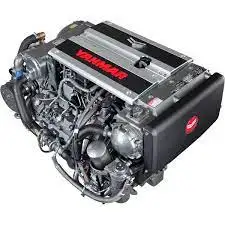
The 8LV-320 is Yanmar’s 8-cylinder marine diesel rated at 320 metric horsepower, built for planing and semi-displacement hulls that need real power without the bulk of a much larger block. It’s a common-rail, twin-turbocharged, intercooled design — a genuine step up in sophistication from older mechanically-injected marine diesels, which is exactly why boat owners with an aging, heavier, less powerful engine tend to land on this one for a repower rather than a like-for-like replacement.
Compact for its output is really the selling point. Boats that couldn’t fit a big-block diesel with the same power figure can often accept an 8LV-320 with less structural surgery, which matters a lot if your engine room wasn’t designed with a repower in mind.
Yanmar 8LV-320 Specifications
| Specification | Detail |
|---|---|
| Configuration | V8, 4-stroke marine diesel |
| Displacement | 4.46 L (272 cu in) |
| Bore x Stroke | 86 mm x 96 mm |
| Aspiration | Twin turbocharged, intercooled |
| Fuel system | Denso common rail direct injection |
| Rated output | 235 kW / 320 mhp |
| Rated speed | 3,800 rpm |
| Dry weight (without gear) | 435 kg (959 lb) |
| Alternator | 12V, 180A |
| Emissions certification | RCD 2, IMO Tier 2, EPA Tier 3, HVO-approved |
These are Yanmar’s published figures, and they’re worth cross-checking against your specific unit’s build plate since running gear and gearbox options change the installed weight and dimensions. For the manufacturer’s full current specification sheet, see Yanmar’s own 8LV-320 product page.
Sizing Your Engine Bed and Structure Before You Order
The single most common surprise on an 8LV-320 repower isn’t the engine — it’s discovering the existing stringers and engine bed don’t match the new mounting footprint. Before you order, get accurate measurements of your current engine bed dimensions, mounting bolt spacing, and the height from the keel to the coupling face, and compare them against the 8LV-320’s mounting footprint and installed height with your chosen gearbox. Even when a repower is marketed as a “drop-in” replacement for an older Yanmar or a comparable-output competitor, the mounting foot spacing and driveshaft angle rarely line up exactly, and you’re almost always looking at some amount of stringer modification or new engine mount fabrication.
If your boat is older and the stringers have any moisture intrusion or delamination, a repower is the moment to address it — you don’t want to bolt a new engine onto structure that’s already compromised, since the added torque and weight distribution of a more powerful engine will find that weakness faster than the old engine did.
Shaft Alignment and Coupling — Don’t Skip This Step
A repower almost always means new shaft alignment, even if you’re keeping your existing propeller shaft and strut. The 8LV-320’s crankshaft centerline and coupling face height are unlikely to match your old engine exactly, which changes the angle the shaft needs to run at relative to the strut and stern tube. Rushing this step is one of the most common causes of premature cutless bearing wear, vibration at cruise speed, and stuffing box leaks after a repower — problems that get blamed on the new engine when the actual cause is a shaft that was never properly aligned to it.
Budget for a marine mechanic to do a proper alignment check with feeler gauges at the coupling once the engine is set on its mounts, and plan to recheck it after the boat’s been in the water and run for a few hours, since hulls settle slightly once they’re loaded and running under power.
Gearbox and Propeller Matching
The 8LV-320 pairs with either Kanzaki shaft-drive gearboxes or a ZT370 sterndrive setup, and which one you need depends entirely on your boat’s existing drive configuration — shaft-drive boats stay shaft-drive, sterndrive boats stay sterndrive, and converting from one to the other during a repower is a much bigger project than most owners want to take on. Beyond that choice, gear reduction ratio needs to be matched to your propeller sizing and hull type; a ratio that worked with your old engine’s power and torque curve won’t necessarily be right for the 8LV-320’s output, and running the wrong prop pitch against this much power either overloads the engine at wide-open throttle or leaves power on the table you paid for.
If you’re not sure what reduction ratio or prop changes your repower needs, work with a prop shop that can calculate load based on your hull’s displacement and speed target — this is worth getting right before you’re back in the water, since re-propping after the fact means another haul-out.
Exhaust System and Wet Exhaust Considerations
Marine diesel exhaust systems are wet — raw water gets injected into the exhaust stream to cool it before it exits the hull — and the riser height, hose routing, and waterlift muffler sizing all need to be reconsidered for the 8LV-320’s exhaust flow and your boat’s specific exhaust exit height above the waterline. Get the riser height wrong and you risk water finding its way back into the engine through the exhaust manifold when the boat pitches or when the engine’s shut down while still hot, which is a failure mode that can hydrolock a cylinder and cause real damage.
If your existing exhaust system was sized for a different engine’s exhaust volume, don’t assume it’ll work unmodified — have a marine mechanic familiar with wet exhaust design review your riser height and muffler capacity against the 8LV-320’s specifications before you finalize the installation.
Cooling System and Raw Water Intake
Confirm whether your boat uses a raw water heat exchanger setup or a keel cooler, since the 8LV-320’s cooling circuit needs to match whichever system you have rather than assuming compatibility. Raw water intake sizing, the sea strainer, and the raw water pump all need to be adequate for this engine’s cooling demand — an undersized raw water system is a common cause of overheating on a repower where the rest of the installation was done correctly but the cooling side got overlooked as “it worked fine with the old engine.”
Electrical and Control Integration
The 8LV-320 runs Yanmar’s electronic engine controls, which typically means a different helm display and control head than an older mechanically-controlled diesel used. Budget for updating your helm instrumentation and control cables (or converting to electronic throttle/shift, depending on your setup) as part of the repower rather than trying to adapt old analog gauges to a modern electronically-controlled engine — in most cases, that adaptation isn’t straightforward or reliable enough to be worth attempting.
If your boat has multiple stations — a flybridge and a lower helm, for instance — factor in the wiring and control head cost at each station, since this adds up faster than owners doing a first repower tend to expect going in.
Physically Getting the Old Engine Out and the New One In
Engine room access is worth walking through before the new engine ever arrives. Measure the path from your haul-out yard’s lifting point to the engine room — through a hatch, over a swim platform, whatever your boat’s layout requires — and confirm the 8LV-320’s dimensions and weight with your gearbox attached will actually clear that path. Yards that do repowers regularly have handled this before and can advise on rigging, but it’s worth confirming before the engine shows up rather than discovering a clearance problem with a crane already involved.
Used, Low-Hour, or With Gearbox — Which Option Fits Your Repower
Not every repower needs the same package. A tested used Yanmar 8LV-320 diesel marine inboard engine for sale without a gearbox makes sense if you’re keeping your existing Kanzaki or ZT370 unit and it’s already in good condition — no point paying for a gearbox you don’t need. If your old gearbox is original to a much older engine, though, buying the 8LV-320 with a matched gearbox included usually saves you compatibility headaches down the road, since gear ratios and bellhousing patterns aren’t always interchangeable across engine generations.
Low-hour units command a premium but come with more confidence baked in, which matters if you’re not planning another haul-out anytime soon and want the longest runway before the next major service is due. Tell us your current setup, your cruising habits, and your budget, and we’ll help you decide whether a bare engine, an engine-and-gearbox package, or a lower-hour unit makes the most sense for your specific boat.
After the Repower — Break-In and Early Maintenance
Once your Yanmar 8LV-320 diesel marine inboard engine for sale is installed and running, treat the first several hours like a break-in period even though it’s a used engine rather than a brand-new one — avoid extended wide-open-throttle runs right away, and vary your rpm rather than holding one steady speed for hours at a stretch. Recheck shaft alignment after the first few hours on the water, since hulls settle slightly under load and an alignment that was correct on the hard can shift once the boat’s actually running.
Change the oil and filter earlier than the normal service interval after a repower specifically, since any break-in debris from new gaskets, fittings, or hose connections tends to show up in that first oil change rather than later ones. After that, stick to Yanmar’s recommended service intervals for oil, fuel filters, and impeller replacement, and keep an eye on coolant and raw water flow for the first few outings to make sure everything in the newly-installed cooling circuit is working the way it’s supposed to.
Why Buy a Used 8LV-320 Instead of New for a Repower
A new 8LV-320 from a Yanmar dealer, factoring in typical lead times and full retail pricing, costs substantially more than a tested used unit, and for most repower budgets that difference is the gap between doing the project this season or waiting another year. A used engine from us comes with documented compression, injector, and turbo condition, so you’re not trading reliability for the savings — you’re getting the same inspection rigor you’d expect from a new-engine warranty backing a unit that’s already proven itself in service.
Common Issues We Check on High-Hour 8LV-320 Engines
Injector condition is the first thing we check on a common-rail diesel like this one, since injector wear shows up as rough idle or reduced power well before it becomes a bigger problem. Turbo shaft play on both turbos gets checked individually, since these run in a twin-turbo configuration and either one failing independently can throw off the whole induction system’s balance. We also pressure-test the raw water and coolant sides of the cooling system, check the gear oil condition in the attached transmission if one’s included, and inspect the wiring harness and control module connectors for corrosion, which is a real risk on any engine that’s spent its life in a marine environment.
Shipping This Yanmar 8LV-320 Diesel Marine Inboard Engine for Sale Worldwide
We ship 8LV-320 engines internationally on a regular basis — crated and secured for standard freight handling, whether you’re in North America, Europe, the Caribbean, the Middle East, or the Asia-Pacific region. We coordinate export documentation and can work directly with your freight forwarder or the repower yard doing your installation, so the engine arrives where the work is actually happening rather than sitting at a dock somewhere while you arrange the next leg yourself.
What to Check Before You Buy Any Used Marine Diesel
Ask for documented compression and injector test results, not just a claim that it ran well when it was pulled. Ask whether both turbos were inspected individually, and ask for hour information along with maintenance history if it’s available. If you’re buying for a repower rather than a like-for-like swap, ask whether the seller can provide mounting footprint and coupling dimensions — a seller who’s done this before should have that information ready, not be figuring it out after you’ve already paid.
Pricing, Warranty, and Getting One to Your Repower Yard
Pricing on our Yanmar 8LV-320 diesel marine inboard engine for sale reflects hours, documented condition, and whether a gearbox is included — current listing and pricing are on the product page linked below. Every engine we ship carries a warranty covering the components we’ve inspected, so you know exactly what’s backed going into a repower that’s already a meaningful investment on its own.
Frequently Asked Questions
Will this Yanmar 8LV-320 diesel marine inboard engine for sale include the gearbox?
Listings specify exactly what’s included. Tell us whether you need a Kanzaki shaft-drive gearbox or ZT370 sterndrive setup and we’ll confirm availability before you order.
Do I need new engine mounts for a repower with this engine?
In most repowers, yes — mounting footprint and coupling height rarely match an outgoing engine exactly. We can provide dimensions so your yard can plan the mounts before the engine arrives.
Can my existing propeller shaft and strut be reused?
Usually, but alignment needs to be rechecked against the new engine’s coupling height and angle, and prop pitch may need adjusting for the 8LV-320’s power and torque curve.
Is this engine tested before it ships?
Yes. Every unit is checked for compression, injector performance, and turbo condition on both turbos before it’s listed.
Can you ship directly to my repower yard instead of to me?
Yes — that’s how most of these installations happen. Give us your yard’s details and we’ll coordinate delivery directly with them.
What if I’m not sure this engine fits my hull?
Send us your boat’s make, model, and current engine specifications, and we’ll help you confirm whether the 8LV-320 is a realistic repower option before you commit to buying anything.
If you’re ready to move forward, check out our current Yanmar 8LV-320 listing, or read our detailed 8LV-320 vs 8LV-350 vs 8LV370 comparison if you’re still deciding which displacement is right for your boat. Get in touch and we’ll help you plan a Yanmar 8LV-320 diesel marine inboard engine for sale repower that goes smoothly from the dock to the water.