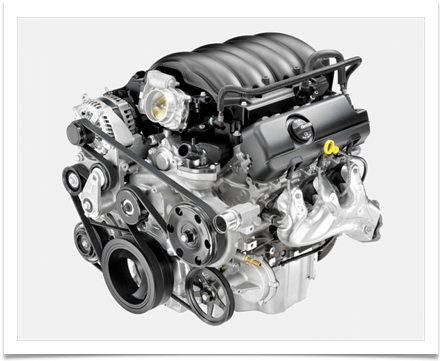
The EA837 vs EA839 engine question comes up almost every week in our inbox. Both are 3.0 litre Audi V6 engines. Both are called 3.0 TFSI. Both went into the S4, S5, A6, A7, Q5 and Q7. But they are not the same engine, and they do not swap into each other without a lot of work. If you buy the wrong one, you lose time and money.
We sell both engines. NJ Global Auto Parts has a tested EA837 3.0T supercharged engine for $3,900 and a tested EA839 3.0T turbo engine for $2,500, both shipped worldwide. See the EA837 engine listing and the EA839 engine listing, or send us your VIN and we will tell you which one your car needs.
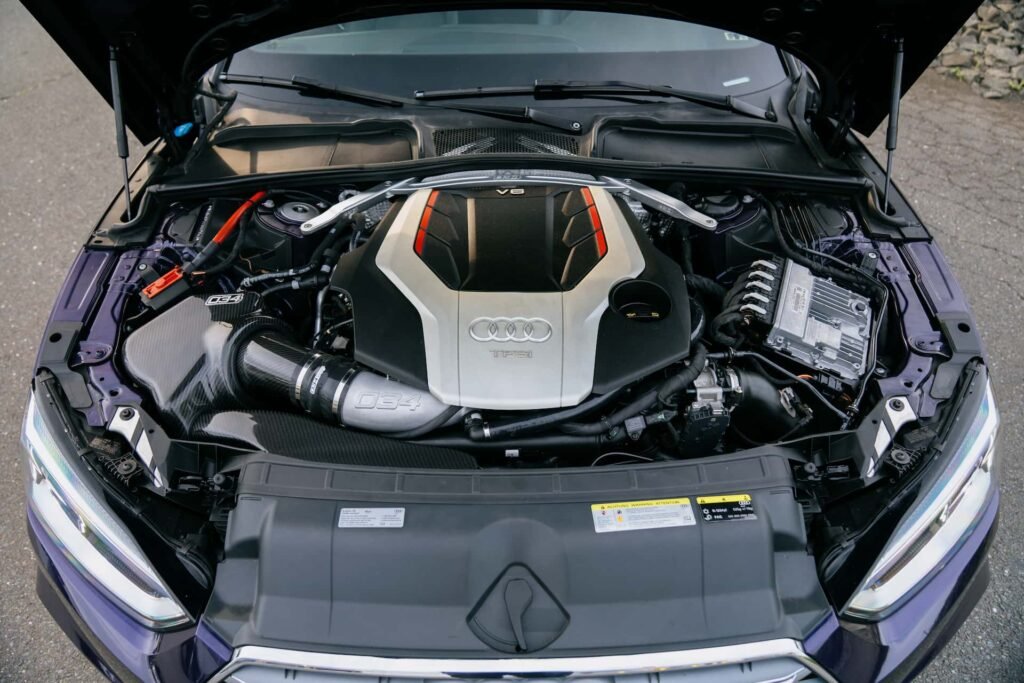
Table of Contents
This guide puts the EA837 vs EA839 engine side by side in plain language. Specs, how they make power, which cars use which, the common faults, and how to tell them apart in thirty seconds when you open the bonnet.
EA837 vs EA839 Engine: The Short Answer
The EA837 is the older supercharged 3.0 TFSI. It uses an Eaton supercharger sitting in the V of the engine, driven by a belt. It was used from about 2009 to 2018 depending on model.
The EA839 is the newer turbocharged 3.0 TFSI. It uses a single twin-scroll turbo sitting in the V, with the exhaust on the inside of the heads. It started showing up from around 2016 to 2017 and is used in current Audi and Porsche models.
Same size, same bore and stroke, very different engines. That is the EA837 vs EA839 engine story in one paragraph.
EA837 vs EA839 Engine Specs Side by Side
| Spec | EA837 3.0 TFSI | EA839 3.0 TFSI |
|---|---|---|
| Layout | 90 degree V6 petrol | 90 degree V6 petrol |
| Displacement | 2,995 cc | 2,995 cc |
| Bore x stroke | 84.5 x 89 mm | 84.5 x 89 mm |
| Forced induction | Eaton Roots-type supercharger in the V | Single twin-scroll turbo in the V (hot V) |
| Exhaust layout | Exhaust on the outside of the heads | Exhaust on the inside of the heads |
| Fuel injection | Direct injection | Direct injection at higher pressure |
| Compression ratio | About 10.3 to 10.8:1 | About 11.2:1 |
| Power | About 268 to 354 hp | About 335 to 354 hp in most Audi models |
| Torque | About 400 to 470 Nm | About 500 Nm |
| Timing drive | Chains at the gearbox end | Chains at the gearbox end |
| Years | About 2009 to 2018 | About 2016 onward |
| Our price | $3,900 tested | $2,500 tested |
Both engines are part of the wider Volkswagen Group engine range. The Volkswagen Group petrol engine list shows how they fit in, and Audi lists the current models using the EA839.
How Each Engine Makes Its Power
EA837: the supercharger
A belt from the crank spins the supercharger. Boost is there as soon as you touch the throttle. The engine feels sharp and linear, almost like a big naturally aspirated V8. The trade-off is that the supercharger takes some power to drive, so fuel use is a little higher.
EA839: the hot V turbo
The exhaust ports point into the V, and a single twin-scroll turbo sits right there. The short path from exhaust to turbo means quick spool, so lag is small. You get more torque low down and better fuel use. The trade-off is heat. A lot of heat sits in the middle of the engine, which puts more stress on nearby hoses, wiring and seals.
When people ask us about the EA837 vs EA839 engine for daily driving, we tell them both are strong. The EA837 feels more instant. The EA839 feels stronger in the middle and is easier on fuel.
Which Cars Use Which Engine
This is the part that matters most when you are buying a replacement.
Cars with the EA837 supercharged 3.0 TFSI
- Audi S4 and S5 B8 and B8.5
- Audi A6 C7 and A7 C7 3.0T
- Audi A8 D4 3.0T
- Audi Q5 3.0T and SQ5 in some markets
- Audi Q7 4L 3.0T and early Q7 4M 3.0T in some markets
- Porsche Cayenne S Hybrid, Panamera S Hybrid and VW Touareg Hybrid
Cars with the EA839 turbo 3.0 TFSI
- Audi S4 and S5 B9
- Audi A6 and A7 C8 55 TFSI
- Audi A8 D5 55 TFSI
- Audi Q7 and Q8 4M 55 TFSI
- Audi SQ5 FY
- Porsche Cayenne, Macan and Panamera models using the 3.0 V6 turbo
Some markets had overlap years where both engines were sold. Always go by the engine code, not just the model name. That is the safest way to settle the EA837 vs EA839 engine question for your car.
How to Tell Them Apart in 30 Seconds
Open the bonnet and take the plastic cover off.
- Supercharger on top, between the heads, with a belt running to the front pulley. That is an EA837.
- No supercharger. Turbo and hot exhaust pipework sitting deep in the V, usually under heat shields. That is an EA839.
- Exhaust manifolds on the outside of the heads near the wheel arches. EA837.
- Intake on the outside, exhaust on the inside. EA839.
Then check the engine code on the sticker in the spare wheel well or in the service book. Examples include CAKA and CGWB for the EA837, and CWGD and DLZA for the EA839. There are many others, so send us yours if you are not sure.
Can You Swap an EA839 Into an EA837 Car?
Short answer: not easily. The EA837 vs EA839 engine difference goes far beyond the supercharger. The intake and exhaust sides are flipped, so manifolds, downpipes, charge air coolers, wiring, sensors, ECU software and often the cooling system all change. Some builders have done it, but it is a big custom job, not a replacement.
If your car came with an EA837, buy an EA837. If it came with an EA839, buy an EA839. It is the cheapest and quickest way to get the car running right.
Common Problems on Each Engine
EA837 weak spots
- Plastic water pump and thermostat housing leaks
- PCV valve failure causing whistles, lean codes and oil use
- Carbon build-up on intake valves
- Supercharger isolator rattle at idle
- Timing chain tensioner wear at higher mileage
- Coil pack and spark plug misfires under boost
EA839 weak spots
- Heat in the hot V ageing hoses, coolant pipes and wiring near the turbo
- Coolant leaks from pipes and the water pump area
- Carbon build-up on intake valves, like most direct injection engines
- Coil pack and spark plug wear
- Electrical faults on cars with the 48 volt mild hybrid system
Neither engine is a bad engine. The EA837 has a longer track record and its faults are well known and cheap to fix. The EA839 is newer, more efficient and stronger, but it lives hotter. When we compare the EA837 vs EA839 engine for buyers, we tell them to focus on the condition of the actual engine more than the family.
EA837 vs EA839 Engine for Tuning
Both tune well. The EA837 gains a lot from a supercharger pulley swap and software. It is a cheap and popular way to add power. The EA839 gains a lot from software alone because it is a turbo engine, and it often makes more peak torque after a tune. The EA839 can get heat soaked in hot climates, so cooling matters more.
If you are buying a replacement engine for a tuned car, tell us. We will make sure the engine you get is a good base for it.
Fuel Use and Running Costs
In everyday driving the EA839 usually uses less fuel than the EA837, because a turbo uses exhaust energy that would be wasted, while a supercharger takes power from the crank. Service costs are similar for oil, filters and plugs. The EA839 parts can cost more because it is newer, and labour can be higher on cars with the mild hybrid system.
Purchase price is a different story. Our tested EA839 is $2,500 and our tested EA837 is $3,900. Prices move with supply, so ask us for a current delivered quote.
Which One Should You Buy?
For a replacement, the EA837 vs EA839 engine choice is simple: buy the one your car was built with. Matching the code means the wiring, software, cooling and exhaust all line up. Anything else turns a two day job into a project.
If you are building a project car from scratch and can choose, the EA839 gives more torque and better fuel use. The EA837 gives that instant supercharger feel and a long, well known service history. Both are good choices.
7 Checks Before You Buy Either Engine
Once you have settled the EA837 vs EA839 engine question for your car, the next job is making sure the engine you buy is healthy. These are the seven checks we run, and you should ask any seller about them.
1. Confirm the engine code
Read the code on the block and the sticker. It must match your car or be a known compatible code. Do not accept “it is a 3.0T, it will fit”.
2. Compression and leak-down
All six cylinders should be close. One low cylinder can mean a burnt valve or a ring problem. A leak-down test tells you where the air is going.
3. Oil condition
Look for milky oil, a fuel smell or metal flakes. Clean oil with no glitter is what you want to see.
4. Coolant condition
Oil in the coolant or a sweet smell from the exhaust points to gasket or head trouble. On the EA839, look closely at coolant pipes around the hot V.
5. Cold start chain noise
A short rattle for a second can be normal. A rattle that lasts or comes back at idle points to worn tensioners or guides. Both engines have chains at the back, so this is a big job if it needs doing later.
6. Supercharger or turbo condition
On an EA837, check for noise, oil leaks at the snout and rattle at idle. On an EA839, check the turbo shaft for play and look for oil in the charge pipes.
7. Photos and video of the actual engine
Not stock pictures. The real engine, running if possible. If a seller cannot do that, move on.
Every engine we sell has passed these checks, whichever side of the EA837 vs EA839 engine choice it sits on.
What They Feel Like to Drive
Owners who have had both describe them in a similar way. The EA837 feels like a big naturally aspirated engine with extra muscle. Press the pedal and it goes, right away, in a straight line up to the redline, with a faint whine from the supercharger. It is very easy to drive smoothly in traffic.
The EA839 feels stronger in the middle. It pulls hard from low revs once the turbo is awake, which takes very little time thanks to the hot V layout. It is quieter at cruise and tends to use less fuel on the highway. Some drivers miss the supercharger whine. Others prefer the extra torque. In the EA837 vs EA839 engine debate among enthusiasts, there is no clear winner. It comes down to what you like.
Hot Climates and Heavy Traffic
If your car lives in a hot country or spends a lot of time in stop and go traffic, cooling matters on both engines. The EA837 puts its supercharger and charge air coolers on top of the engine, and the plastic water pump and thermostat housings are the usual weak spot when they get old. The EA839 keeps its turbo and hot exhaust in the middle of the engine, so the hoses, wiring and seals in that area age faster in heat.
Either way, the fix is the same. Keep the radiator and fans healthy, use the correct coolant, check for leaks often, and do not ignore a temperature warning. Most of the failed engines we replace for buyers in the Gulf, Africa and hot parts of the Americas were overheated at some point. That is true on both sides of the EA837 vs EA839 engine line.
Repair or Replace?
When one of these engines has a serious fault, owners often ask if they should repair or replace. A simple way to think about it:
- Repair if the problem is outside the engine core: a water pump, a PCV valve, coils, plugs, a supercharger isolator or a turbo. These are normal service jobs.
- Replace if the problem is inside: scored cylinders, a spun bearing, bent valves after a chain failure, a cracked head or block. On an aluminium V6 with rear mounted chains, an internal repair quickly costs more than a tested used engine.
If you are on the replace side, we can usually ship the right engine quickly. Send us your engine code and we will confirm whether you need the EA837 or the EA839 and give you a delivered price.
Why Prices Differ Between the Two
You might expect the newer EA839 to cost more. On the used market that is not always how it works. Supply drives price. When lots of newer cars are broken for parts after accidents, more EA839 engines come onto the market. The EA837 has been out of production for some years, and clean low mileage examples are getting harder to find. That is why our tested EA837 is currently $3,900 and our tested EA839 is $2,500. Prices change, so always ask for a current quote.
How We Test Both Engines
- Compression test on all six cylinders.
- Oil and coolant check for contamination.
- Start up and listen for chain noise and knocks.
- Supercharger check on EA837, turbo check on EA839.
- Visual check for leaks, cracks and heat damage.
- Photos and video of the actual engine for the buyer.
We then drain fluids, seal openings and crate the engine for shipping.
Installing Your Replacement
Whatever side of the EA837 vs EA839 engine choice you land on, do these jobs when you fit it:
- Replace plastic cooling parts if they look old.
- Fit new spark plugs and check the coils.
- New oil and filter to the correct Audi spec.
- Flush the cooling system and charge air coolers if the old engine failed badly.
- On EA839, check hoses and wiring in the hot V area.
- Clear codes and run adaptations with a proper scan tool.
Shipping and Ordering
We crate both engines and ship by sea or air to buyers all over the world, including the United States, Canada, Mexico, the UK, Europe, the Gulf, Africa, Asia and Oceania. See our shipping policy.
- Send your VIN, engine code, car model and country through our contact page.
- We confirm EA837 or EA839 and send a delivered price.
- We send photos and video of the actual engine.
- You pay by bank transfer and get an invoice and order confirmation by email.
- We ship and send tracking and documents.
You can also call +1 (209) 733-0882 or email info@njglobalautoparts.com.
More Reading on Audi 3.0 Engines
- Audi 3.0 TFSI supercharged engine for sale
- Audi EA837 3.0T supercharged engine price
- Audi EA839 engine for sale
- Audi 3.0T replacement engine
- Used European car engines
- All Audi engines in our shop
EA837 vs EA839 Engine Buying Summary
If you skipped straight down here, this is what you need to know:
- Check your code first. The code on the block and the service sticker settles the EA837 vs EA839 engine question for your car.
- Supercharger on top means EA837. Turbo hidden in the V means EA839.
- Do not cross swap. The heads are flipped, so the intake, exhaust, wiring and software are all different.
- Check the condition, not just the family. A tired EA839 is worse than a healthy EA837, and the other way round.
- Fix the cooling system when you fit the engine. Heat is the main enemy of both.
- Get the delivered price in writing. Engine price plus freight to your door.
We get the EA837 vs EA839 engine question so often that we now ask for the VIN on every Audi 3.0 enquiry before we quote. It takes a minute and it saves buyers from expensive mistakes. If you are a workshop ordering for a customer, send the VIN and a photo of the engine bay and we will confirm the right engine the same day in most cases. The EA837 vs EA839 engine choice is easy once you have the code, and we are happy to check it for you.
Frequently Asked Questions
Does the EA837 vs EA839 engine choice change the gearbox?
Usually the car keeps its own gearbox. The EA837 vs EA839 engine difference is mostly in the engine bay, so match the engine to the car.
Which way should I go in the EA837 vs EA839 engine choice for a hot country?
Stay with what your car has. In the EA837 vs EA839 engine comparison, both cope with heat if the cooling system is in good shape.
Can you check the EA837 vs EA839 engine fit for my workshop customer?
Yes. Send the VIN and a photo of the engine bay and we will settle the EA837 vs EA839 engine fit before you order.
What is the main EA837 vs EA839 engine difference?
The EA837 is supercharged with the exhaust on the outside of the heads. The EA839 is turbocharged with a single turbo in the V and the exhaust on the inside.
Are they the same size?
Yes. Both are 2,995 cc with the same 84.5 mm bore and 89 mm stroke.
Which one is more reliable?
Both are good when serviced well. The EA837 has a longer record and well known fixes. The EA839 runs hotter in the V, so cooling parts and hoses need watching.
Can I put an EA839 in my B8 S4?
Not as a simple swap. Stick with the EA837 your car was built with.
How much are your engines?
Tested EA837: $3,900. Tested EA839: $2,500. Freight is added and confirmed in writing before you pay.
Do you ship worldwide?
Yes, by sea or air.
How do I pay?
By bank transfer, with an invoice and order confirmation by email.
Final Word on the EA837 vs EA839 Engine
Same size, same badge, two very different engines. The EA837 is the supercharged one with instant response. The EA839 is the hot V turbo with more torque and better fuel use. For a replacement, match your engine code and do not try to mix them.
Not sure which one you have? Send us your VIN. We will settle the EA837 vs EA839 engine question for your car and send a straight price for a tested engine with shipping to your door.