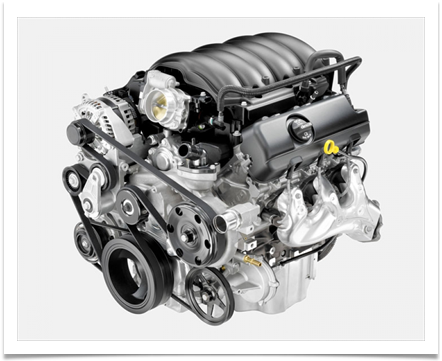
Nissan built two big 5.6 litre V8s with almost the same name. The VK56DE came first and went into the Titan, the Armada and the first QX56. The VK56VD followed with direct injection and a clever valve system, and it went into the Patrol Y62, the QX80, the newer Armada and the second generation Titan. Same size, same family, very different engines to own. If you are trying to sort out Nissan VK56DE vs VK56VD before buying a car or a replacement engine, this guide is for you.
We are NJ Global Auto Parts. We sell replacement engines and ship them worldwide, and the VK56 is one of our regular movers. Patrol owners in hot dusty places, Titan owners who tow, workshops that look after Armadas and QX80s, they all end up asking us the same Nissan VK56DE vs VK56VD question: which one do I have, which one is better, and can I swap one for the other.
Need an engine now? See our Nissan VK56DE engine for sale page, or send your VIN on the contact page and we will check VK56VD stock too.
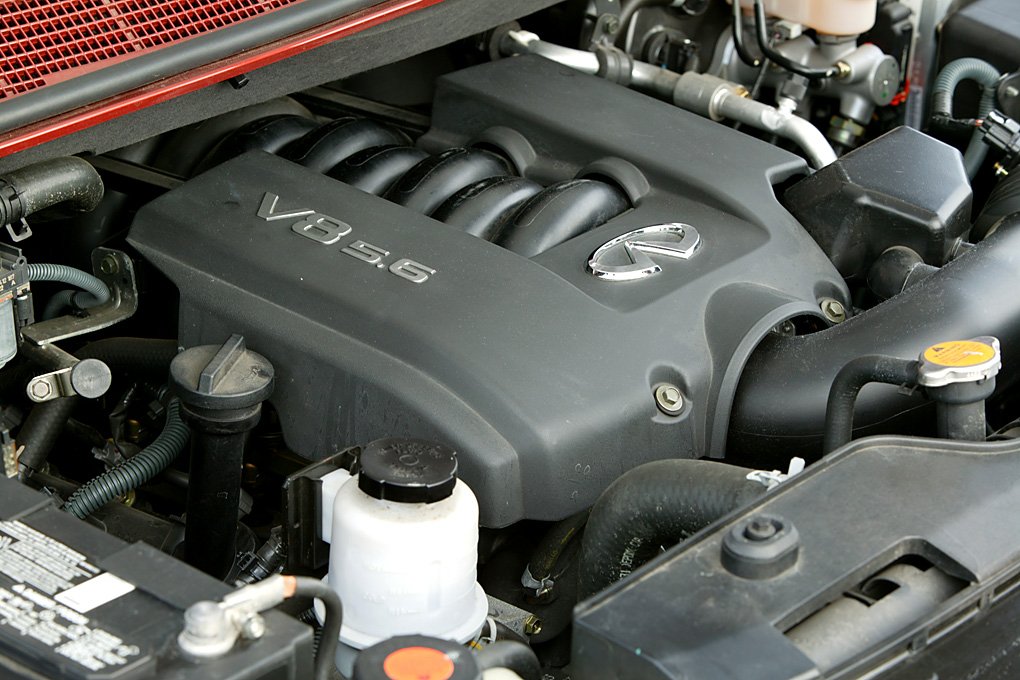
Nissan VK56DE vs VK56VD: The Short Answer
The VK56DE is the older, simpler engine. Port fuel injection, conventional variable cam timing, around 305 to 317 horsepower. It is easy to work on and parts are everywhere. Its weak spots are well known: exhaust manifolds, early catalytic converters and timing chain wear at high mileage.
The VK56VD is the newer engine. Direct injection, VVEL variable valve lift on the intake side, higher compression, around 390 to 400 horsepower. It is stronger and more efficient for its power, but more complex, and it brings direct injection habits like carbon on the intake valves.
So in the Nissan VK56DE vs VK56VD match up, the DE wins on simplicity and the VD wins on power and refinement. Which one is right depends on your vehicle, because in practice you usually replace like with like.
Nissan VK56DE vs VK56VD Specifications
| Specification | VK56DE | VK56VD |
|---|---|---|
| Layout | 90 degree V8 | 90 degree V8 |
| Displacement | 5,552 cc (5.6 L) | 5,552 cc (5.6 L) |
| Bore x stroke | 98.0 mm x 92.0 mm | 98.0 mm x 92.0 mm |
| Valve train | DOHC, 32 valves, chain driven | DOHC, 32 valves, chain driven |
| Variable valve control | Variable intake cam timing | VVEL variable lift on intake, variable timing on intake and exhaust |
| Fuel system | Port injection | Direct injection |
| Compression ratio | About 9.8:1 | About 11.0 to 11.2:1 |
| Block and heads | Aluminium | Aluminium |
| Power | About 305 to 317 hp | About 390 to 400 hp |
| Torque | About 520 Nm | About 535 to 560 Nm |
| Era | About 2003 to 2015 | About 2010 onward |
Look at the bore and stroke. They are the same. That is why people assume the two are near identical. They are not. The heads, valve train, fuel system, pistons, engine management and a lot of external parts differ. The Nissan VK56DE vs VK56VD difference is mostly above the block and in the electronics.
Which Vehicles Use Each Engine
VK56DE
- Nissan Titan, first generation, about 2004 to 2015
- Nissan Armada, first generation, about 2004 to 2015
- Infiniti QX56, first generation, about 2004 to 2010
- Nissan Pathfinder Armada in some markets
VK56VD
- Nissan Patrol Y62, 2010 onward
- Infiniti QX56 second generation and QX80
- Nissan Armada, second generation from about 2017
- Nissan Titan and Titan XD petrol, second generation from about 2016
If you own a Patrol Y62, you have a VK56VD. If you own a first generation Titan or Armada, you have a VK56DE. The confusing ones are the crossover years and grey imports, where the engine number is the only safe check. Every Nissan VK56DE vs VK56VD quote we give starts with that number.
How to Tell Which Engine You Have
- Read the engine number. It is stamped on the block and starts with VK56DE or VK56VD.
- Check the VIN. A dealer or a decent VIN decoder will show the engine.
- Look at the top of the engine. The VD has a high pressure fuel pump and different fuel rails because of direct injection.
- Check the power figure on the owner’s manual or sales sheet. Around 300 means DE, around 400 means VD.
Send us a photo of the engine number and we will confirm it. It saves a lot of wrong orders, and it settles the Nissan VK56DE vs VK56VD question for your vehicle in a minute.
Performance: How They Drive
The VK56DE is torquey and smooth, with a lazy, heavy feel that suits a big truck. It pulls a trailer without fuss. In Nissan VK56DE vs VK56VD terms, the VK56VD feels noticeably stronger, especially higher in the rev range, and it is more responsive thanks to VVEL. Put a Y62 Patrol next to an older Armada and the difference is obvious from the first push of the pedal.
For towing, both are good. For outright performance, the VD is clearly ahead. In a Nissan VK56DE vs VK56VD comparison purely on how the vehicle drives, most people pick the VD.
Fuel Economy
Neither of these is a fuel saver. They are big V8s in heavy vehicles. The VD makes much more power but, thanks to direct injection and VVEL, its fuel use is not much worse and can be similar in real driving. The DE, with older technology, uses about as much fuel for less power. Gearing, tyres, load and driving style matter more than the Nissan VK56DE vs VK56VD choice when it comes to what you spend at the pump.
Common VK56DE Problems
- Exhaust manifold cracks. The most common one. You hear a ticking, louder when cold. Broken manifold studs often come with it.
- Catalytic converter failure on early engines. Some early trucks had pre catalysts that broke down. Debris could be pulled back into the engine and score cylinders. If you are buying an early engine, ask about this.
- Timing chain and guide wear at high mileage, showing as a whine or rattle from the front of the engine.
- Oil leaks from valve covers and the rear of the engine.
- Water pump and cooling hoses as the engine ages.
- Spark plugs and coils, which are straightforward but need doing.
None of this makes the DE a bad engine. Many have run past 400,000 km. But when we talk Nissan VK56DE vs VK56VD, the DE’s list of known issues is older, longer documented and easier to plan for.
Common VK56VD Problems
- Carbon on intake valves. A direct injection side effect. Slow build up that brings rough idle and lost power over time.
- VVEL faults. The variable lift system has an actuator and sensors. Faults bring warning lights and rough running.
- Timing chain wear on some high mileage engines, especially with poor oil history.
- High pressure fuel pump issues, bringing lean codes and power loss.
- Exhaust manifold leaks, less common than on the DE but still seen.
- Cooling system wear, worth watching on Patrols working hard in hot climates.
The VD is generally regarded as a strong engine. The extra complexity means faults can be pricier to diagnose. That is the trade off at the heart of Nissan VK56DE vs VK56VD reliability.
Reliability: Which One Lasts Longer?
Honestly, both last a long time if serviced properly. Nissan VK56DE vs VK56VD is not a contest between a good engine and a bad one. The DE has the advantage of simplicity: fewer high pressure parts, no carbon problem, and lots of mechanics who know it. The VD has the advantage of later design and better materials in some areas, and it does not have the DE’s early catalyst issue.
In the engines we buy and sell, condition and history matter far more than the Nissan VK56DE vs VK56VD label. A well kept DE beats a neglected VD every time, and the other way round.
Can You Swap a VK56VD Into a VK56DE Vehicle?
This is the most common question we get. People with an older Titan or Armada want the extra hundred horsepower. Here is the honest answer:
- The blocks share bore and stroke, and the general shape is similar, so physically fitting it is possible in some vehicles.
- But the VD needs its own engine computer, wiring, fuel system that can feed a direct injection pump, and in many cases a matched transmission and software.
- Dash, immobiliser and emissions systems must all talk to the new engine.
- Local road and emissions rules may not allow it.
It can be done, but it is a project, not a weekend swap. We have seen Nissan VK56DE vs VK56VD swaps take months. For most owners, Nissan VK56DE vs VK56VD is not a choice at replacement time. You fit the engine your vehicle came with. If you want to talk about a swap project, contact us and we can supply a complete VD with the parts it needs.
Maintenance Differences
| Item | VK56DE | VK56VD |
|---|---|---|
| Oil changes | Regular, standard grade | Regular, be strict on interval |
| Spark plugs | Long life plugs | Long life plugs |
| Intake valve cleaning | Not needed | May be needed at higher mileage |
| Exhaust manifolds | Inspect, common failure | Inspect |
| Fuel system | Simple port injection | High pressure pump and injectors |
| Diagnostics | Basic scan tool works well | Better tool helps with VVEL |
The routine is similar. The VD just rewards strict oil changes and good fuel a bit more, and it may need an intake clean at some point. Factor that in when you look at Nissan VK56DE vs VK56VD running costs.
Patrol Y62 Owners: A Note on Heat and Dust
A lot of our VK56VD customers run Patrols in very hot, dusty places, and they often ask about Nissan VK56DE vs VK56VD because older Patrol owners want to know what they are moving up to. Desert driving and towing put huge load on the cooling system and air filter. Keep the radiator clean, use the right coolant, change air filters more often than the book says, and let the engine idle a minute after hard driving. Dust ingestion from a poor air filter is one of the quickest ways to wear out any engine, VD or DE.
Titan and Armada Owners: A Note on Towing
Towing heavy trailers is where these engines earn their keep. It also heats the oil and transmission fluid. Check fluids before long tows, use the tow mode, and do not lug the engine on long hills. A transmission cooler is worth fitting if your truck does not have a good one. Looked after like this, both sides of the Nissan VK56DE vs VK56VD choice will tow for a very long time.
A Little History of the VK Family
Nissan launched the VK series in the early 2000s for its luxury and large vehicles. The VK45DE 4.5 litre went into Infiniti saloons, and the VK56DE 5.6 litre was built in the United States for the new full size Titan and Armada. It was Nissan’s answer to the big American V8s, and it held its own.
By the end of the decade, emissions and fuel rules were tightening. Nissan reworked the 5.6 with direct injection and VVEL, the variable valve system it had first used on the VQ37VHR V6. The result was the VK56VD, launched in the new Patrol Y62 and the second generation QX56. That is the story behind Nissan VK56DE vs VK56VD: the same basic engine, rebuilt for a new decade.
Do Any Parts Interchange?
Some do, many do not. Here is a rough guide, but always check part numbers before buying.
| Part | Shared? |
|---|---|
| Basic block dimensions | Similar, but not always the same casting |
| Cylinder heads | No |
| Pistons | No, different compression and combustion design |
| Fuel injectors and rails | No |
| Intake manifold | No |
| Engine computer and harness | No |
| Some sensors and small parts | Sometimes |
| Accessories like alternator or AC compressor | Depends on vehicle |
The short version: when it comes to Nissan VK56DE vs VK56VD parts, assume nothing is shared until a part number says so.
Warning Signs on Either Engine
- Ticking from the exhaust area, louder when cold: likely a manifold crack
- Rattle or whine from the front of the engine: check the timing chain and guides
- Check engine light with misfire codes
- Rough idle on a VD: think carbon or VVEL
- Loss of power with lean codes: fuel pump or vacuum leak
- Oil or coolant level dropping
- Knocking from low down in the engine: stop and investigate now
Catch these early and most faults on both sides of the Nissan VK56DE vs VK56VD story stay as repairs rather than replacements.
Buying a Truck or SUV: Which Engine to Look For
If you are shopping for a used vehicle, the engine comes with the model, so the real question is which vehicle. An older Titan or Armada with a VK56DE is cheap to buy and cheap to fix, which suits a work truck or a budget family hauler. A Patrol Y62, QX80 or later Armada with the VK56VD is stronger and smoother, and better for long trips with heavy loads.
Either way, have the engine checked. A cheap vehicle with a tired engine can still be a smart buy if you price in a replacement engine from us. We are happy to quote one before you buy, so the Nissan VK56DE vs VK56VD question becomes a real cost comparison rather than a guess.
Cost of Ownership, Side by Side
| Area | VK56DE | VK56VD |
|---|---|---|
| Purchase price of used engine | Lower | Higher |
| Parts availability | Very good | Good |
| Common big repair | Exhaust manifolds | Intake carbon clean, VVEL parts |
| Diagnosis difficulty | Easy | Moderate |
| Fuel use for power made | Worse | Better |
Neither is a cheap engine to run in absolute terms, but the DE is the budget pick and the VD the performance pick. That is the honest Nissan VK56DE vs VK56VD summary for a buyer counting money.
Shipping and Fitting Your Engine
A complete VK56 is heavy and bulky, so we crate engines on pallets, seal the openings and ship by sea or air with tracking. When it arrives, have your mechanic compare it with the photos and engine number, swap over any parts the replacement does not include, fit new gaskets and fresh fluids, and follow the warranty fitting rules. On a DE we suggest checking the exhaust manifolds before fitting, since they are easier to deal with while the engine is out. On a VD, a quick check of the intake valves is worth doing at the same time. Ask us about either when you request your Nissan VK56DE vs VK56VD quote.
Repair or Replace?
On both sides of Nissan VK56DE vs VK56VD, exhaust manifolds, coils, sensors and leaks are repairs. Timing chain work is a bigger job but still a repair on a healthy engine. These are the cases where we usually see a replacement engine as the better choice:
- Scored cylinders from catalyst debris on early DE engines
- Knocking from bearing wear or oil starvation
- Overheating with head or gasket damage
- Snapped timing chain with valve damage
- Very high mileage with low compression and several major faults
Get a written repair price, then ask us for a delivered engine price. Compare honestly, including how long the vehicle will be off the road.
Buying a Used VK56: What to Check
- Engine code. The core of any Nissan VK56DE vs VK56VD purchase. Get the right one.
- Donor vehicle and year. Especially important on DE engines because of the early catalyst issue.
- Mileage. Known mileage beats a guess.
- Compression test on all eight cylinders.
- Exhaust manifolds. Cracked or not.
- Oil condition. No metal, no coolant.
- What is included. Complete engine or long block, sensors, harness.
- Warranty in writing.
We send engine codes, photos and test notes with every quote, whichever side of Nissan VK56DE vs VK56VD you need.
What We Supply
- Used VK56DE engines for Titan, Armada and QX56
- Used VK56VD engines for Patrol Y62, QX80, Armada and Titan
- Rebuilt units on request
- Complete engines and long blocks
- Worldwide shipping, crated and tracked
- Written warranty
More reading: our VK56DE buying guide, the page on rebuilt VK56DE engines, and our article on the VK56DE for Titan, Armada and Patrol.
Other Nissan Engines We Sell
- Nissan VQ40DE V6
- Nissan TD42 diesel for older Patrols
- Nissan ZD30
- Nissan YD25
- Nissan VR38DETT
See the full Nissan engines range or our shop.
How to Order
- Send your VIN, engine number and delivery country.
- We confirm DE or VD and send details and photos.
- You get a written quote with engine, warranty and shipping.
- Once confirmed, we crate and ship with tracking.
Start on our contact page.
About Our Warranty and Support
Every engine we sell comes with a written warranty. The terms depend on the engine and whether it is used or rebuilt, and we put them in writing before you pay, not after. Most warranties ask for fitting by a qualified mechanic, fresh oil and coolant, new filters, and a record of the work. Keep your receipts. If something goes wrong, they make the claim simple.
We also stay on the line after the sale. If your mechanic has a question during fitting, about a sensor, a bracket, or a part that looks different from the old engine, send us a message with a photo and we will help. Plenty of customers come back to us for their second and third engines because of that. When you are dealing with the Nissan VK56DE vs VK56VD question, it helps to have a supplier who answers the phone.
Nissan VK56DE vs VK56VD FAQ
Which is better, VK56DE or VK56VD?
The VD is more powerful and more modern. The DE is simpler and cheaper to keep. In the Nissan VK56DE vs VK56VD debate, the better engine is usually the one that fits your vehicle without a big conversion.
Is the VK56VD more reliable?
Both are reliable with good care. The VD avoids the DE’s early catalyst problem but adds direct injection and VVEL complexity.
Do both use a timing chain?
Yes. Neither has a timing belt.
Can I put a VK56VD in my Titan?
In a first generation Titan it is a major conversion, not a bolt in. A second generation petrol Titan already has the VD.
What does the VD in VK56VD mean?
It points to the direct injection and variable valve technology. DE refers to the older double overhead cam, electronically injected design.
Do you ship worldwide?
Yes, by sea and air.
Nissan VK56DE vs VK56VD: Pick the Right One and Get Moving
The Nissan VK56DE vs VK56VD question has a simple answer for most owners: check the engine number and fit the same type. Both are strong V8s that will give long service if you look after the oil, the cooling and the exhaust manifolds.
When you need one, we have them. Contact us on the contact page, browse used engines, or read more on the blog. For background on the family, see the Nissan VK engine overview and this explainer on variable valve timing.