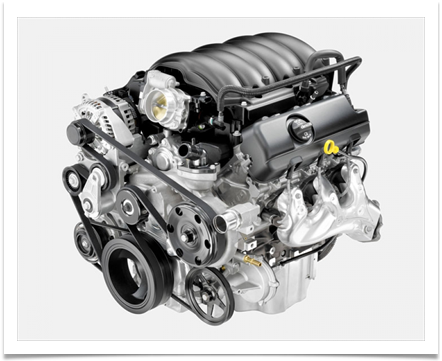
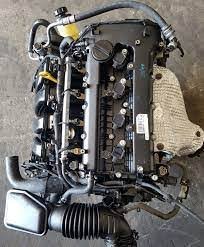
If you’re shopping for a Hyundai G4KE engine for sale worldwide, you’ve probably already read that this engine has an oil consumption problem and a rod bearing recall history — and you’re right to want more than a one-line warning before you spend money on a replacement. What actually matters is knowing which specific issues affect which model years, how to check a used unit before you buy it, and whether used, low-mileage, or remanufactured is the smarter call for your situation. That’s what this page walks through.
NJ Global Auto Parts tests and ships G4KE engines to Sonata, Santa Fe, Tucson, Optima, and Sorento owners across the US and internationally, and the buyers who do best with this engine are the ones who go in knowing exactly what to check rather than assuming any G4KE off a listing page is the same as any other.
What the Hyundai G4KE Actually Is
The G4KE is a 2.4-liter inline-four from Hyundai’s Theta II family, running dual overhead cams and multi-point fuel injection with an aluminum block and head. It replaced the earlier 2.4L Theta engine and was Hyundai and Kia’s mainstream mid-size engine for well over a decade, which is exactly why used units are widely available now — a huge number of Sonatas, Santa Fes, Optimas, and Sorentos ran this exact block.
It’s a reasonably strong-running engine when it’s healthy, and parts availability is excellent given how many vehicles used it. The issue isn’t the design being fundamentally weak — it’s that a specific subset of these engines, mostly built in a particular production window, developed oil consumption and bearing wear issues that Hyundai eventually addressed through a warranty extension and, for some model years, a class action settlement. Buying used means knowing whether the specific engine in front of you already had that issue addressed, is still at risk, or was built outside the affected window entirely.
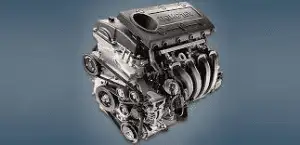
Hyundai G4KE Engine Specifications
| Specification | Detail |
|---|---|
| Configuration | Inline 4-cylinder, DOHC, 16-valve |
| Displacement | 2.4 L (2,359 cc) |
| Bore x Stroke | 88 mm x 97 mm |
| Compression ratio | 10.5:1 |
| Fuel system | Multi-point injection (MPI) |
| Power output | Approx. 176-179 hp @ 6,000 rpm |
| Torque | Approx. 168-170 lb-ft @ 4,000 rpm |
| Block/head material | Aluminum |
For the broader Theta engine family history and how the G4KE fits into it, the Hyundai Theta engine page on Wikipedia covers the full lineup, including the later GDI variants that replaced it.
Which Vehicles Used the G4KE — And Why That Affects What You’re Buying
| Make | Models | Years |
|---|---|---|
| Hyundai | Sonata | 2007-2019 |
| Hyundai | Santa Fe | 2010-2020 |
| Hyundai | Tucson / ix35 | 2010-2020 |
| Hyundai | Grandeur / Azera | 2008-2016 |
| Kia | Optima | 2008-2019 |
| Kia | Sorento | 2009-2020 |
| Kia | Sportage | 2011-2021 |
| Kia | Forte / Cadenza / Rondo | 2008-2013 (varies by model) |
The engine itself is essentially identical across these applications, but engine mounts, wiring harness connectors, and accessory brackets differ between Hyundai and Kia installations even though the manufacturers share the platform. If you’re doing a same-model replacement, fitment is straightforward. If you’re cross-shopping between a Hyundai-sourced and Kia-sourced engine for the same-generation vehicle, confirm mount and harness compatibility with us before ordering.
Used vs. Low-Mileage vs. Remanufactured — A Real Decision Framework
This is the choice that actually determines what you pay and what risk you’re taking on, and it deserves more thought than just picking whatever’s cheapest on the page.
A tested used engine with documented compression numbers and no history of the known oil consumption issue is the most economical path back to a running car, and it’s the right call if your budget is tight and you’re comfortable with a standard inspected-used warranty rather than paying more for extra peace of mind.
A low-mileage used engine costs more but reduces the odds you’re inheriting wear that’s already progressed partway toward a problem. This makes the most sense if you’re keeping the vehicle for years to come and want the longest runway before you’re dealing with an engine question again.
A remanufactured engine goes further still — new piston rings, bearings, and gaskets, with the block and head machined to spec — and it’s the right call specifically if your vehicle’s VIN falls inside the affected production window for the oil consumption issue, since a remanufactured unit eliminates that risk entirely rather than just hoping the specific engine you’re buying happened to escape it.
Tell us your vehicle’s VIN when you order, and we’ll check it against the known affected range and steer you toward the option that actually matches your situation instead of upselling you on more engine than you need — or, just as importantly, warning you off a used unit if your car’s history makes remanufactured the smarter call.
The Pre-Purchase Inspection Checklist
Whether you’re buying from us or comparing against another seller, this is what actually separates a safe used G4KE purchase from a gamble:
| Check | What to Look For |
|---|---|
| Compression test, all 4 cylinders | Numbers should be even across cylinders; a low or uneven reading points to ring or valve wear |
| Oil consumption history | Ask directly whether the engine was tested for oil consumption over a run cycle, not just visually inspected |
| Cold start rattle | Listen for a knocking or rattling sound on cold start, which can indicate piston slap — a known issue on affected units |
| Timing chain noise | A rattle that doesn’t clear once warm can point to chain tensioner wear |
| Head gasket / coolant condition | Check for coolant loss, milky oil, or exhaust smell in the coolant reservoir |
| VIN and build date | Cross-reference against the known affected production range for the oil consumption recall/settlement |
| Service records if available | A documented history of regular oil changes lowers risk regardless of production date |
We run every one of these checks on our own inventory before it’s ever listed, and we document the results so you’re not taking our word for it — you’re seeing what we actually found.
Common Reasons a G4KE Gets Replaced
Excessive oil consumption is the headline issue, usually tracing back to piston ring design on engines built within the affected window, and it shows up as needing to add oil well before the next scheduled change rather than any dramatic failure. Piston slap and audible engine noise often accompany this, especially noticeable on cold start and fading as the engine warms.
Connecting rod bearing damage is the more serious end of the same underlying issue, and if it’s progressed that far, a full replacement is usually more sensible than a partial repair. Overheating and head gasket failure round out the common list, and while this affects plenty of engines regardless of make, it’s worth ruling out separately from the oil consumption issue since the fix and cost involved are completely different.
How the Oil Consumption Issue Actually Happened
It’s worth understanding the mechanism, because it changes what “fixed” actually means when you’re evaluating a used engine. The issue traces back to debris left in the cylinder bore from the block manufacturing process on engines built within a specific window — that debris scored the cylinder walls slightly, which accelerated wear on the piston rings and let oil past into the combustion chamber faster than a healthy engine should burn it. It’s not a design flaw in the sense that every G4KE has this problem baked in; it’s a manufacturing quality issue that affected a subset of the production run.
Hyundai’s response varied by market and model year — some vehicles got a class-action settlement covering engine replacement, others got an extended powertrain warranty, and Hyundai also rolled out a software update for the Knock Sensor Detection System on affected vehicles, which is designed to catch the early warning signs of rod bearing wear before it becomes a catastrophic failure. If you’re buying a used G4KE that came out of a vehicle that already had this software update and, ideally, already had the engine replaced under the settlement, you’re getting a unit that’s less likely to be a ticking clock than one pulled from a vehicle that never had any of this addressed.
What a Remanufactured G4KE Actually Involves
When we say remanufactured, we mean the block gets bored and honed to spec, new pistons and rings go in — not just cleaned-up originals — new main and rod bearings are fitted, and the head gets a valve job with new seals. That’s a meaningfully different product than a used engine that’s simply been pulled, cleaned up, and tested, and it’s why the price difference exists. For a vehicle you’re planning to keep for years, or one where the VIN falls inside the affected production window, that difference is usually worth paying for the peace of mind alone, separate from any performance difference you’d actually feel behind the wheel.
Maintenance Tips Once Your G4KE Is Installed
Whichever option you choose, a few habits matter more on this engine than on a typical four-cylinder given its production history. Stay on top of oil changes and use the specification Hyundai calls for — thinner, higher-quality synthetic oil handles the tight tolerances in this engine better than a bargain conventional oil, and consistent oil quality is one of the few things within your control that affects long-term ring and bearing health. Check your oil level more often than you might on another vehicle, at least until you’ve built some confidence in how this specific engine is behaving, since catching rising oil consumption early gives you options that waiting for a warning light doesn’t.
Pay attention to any knocking or rattling noise, especially on cold start, and don’t dismiss it as “normal for an older engine” — on this specific engine family, that’s exactly the symptom associated with the bearing wear issue, and catching it early is the difference between a bearing replacement and a full engine loss. Keep the cooling system in good shape too, since head gasket failure is a separate but still common failure point, and a coolant flush on schedule is cheap insurance against it.
Why Buy From Us Instead of an Unknown Used Engine
Every G4KE we sell has been through compression testing, an oil consumption check, and a cold-start inspection for the piston slap noise associated with affected units — not just a quick look and a listing. You get documented results, not just a seller’s assurance that “it ran fine.” That documentation is exactly what you need if you’re trying to decide between used, low-mileage, and remanufactured in the first place, since it tells you where the specific unit you’re considering actually stands.
Kia vs. Hyundai Fitment — What Actually Differs
Since the G4KE turns up under both badges, it’s worth being specific about what carries over and what doesn’t when you’re sourcing a replacement from the “other” brand’s vehicle. The core block, head, and internals are shared, so displacement, compression, and power output are identical regardless of which brand the donor vehicle wore. Where it splits is engine mounts — Hyundai and Kia used different bracket designs even on shared platforms — along with some wiring harness connector styles and, on certain model years, different accessory drive pulley setups for the alternator and power steering pump.
Practically, that means a Sonata engine will need mount and harness adaptation to go into an Optima, and vice versa, even though it’s mechanically the same engine underneath. If you’re sourcing based purely on availability rather than an exact same-model match, tell us both the donor vehicle and the vehicle you’re installing into, and we’ll flag what needs adapting rather than you discovering a mismatched bracket after the engine’s already on your bench.
What a New Dealer Replacement Costs by Comparison
A brand-new G4KE isn’t something you can simply order from a Hyundai or Kia parts counter in most cases at this point — dealers typically source replacement engines through Hyundai’s remanufactured engine program or point you toward a full engine assembly at a price that, once you add dealer labor for the swap, runs well beyond what most owners of a vehicle this age want to spend relative to the car’s overall value. That gap is exactly why a tested used, low-mileage, or independently remanufactured engine makes sense for most owners — you’re getting a comparable outcome without paying dealer markup on a car that may not be worth that investment at full retail pricing.
How to Order a Hyundai G4KE Engine
Send us your VIN, current mileage, and how you’re planning to use the vehicle going forward. We’ll check the VIN against the known affected production range, walk you through which of our available units fit your budget and risk tolerance, and confirm pricing and warranty terms before you commit to anything.
Shipping This Hyundai G4KE Engine for Sale Worldwide
We ship G4KE engines internationally on a regular basis — crated and secured for standard freight handling to North America, Central America, the Middle East, Africa, and beyond. We handle export documentation and coordinate directly with your freight forwarder, or point you toward one we’ve worked with before if you don’t have one lined up.
Pricing and Warranty
Pricing on our Hyundai G4KE engine for sale worldwide reflects mileage, documented condition, and whether you’re choosing used, low-mileage, or remanufactured — current listing and pricing are on the product page linked below. Every engine we ship carries a warranty covering the components we’ve inspected, and remanufactured units carry extended coverage reflecting the additional work that’s gone into them.
Frequently Asked Questions
How do I know if my Hyundai or Kia is in the affected oil consumption range?
Send us your VIN and we’ll check it against the known affected production window before recommending which engine option fits your situation.
Is this Hyundai G4KE engine for sale tested before it ships?
Yes. Every unit gets a compression test, oil consumption check, and cold-start inspection before it’s listed.
Should I buy used or remanufactured if my car is in the affected range?
Remanufactured is the safer call if your VIN falls inside the affected window, since it eliminates the piston ring issue rather than hoping the specific used unit escaped it.
Will the engine include the wiring harness and sensors?
Listings specify exactly what’s included. Tell us your vehicle’s model and year and we’ll confirm before you order.
Can you ship to a freight forwarder instead of my home address?
Yes — give us your forwarder’s details and we’ll coordinate delivery directly with them.
What if I’m not sure this engine fits my specific vehicle?
Send us your VIN and we’ll confirm fitment before you commit to buying anything.
If you’re ready to move forward, check out our current Hyundai G4KE Engine For Sale listing, or read our earlier coverage of G4KE model compatibility and common problems for more background before you order. Get in touch and we’ll help you land the right Hyundai G4KE engine for sale worldwide for your Sonata, Santa Fe, Tucson, Optima, or Sorento.