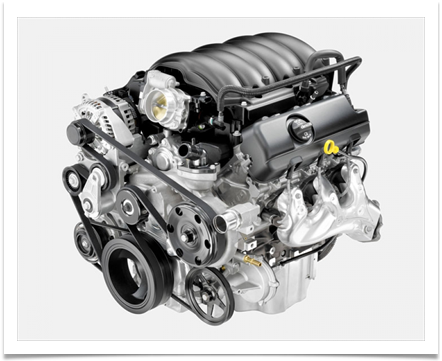
If you’re hunting for a 3.0L BMW M57 turbo diesel for sale, you already know these motors aren’t just another diesel option — they’re the engine that convinced a lot of skeptics that a diesel BMW could still feel like a BMW. We deal with these inline-sixes every week: pulling them from donor cars, testing them on the stand, and shipping them out to shops and DIYers around the world. This guide walks through what the M57 actually is, which version you’re probably looking at, what tends to go wrong on a tired one, and what a fair price looks like right now.
We’ll be straight with you up front: not every M57 is the same engine wearing a different sticker. There’s a real gap between an early single-turbo 184-horsepower unit out of a 2000 530d and a late twin-turbo 286-horsepower unit out of a 335d, and that gap matters when you’re trying to match an engine to a chassis or figure out what a swap will actually deliver. Keep reading and you’ll know exactly what to ask for before you spend a dollar.
What Is the BMW M57 Turbo Diesel Engine?
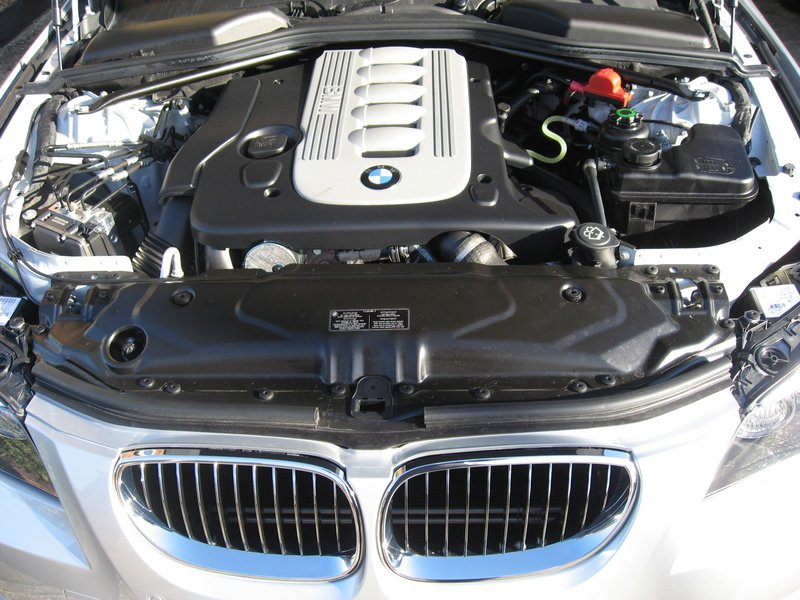
The BMW M57 diesel engine is a 3.0-liter inline-six built with a cast-iron block and an aluminum cylinder head, DOHC with 24 valves, and common-rail direct injection feeding a variable-geometry turbocharger on most versions. BMW produced it from 1998 into the early 2010s, and among people who actually work on these cars, it’s regarded as one of the best diesel sixes to come out of that era — full stop.
What set it apart wasn’t just the spec sheet. It was how the power arrived. Where a lot of diesels from that generation felt laggy off idle and flat up top, the M57 pulled hard and stayed smooth doing it, largely thanks to the variable-nozzle turbine geometry and, on the later cars, a second turbo picking up exactly where the first one ran out of breath.
The M57 Family: From the Original M57D30 to the Twin-Turbo M57TU2
BMW never stopped tweaking this engine, and that’s exactly why you need to know which version is under discussion before you buy.
M57D30 — The Original (1998–2001)
The first-generation M57D30 displaces 2,926cc and made 184 to 193 hp with roughly 390–410 Nm of torque, running a single Garrett variable-geometry turbo. You’ll find it in the E39 530d, the E46 330d and 330xd, early E38 730d cars, and the first E53 X5 3.0d. It’s the simplest version of this engine — fewer sensors, fewer failure points — which is part of why so many of them are still turning over.
M57TU / M57D30TU — The Technical Update (2001–2005)
BMW nudged displacement up to 2,993cc, revised the injection system and turbo control, and pushed output to somewhere between 204 and 231 hp depending on year and market, with torque climbing as high as 500 Nm on some tunes. This version shows up in the facelifted E46 330d, later E39 530d cars, the early E60/E61 530d, the E65 730d, the second-generation E53 X5 3.0d, and the E83 X3 3.0d.
M57TU2 / M57D30TU2 — The Final, Most Powerful Generation (2005–2013)
The last version split into two distinct tunes. The single-turbo M57TU2 made around 231 to 235 hp, while the twin-turbo tune — what BMW called bi-turbo — climbed to roughly 265 hp on earlier examples and topped out at 286 hp with 580 Nm of torque on the last ones built. If you’re chasing the strongest 3.0L BMW M57 turbo diesel for sale on the market, this is the generation to look for: it’s what powered the E90/E92 335d, the E60/E61 535d, the E70 X5 35d, and the E71 X6 35d.
There’s also a 2.5-liter sibling, the M57D25, used mainly in early E39 525d cars — worth knowing so nobody sells you the wrong displacement by accident. And this engine didn’t stay inside BMW showrooms, either. Land Rover sourced a version of the M57D30 for the 2002–2006 Range Rover L322, badged as the 3.0 Td6, before the Ford era of Land Rover switched to its own diesel. Opel used the smaller M57D25 in a handful of Omega B models around the same period.
BMW M57 Specs at a Glance
If you’re comparing a 3.0L BMW M57 turbo diesel for sale against anything else in this class, these are the numbers that matter.
| Variant | Displacement | Turbo Setup | Power | Torque | Production Years |
|---|---|---|---|---|---|
| M57D30 (original) | 2,926cc | Single VNT turbo | 184–193 hp | 390–410 Nm | 1998–2001 |
| M57TU / M57D30TU | 2,993cc | Single VNT turbo | 204–231 hp | 410–500 Nm | 2001–2005 |
| M57TU2 (single turbo) | 2,993cc | Single VNT turbo | 231–235 hp | ~500 Nm | 2005–2013 |
| M57TU2 (twin turbo) | 2,993cc | Twin sequential turbo | 265–286 hp | 560–580 Nm | 2005–2013 |
Every variant shares the same basic architecture: DOHC 24-valve aluminum head, cast-iron block, and common-rail direct injection. What changes across generations is mostly turbo hardware, injector flow rate, compression ratio, and ECU tuning. Redline sits around 4,750 rpm on all of them — this was never built to rev like a gas six, it was built to shove. Early cars run Bosch EDC15 engine management, while the TU and TU2 generations moved to EDC16 and eventually EDC17, which matters more than people realize if you’re planning a swap, since the ECU generation dictates what wiring and immobilizer work you’ll need to do.
Why This Engine Has Earned Its Reputation
Ask anybody who’s put 150,000 miles on a 530d or a 335d what they think of the M57, and you’ll hear a similar answer: it just keeps going. Three things drive that reputation.
Torque That Makes the Numbers Feel Bigger Than They Are
A 184-hp diesel doesn’t sound impressive next to a modern turbo-four gas engine putting up similar figures, but torque is the real story here. Even the original M57D30 makes more twisting force at 2,000 rpm than most naturally aspirated gas sixes make anywhere in their rev range, and the twin-turbo cars pull hard for a diesel — hard enough that plenty of owners never miss the six-cylinder gas engine they traded in. It’s exactly that kind of real-world pull that keeps a 3.0L BMW M57 turbo diesel for sale in steady demand among swap builders and daily drivers alike.
Efficiency Without Feeling Underpowered
These cars returned genuinely good fuel economy for their size and weight, which is a big part of why so many 530d, 730d, and X5 3.0d owners kept them well past 200,000 miles instead of trading in for something newer. It’s a big reason a well-cared-for 3.0L BMW M57 turbo diesel for sale still commands real money on the used market today.
A Build Quality That Rewards Maintenance
Cast-iron blocks don’t crack easily, the bottom end is stout, and the head design is well understood by independent shops at this point. Neglect one and it will still find a way to cause trouble — no engine is immune to that — but a maintained M57 has a well-earned reputation for going the distance.
That reliability record is exactly why demand for a solid 3.0L BMW M57 turbo diesel for sale never really dries up. These motors keep finding second and third lives in project cars and swaps long after the original chassis they came out of is gone.
Which Cars Take the M57? Compatibility and Chassis Codes
Here’s the compatibility rundown, chassis code by chassis code, since that’s what actually matters when you’re matching an engine to a car.
- 3 Series: E46 330d / 330xd, E90/E91/E92/E93 330d, E90/E92 335d (twin-turbo M57TU2)
- 5 Series: E39 530d, E60/E61 530d and 535d (535d runs the twin-turbo tune)
- 7 Series: E38 730d, E65/E66 730d
- X5: E53 3.0d, E70 X5 35d (twin-turbo)
- X3: E83 3.0d
- 6 Series: E63/E64 630d
- Land Rover: Range Rover L322 3.0 Td6 (2002–2006), built around a BMW-sourced M57D30
That last one surprises people, but it’s genuine — before Land Rover switched to its own diesel, BMW supplied the M57D30 for the early L322 Range Rover. If you’re chasing parts or a replacement for one of those, you’re shopping in the same pool as BMW owners.
This overlap is also why the M57 shows up so often in engine-swap builds. Drift and track-day BMW owners like the twin-turbo TU2 for the torque, and L322 restorers sometimes go looking for a fresher BMW-sourced unit instead of hunting down Td6-specific parts. Matching chassis code to variant is the first step. Get that sorted before you start browsing listings for a 3.0L BMW M57 turbo diesel for sale, especially if you’re eyeing a twin-turbo unit for a swap into an older chassis.
Common Swap Interest: Why Builders Put the M57 Into Older BMWs
You’ll find no shortage of people running an M57 in a chassis it never came in from the factory. E30 and E36 diesel drift and grip builds have used this engine for years, mostly because it hands you enormous low-end torque for not much money compared to building a comparable amount of grunt out of a gas six. Drop a twin-turbo M57TU2 into a lightweight older chassis and you end up with a car that pulls like nothing BMW ever actually sold with that body style.
None of that is a factory-supported swap, so go in with your eyes open. Custom mounts, a standalone or heavily adapted ECU setup, and a fabricated exhaust are part of the deal, and you’ll want to budget time and money for all three. But if you already know that and you’re just sourcing the engine itself, a tested 3.0L BMW M57 turbo diesel for sale from a reputable seller is a far better starting point than a mystery unit pulled from a wrecked car with no history.
Used, Rebuilt, or Remanufactured — Which Condition Should You Buy?
We typically stock this engine in three conditions, and each one suits a different kind of buyer.
Used, Low-Mileage
Pulled from a running donor vehicle, compression-tested, and inspected before it’s ever listed. This is the option most people looking for a straightforward, budget-conscious 3.0L BMW M57 turbo diesel for sale end up choosing, since it gets you a proven unit at a fraction of new-engine money.
Rebuilt
A rebuilt engine has had wear items replaced — seals, gaskets, sometimes the turbo — but keeps its original core components where they tested sound. It sits in the middle price-wise and works well if you want more confidence than a straight pull without paying for a full internal rebuild.
Remanufactured
This is the most thorough option: internals are measured, machined where needed, and rebuilt to spec with new wear parts throughout. It costs more, but it’s the closest you’ll get to a “new” M57 without buying direct from BMW, and it’s what we’d point you to for a car you’re planning to keep long-term or a swap you don’t want to revisit in two years.
Whichever condition you land on, ask what testing was actually done — compression numbers, leak-down results, turbo shaft play — instead of taking “fully tested” at face value. Any seller serious about this engine should have no problem showing you that data.
What to Check Before You Buy an M57
Before you commit to any 3.0L BMW M57 turbo diesel for sale, run through this list. It’ll save you from buying someone else’s problem.
Swirl Flap Failures (Pre-2007 Cars Especially)
This is the one to take seriously, and it mostly affects the earlier M57D30 and M57TU intake manifolds. The plastic swirl flaps inside the intake can crack or snap off, and if a flap breaks loose, it gets pulled straight into a cylinder — which is exactly as bad for the engine as it sounds. Check whether the flaps have been removed (a common and accepted fix) or replaced with a metal-flap delete kit before you buy any pre-2007 car built around this engine, and ask specifically whether the unit you’re looking at has already had this addressed.
Turbo Condition
Turbo failure on a high-mileage M57 usually shows up as shaft play, oil showing up in the intercooler piping, or a whine that wasn’t there before. On the twin-turbo TU2 units, check both turbos independently — it’s not unheard of for one to be fine and the other to be on its way out. This is exactly the kind of detail a tested 3.0L BMW M57 turbo diesel for sale should already have documented before it ever ships.
EGR and Injector Health
EGR valves gum up with soot over time and can stick open or closed; either way it hurts idle quality and emissions performance. Injectors on these engines are durable but not immortal — listen for excessive diesel knock at idle, which can point to a failing injector rather than just “that’s how diesels sound.”
ECU and Wiring Harness Match
This trips people up more than anything else on this list. The engine you’re buying has to match — or be adaptable to — your car’s ECU generation and wiring harness. A twin-turbo M57TU2 pulled from a 335d won’t just bolt into an early E39 without addressing the electronics, so confirm compatibility with whoever you’re buying from before the engine ships, not after it arrives.
Maintenance History
Timing chain guides and tensioners on the M57 can wear out over very high mileage, and a chain that’s jumped even one tooth will throw codes and hurt performance without necessarily killing the engine outright. Ask for service records if the seller has them, and pay attention to whether the oil looks like it was changed on a normal interval or stretched well past it. An engine with boring, consistent maintenance behind it is worth more than one with lower miles and no paperwork.
A reputable seller of a 3.0L BMW M57 turbo diesel for sale will walk you through all five of these points without being asked twice.
Realistic Pricing for a 3.0L BMW M57 Turbo Diesel for Sale
Prices move with condition, mileage, and which variant you’re after, but here’s a realistic range based on what we see move.
| Condition | Typical Price Range | Notes |
|---|---|---|
| Used, low-mileage (M57D30 / M57TU) | $1,200–$2,200 | Compression-tested, good for a direct replacement |
| Used, low-mileage (M57TU2 twin-turbo) | $2,000–$3,200 | Higher demand, especially for swaps |
| Rebuilt | $2,500–$3,800 | Wear items replaced, partial machining |
| Remanufactured | $3,800–$5,500+ | Full machining and new internals, longest expected life |
Complete engines with the turbo, injectors, and wiring harness included sit at the top of these ranges; a bare long block without accessories lands toward the bottom. Freight is quoted separately and depends on your location, so get a shipping number alongside the engine price rather than assuming it’s baked in.
How Ordering and Worldwide Shipping Works
We ship every 3.0L BMW M57 turbo diesel for sale worldwide, not just regionally, so don’t rule us out just because of where you’re located.
- Contact us with your chassis code, or VIN, and confirm which M57 variant fits your car
- We confirm stock and condition and get you a firm quote, including freight to your country
- The engine is crated and palletized for freight, with tracking provided from pickup to delivery
- You install with confidence, backed by whatever warranty terms apply to the condition you chose
International orders need a bit more paperwork than a domestic sale — commercial invoices, HS codes, and sometimes an import permit depending on your country’s rules around used engines. We handle the documentation on our end, but it helps to know your local customs requirements ahead of time so the engine doesn’t sit at a port while paperwork gets sorted out. If you’re not sure what your country requires, ask us before you order and we’ll tell you exactly what to expect.
Head over to the shop to browse what’s currently in stock, or if you’d rather talk it through first, our contact page is the fastest way to reach someone who actually knows this engine and can confirm fitment before anything ships.
Frequently Asked Questions
How do I tell which M57 variant I have?
Check the engine code stamped on the block near the bellhousing, or pull it from your car’s VIN and options. The short version: single-turbo cars built before 2005 are almost always the original M57D30 or the M57TU update, and anything with two turbos is the M57TU2.
Can I put a twin-turbo M57TU2 into an older single-turbo car?
Mechanically, often yes, since the block dimensions are close across the family. Electrically, it’s more work — you’re dealing with a newer ECU, different sensors, and different wiring, so budget for that before you commit to the swap.
Is a 3.0L BMW M57 turbo diesel for sale worth it over buying a whole used car?
If the rest of your car is solid and it’s just the engine that’s failed, replacing the engine is almost always cheaper than replacing the car, especially once you factor in a tested unit with a warranty instead of a gamble on someone else’s problem vehicle.
Do you ship outside the United States?
Yes. We ship this engine worldwide on a regular basis, with freight and documentation handled on our end.
Ready to Buy Your BMW M57?
If you’ve read this far, you already know more about this engine than most people shopping for one. The short version: figure out your chassis code, decide whether you want the extra confidence of a rebuilt or remanufactured unit versus a tested used engine, and check the swirl flaps and turbo condition on anything built before 2007.
We keep a rotating stock of this engine in multiple conditions, tested and ready to ship. Check the current price on our 3.0L BMW M57 turbo diesel for sale, or reach out directly if you need help confirming fitment before you order.