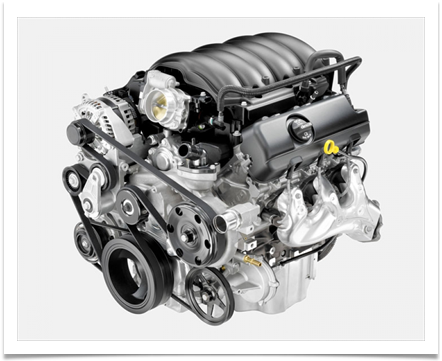
If you’re shopping for a HEMI 6.4L Engine for sale, you’re looking at one of the most capable V8s Chrysler has ever put into production. This is the engine that shows up under the hood of Challenger and Charger SRT models, the Durango SRT, the Grand Cherokee SRT, and the Ram 2500/3500 HD trucks — a genuinely versatile block that works just as hard hauling a trailer as it does putting down quarter-mile times. We stock tested used pulls, remanufactured long blocks, and new crate versions, and we ship every one of them worldwide. Below is what we tell customers on the phone every day: real specs, real pricing ranges, what to check before you commit, and how the order actually gets to your door.
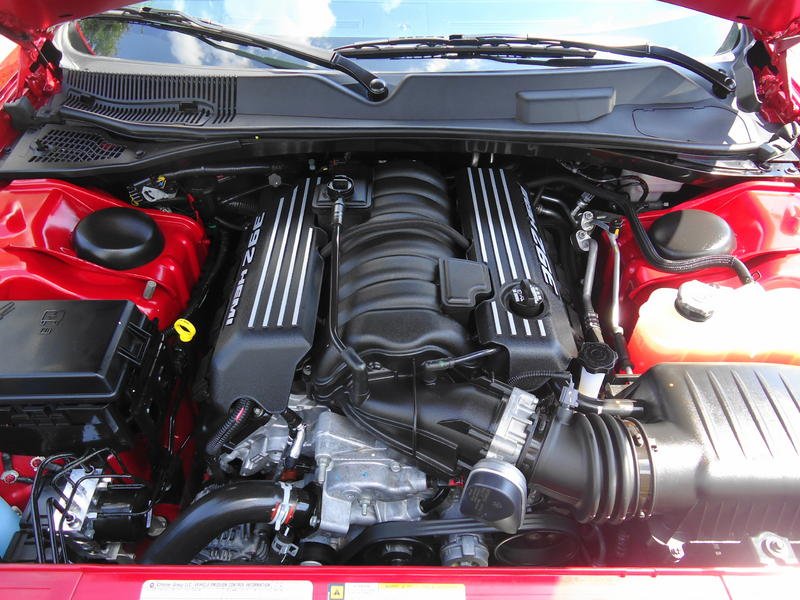
What Exactly Is the 6.4L HEMI (392) Engine?
The 6.4L, commonly called the “392” because of its 391.9 cubic inch displacement, is a third-generation member of the Chrysler Hemi engine family. It’s a naturally aspirated, pushrod OHV V8 — two valves per cylinder, hemispherical combustion chambers, a forged steel crank, and hypereutectic cast pistons. It’s not a high-tech overhead-cam design, and that’s part of why it holds up so well under abuse. Fewer moving parts at the top end means fewer things to fail when the engine is worked hard for years on end.
Chrysler introduced the passenger-car version of this displacement around 2011, building on the 5.7L and 6.1L Hemi architecture that came before it. A slightly different truck-spec version, sometimes referred to internally as the BGE, went into Ram heavy-duty pickups a few years later with a lower compression ratio tuned for towing and durability instead of peak horsepower. Both versions share the same basic bore-and-stroke layout and family DNA, but they are calibrated for very different jobs — one wants to rev and make power, the other wants to make torque all day at low RPM without complaint.
When people search for a HEMI 6.4L engine for sale, they’re usually cross-shopping either a performance swap for a Challenger, Charger, or older Mopar muscle car, or a heavy-duty replacement for a Ram truck that’s got too many miles on the factory unit. Both are common jobs for us, and both start with the same engine family.
Key Specs at a Glance
Numbers matter here, so let’s get them straight before anything else. These are the specs you should be comparing against whatever a private seller or a salvage yard is telling you.
| Spec | Detail |
|---|---|
| Displacement | 6.4L / 6,414cc (391.9 cu in) |
| Configuration | 90-degree V8, OHV pushrod, 2 valves per cylinder |
| Bore x Stroke | 4.090 in x 3.578 in |
| Block material | Cast iron |
| Cylinder heads | Aluminum, hemispherical combustion chambers |
| Compression ratio | 10.9:1 (car/SUV) / 10.0:1 (Ram HD truck version) |
| Fuel system | Sequential multi-port electronic fuel injection |
| Cylinder deactivation | MDS (Multi-Displacement System) on automatic-equipped car/SUV applications |
| Horsepower (Challenger/Charger SRT 392) | 485 hp |
| Torque (Challenger/Charger SRT 392) | 475 lb-ft |
| Horsepower (Grand Cherokee/Durango SRT) | 470 hp |
| Horsepower/Torque (Ram 2500/3500 HD) | 410 hp / 429 lb-ft (Aisin-equipped Mega Cab and dually models run 370 hp) |
One thing worth flagging: the passenger-car block and the truck block are not identical castings, even though people lump them together as “the 6.4.” The truck version uses a heavier-duty iron block shared with some Hellcat-family tooling and runs a milder cam and lower compression to survive 300,000-mile duty cycles under load. If you’re sourcing a HEMI 6.4L engine for sale to drop into a truck, don’t grab a Challenger pull assuming it bolts up cleanly — check which casting and accessory drive you’re actually getting.
Why This Engine Is Worth Buying
Buyers come to us for the 6.4 for three reasons, and honestly they’re all valid. First is raw output — 470 to 485 horsepower out of the factory, naturally aspirated, with no turbo lag and no supercharger belt to maintain, is a lot of easy power. Second is durability. The Gen III Hemi platform has been in production long enough now that the failure points are well documented, and a stock 6.4 that’s been maintained normally will go well past 150,000 miles without a rebuild. Third is flexibility — this is one of the few modern V8s that shows up in both a rear-drive muscle car and a 10,000-lb-capable pickup, so parts, tuners, and knowledge are widely available no matter which platform you’re building.
If you’re coming from an LS swap background, the Hemi will feel different in a couple of ways worth knowing up front. The pushrod, two-valve layout means it doesn’t rev as freely as some overhead-cam competitors, but it makes torque lower in the band, which is exactly what you want for towing or for a street car you actually drive rather than trailer to the track. And because MDS shuts down four cylinders under light cruising load, you get better real-world fuel economy than the horsepower number would suggest — assuming the lifters and solenoids are in good shape, which is one of the things we check on every used pull before it leaves our shop.
People also underestimate how much aftermarket support exists for this engine. Cam packages, long-tube headers, ported heads, and forged internals are all readily available because the platform has been popular for over a decade. If you buy a HEMI 6.4L engine for sale as a stock base and decide later you want more, you won’t be stuck sourcing rare parts from a niche supplier.
New Crate, Remanufactured, or Used — Which One Fits Your Job?
We sell all three conditions, and the right one depends on your budget and how much risk you’re willing to carry.
- New crate engine. This is a factory-fresh long block or complete assembly, zero miles, full warranty coverage. Mopar’s own 392 crate packages (the “Apache” builds, for example) push north of 500 hp with forged rotating assemblies and no MDS, aimed squarely at swap builders who want a known-good foundation. This is the safest option if the vehicle is a serious build and you don’t want any unknowns.
- Remanufactured / rebuilt. A reman 6.4 has been fully disassembled, machined to spec, and rebuilt with new bearings, rings, gaskets, and typically a new oil pump and timing set. It’s a good middle ground — most of the risk of a used engine is gone, but you’re not paying full crate-engine money. This is what we recommend most often for a daily-driven truck or car replacement.
- Used / low-mileage pull. These come out of wrecked or parted-out vehicles, and pricing depends heavily on documented mileage and whether it’s a running, tested pull versus an unknown unit. We compression-test and, where possible, run every used engine before it ships, and we’ll tell you honestly if one isn’t a good candidate rather than push it on you.
Whichever condition you land on, ask for documentation. A real compression test printout, mileage from the donor vehicle’s title or CarFax, and photos of the engine before it’s crated are things any legitimate seller of a HEMI 6.4L engine for sale should hand over without hesitation. If a seller won’t answer basic questions about the source, that’s a signal to keep looking.
Vehicle Compatibility: Factory Fits and Popular Swaps
The 6.4 Hemi has shipped from the factory in a wider range of vehicles than most people realize:
- Dodge Challenger SRT8 / SRT 392 (2011–2023)
- Dodge Charger SRT8 / SRT 392 (2012–2023)
- Chrysler 300 SRT8 (2012–2014)
- Jeep Grand Cherokee SRT (2012–2021)
- Dodge Durango SRT (2018–2024)
- Ram 2500 and 3500 HD (2016–present, standard gas option)
- Ram 4500 and 5500 chassis cabs
Beyond factory applications, the 6.4 has become a favorite swap engine for older Mopar muscle cars — first- and second-generation Challengers and Chargers, Dusters, Darts, even Jeep CJs and Wranglers where builders want modern reliability with a classic body. It’s also a common upgrade path for anyone replacing a tired 5.7 Hemi who wants a genuine power bump without switching engine families, since the accessory layout and general footprint are close enough that a lot of the surrounding hardware carries over.
For truck owners specifically, swapping a used or reman 6.4 into an HD Ram that’s thrown a rod or spun a bearing is usually far more cost-effective than a dealer replacement, and it gets you back to towing capacity faster than most machine shops can turn around a full rebuild.
What to Check Before You Buy
This is the part people skip, and it’s the part that saves you money. Before you pull the trigger on any HEMI 6.4L engine for sale, run through these:
- ECU and harness compatibility. The PCM has to match the engine’s calibration, and on later model years the ECU is often immobilizer-locked to the donor vehicle. Either buy the matching ECU, harness, and cluster together as a set, or plan on having a tuner do a standalone harness and flash. Don’t assume a random used ECU will just work — it usually won’t without extra effort.
- Transmission pairing. Most SRT applications ran either a 5-speed automatic (early years) or an 8-speed automatic (later years), and truck applications ran a 6-speed automatic or, in some Mega Cab/dually configurations, an Aisin. Torque converters, bellhousing bolt patterns, and flexplates are not interchangeable across all of these. If you’re keeping your existing transmission, confirm the engine you’re buying matches its generation.
- Emissions and smog considerations. If your state does visual or functional smog inspection, a swapped engine generally needs to retain (or match) the emissions equipment appropriate to the vehicle’s model year, and in stricter states an engine swap can trigger a referee inspection. Check your local rules before you commit to a swap that crosses model years or vehicle classes.
- MDS lifters and solenoids. On MDS-equipped engines, ticking lifters are the most common complaint we hear about from other sellers’ used units. Ask specifically whether MDS was tested and whether the lifters were inspected, not just whether “the engine ran.”
- Accessory drive and oil pan differences. Car, SUV, and truck applications use different oil pans, motor mount bosses, and sometimes different water pump routing. Match your donor engine to your chassis type, not just the displacement number.
None of this is meant to scare you off — the 6.4 is a straightforward engine to work with once you know these details. It’s just that “6.4 Hemi” covers several distinct hardware variants, and matching yours correctly up front is a lot cheaper than discovering a mismatch after the engine’s already in the car.
Common Wear Points and What Good Maintenance Looks Like
Every engine has a personality once it’s got some miles on it, and the 6.4 is no exception. Knowing what tends to wear helps you evaluate a used unit and helps you keep whatever you buy running well for the long haul.
Exhaust manifold bolts and studs are a known weak point across most Gen III Hemi displacements, the 6.4 included — they can loosen or snap from heat cycling, and you’ll hear it as a light tick that gets louder under load. It’s a cheap fix if caught early and a nuisance if ignored for years, so it’s one of the first things worth checking on a used engine before you buy it, not after. Oil consumption is another item to ask about directly; a healthy 6.4 shouldn’t be burning noticeable oil between changes, and if a seller hedges on that question, treat it as a red flag rather than a minor detail.
On the maintenance side, the single biggest thing you can do for longevity is stick to the oil change interval and use a quality full-synthetic oil — these engines run hot heads and tight tolerances, and cheap oil stretched too far is how you end up with premature cam lobe or lifter wear. If you’ve added a tune or you’re running the engine harder than stock, shorten that interval rather than lengthen it. Coolant system upkeep matters too; the aluminum heads on a cast-iron block create a bimetallic setup that’s sensitive to old, acidic coolant, so don’t let flush intervals slide just because the temp gauge looks fine.
If you’re pairing your HEMI 6.4L engine with a heavier-duty use case — think towing near the max rating on a Ram HD, or repeated track days on an SRT car — pay extra attention to the transmission cooler. The 6.4 makes enough torque that the factory cooling setup can get overwhelmed under sustained load, and a cooked transmission is a far more common failure than anything actually going wrong inside the engine itself. Honestly, the 8-speed handles the torque just fine on its own; it’s heat that kills these, not load, so don’t cheap out on cooling if you’re going to use the truck the way it’s rated to be used.
Frequently Asked Questions
Is a used HEMI 6.4L engine reliable enough to buy with confidence?
Yes, provided it’s been evaluated properly. A used 6.4 with documented mileage, a passed compression test, and no history of overheating is a genuinely solid buy. The platform has years of production behind it, so most of the ways these engines fail are well known and easy to check for ahead of time rather than a mystery you discover after installation.
Can I put a 6.4L Hemi in a vehicle it didn’t originally come in?
Plenty of people do, especially into older Mopar chassis and Jeeps. You’ll need to sort out motor mounts, the accessory drive, wiring, and likely a standalone or aftermarket engine management setup depending on how far off-platform you’re going. It’s a well-traveled path with a lot of documented builds to reference, so you’re not figuring it out from scratch.
How long does shipping take for an international order?
It depends on the destination port and local customs processing, which is outside our control, but domestic freight typically runs a matter of days and international shipments are quoted with an estimated transit window at the time you order. We’ll walk you through the realistic timeline for your specific country before you commit to anything.
Do you offer any warranty on a HEMI 6.4L engine for sale?
Coverage depends on condition. New crate engines carry manufacturer warranty terms, remanufactured units come with our own coverage period, and used pulls are sold with the testing documentation described above so you know exactly what you’re getting. Ask us directly about the specific unit you’re considering and we’ll give you the exact terms in writing before you pay.
HEMI 6.4L Engine for Sale: What It Actually Costs
Pricing swings a lot based on condition, mileage, and whether you’re buying a bare long block or a complete drop-in unit with accessories. Here’s a realistic range based on what we see move:
| Condition | Typical Price Range (USD) | Notes |
|---|---|---|
| Used, tested pull (moderate mileage) | $2,500 – $4,500 | Long block or complete engine, compression-tested |
| Low-mileage used pull | $4,500 – $6,500 | Documented low mileage, often from a wrecked late-model vehicle |
| Remanufactured / rebuilt | $6,000 – $9,000 | New bearings, rings, gaskets, machined to spec, warranty included |
| New crate engine (stock output) | $8,000 – $10,500 | Zero-mile, factory-sealed, full warranty |
| New crate engine (performance/forged, e.g. Apache-style builds) | $11,000 – $16,000+ | Forged internals, higher output, aimed at swap and performance builds |
These ranges move with the market and with whatever accessories are included — accessory brackets, intake, exhaust manifolds, and a torque converter can add several hundred dollars either way. When you check the current price on our HEMI 6.4L engine for sale product page, you’ll see exactly what’s bundled with that specific unit so there’s no guessing at checkout.
How Ordering and Worldwide Shipping Works
We ship engines internationally on a regular basis, not as an occasional exception, so the process is built around it rather than bolted on afterward. Here’s the short version of how it goes once you order:
- We confirm the exact application (car/SUV vs. truck casting, model year range, transmission pairing) before the engine is pulled from inventory, so you’re not guessing about fitment after it’s already shipped.
- The engine is drained, crated on a purpose-built pallet, and photographed before it leaves our facility — you get those photos as a record of condition at time of shipment.
- Freight is quoted based on your destination, whether that’s a domestic address or an overseas port, and we handle the export paperwork on our end for international orders.
- Tracking is provided the moment the crate leaves our dock, and our team stays reachable through delivery — not just through checkout.
If you’ve got questions about freight cost to your specific country, engine availability, or which variant fits your vehicle, it’s faster to just reach out to us directly than to guess from spec sheets alone. We deal with this exact question daily and can usually tell you in a couple of minutes whether a given engine will bolt into your application.
Ready to Move Forward
The 6.4L Hemi earns its reputation honestly — big naturally aspirated power, a truck-duty version built for towing, and enough production history that parts and knowledge aren’t hard to find. Whatever’s driving the search, a blown factory engine, a swap project, or a fleet truck that needs to get back to work, we’ve got tested inventory across all three condition tiers and we’ll tell you straight which one makes sense for your budget and your timeline.
Check current stock and pricing on our HEMI 6.4L Engine for sale listing, or browse the rest of our engine inventory if you’re comparing against other displacements. Either way, get in touch before you buy elsewhere — we’d rather answer your fitment questions up front than have you deal with a mismatched engine later.