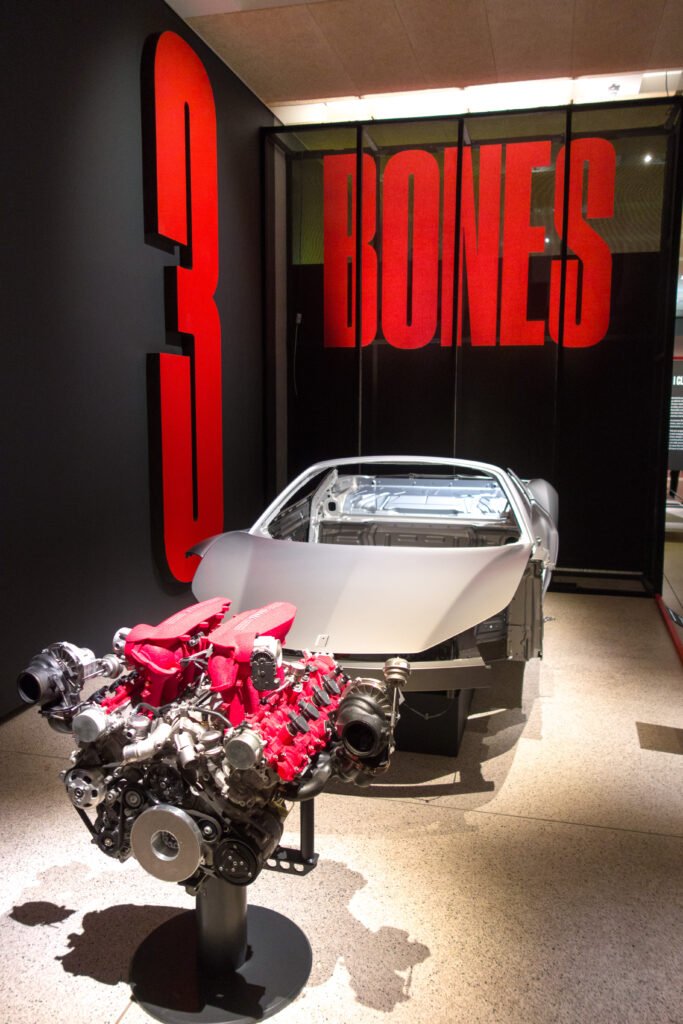
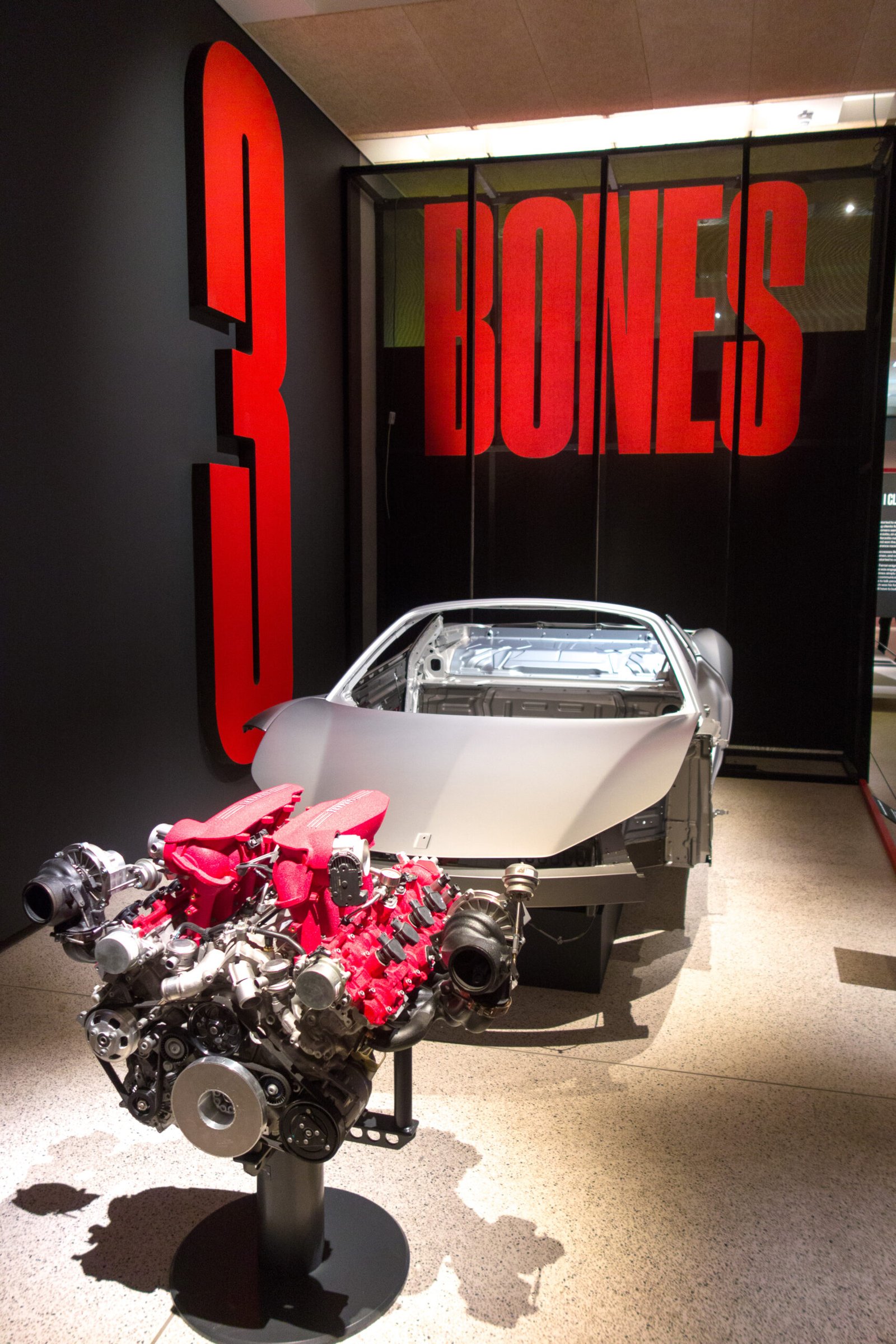
If you’re hunting for a Ferrari F136FB Engine for sale, you already know this isn’t a part you find sitting on a shelf at the local dismantler. The F136FB is the 4.5-liter, naturally-aspirated V8 that Ferrari built specifically for the 458 Italia and 458 Spider, and it’s one of the last great high-revving, direct-injected V8s the company made before turbocharging took over the mid-engine lineup. We deal with engines like this regularly, and every conversation about one starts the same way: confirming exactly which F136 code you need, because the family has several, and only one of them is a true F136FB.
What the F136FB Actually Is, and Why the Code Matters
Ferrari and Maserati shared a V8 architecture for the better part of two decades, and internally that whole family carries the “F136” designation. That’s where the confusion starts. People searching for a Ferrari F136FB Engine for sale sometimes get quoted the wrong variant, because a seller lists “F136” without the suffix and assumes buyers won’t check.
The suffix is the whole story. F136E and F136ED are the 4.3-liter versions out of the F430 and F430 Scuderia. F136I and F136IH are the smaller displacement units Ferrari built for the California. Maserati ran its own sub-codes — F136Y in the Quattroporte S and GranTurismo S, F136R in the Coupé and Spyder — at a different displacement again. None of those are the engine you want if you’re rebuilding, restoring, or swapping into a 458.
FB is the code Ferrari assigned to the 4,497cc version built exclusively for the 458 Italia and 458 Spider. There’s a related FL code used in the later, higher-output 458 Speciale, which shares the same basic architecture and displacement but runs different internals to make more power. If someone offers you an FL and calls it an FB, or vice versa, that’s a red flag worth pausing on — the parts aren’t universally interchangeable and the documentation should say exactly which one you’re getting.
Part of what we do before any engine leaves our hands is confirm the casting numbers and stamped codes match what the paperwork claims, because at this price point a mislabeled engine is not a small mistake.
For a deeper technical history of how these codes evolved across Ferrari and Maserati platforms, the Ferrari-Maserati F136 engine family is well documented, and it’s worth a read if you want the full lineage rather than just the 458-specific slice we’re covering here.
F136FB Specifications at a Glance
Here’s what you’re actually buying, spec for spec, if you go through with a Ferrari F136FB Engine for sale purchase. These are the verified factory figures for the F136FB as fitted to the 458 Italia and 458 Spider, not rounded marketing numbers pulled from a brochure.
| Spec | Value |
|---|---|
| Engine code | Ferrari Tipo F136 FB |
| Configuration | 90° V8, flat-plane crankshaft |
| Displacement | 4,497 cc (4.5L) |
| Bore x Stroke | 94 mm x 81 mm |
| Compression ratio | 12.5:1 |
| Valvetrain | DOHC, 4 valves per cylinder (32 total) |
| Fuel delivery | Direct injection |
| Aspiration | Naturally aspirated |
| Power | 562 hp (419 kW) @ 9,000 rpm |
| Torque | 398 lb-ft (540 Nm) @ 6,000 rpm |
| Redline | 9,000 rpm |
| Lubrication | Dry sump |
| Applications | Ferrari 458 Italia, Ferrari 458 Spider (2009–2015) |
A couple of those numbers deserve context. 12.5:1 compression on a naturally-aspirated engine is genuinely high for a road car, and it’s a big part of why the F136FB revs the way it does and why it demands premium fuel without exception.
The dry sump system isn’t there for marketing — it keeps oil supply consistent under the kind of lateral and longitudinal g-loads this car is capable of generating, something a wet sump setup would struggle with at the track. If you’re pulling one of these for a track-focused build, keep the factory dry sump tank and plumbing together as a set; sourcing that separately later is its own headache.
Why the F136FB Is Worth Caring About
Flat-plane crank V8s aren’t common outside of Ferrari and a handful of American attempts to chase that sound (the Voodoo in the GT350 being the obvious one). The 180-degree crank arrangement lets the engine breathe and rev like two four-cylinder banks working together, rather than fighting the firing-order compromises a cross-plane crank imposes.
That’s the mechanical reason this engine wants to spin to 9,000 rpm and actually makes usable power the entire way there, instead of running out of breath past 6,500 like most V8s. It’s also why it sounds the way it does — that hard-edged, almost race-car snarl rather than the classic American V8 burble.
The 458’s engine was also a genuine technical milestone for Ferrari. It was the first mid-engine road car from the company to use direct fuel injection, which let engineers run that 12.5:1 compression ratio without the detonation problems port injection would have caused at those pressures.
Combine that with a genuinely low-inertia rotating assembly and you get, in a Ferrari F136FB Engine for sale listing like this one, an engine that changes revs almost as fast as a motorcycle engine relative to its displacement. Drive a 458 back to back with a turbocharged 488 and the difference in throttle response is not subtle — the F136FB is the last of a breed before turbocharging became mandatory for emissions and efficiency reasons across the range.
None of that is retro nostalgia talk for its own sake. It matters practically if you’re buying this engine, because it means there’s no substitute for it in a 458 that’s chasing the character the car was built around. Swap in a later turbo unit and you get more torque and probably more peak power, but you lose the entire reason a lot of people bought a 458 Italia in the first place. That’s the case for sourcing a proper Ferrari F136FB Engine for sale rather than “upgrading” to something newer.
There’s also a competition pedigree worth mentioning. Derivatives of this same architecture ran in the 458 Challenge one-make series and the GT2/GT3 racing programs, tuned differently for those applications but built on the same fundamental bottom end and flat-plane layout. Ferrari doesn’t build a race-capable bottom end for a road-going Ferrari F136FB Engine for sale by accident — the FB was engineered with enough margin in the block and rotating assembly to survive being run harder than most owners ever will. That’s part of why well-maintained examples hold up so well even after track use, provided the maintenance intervals were actually respected.
What “Sourcing One” Actually Looks Like
Ferrari didn’t build the 458 in Camry numbers, and it built even fewer F136FB units as standalone spares. So let’s be honest about where a usable engine actually comes from, because it’s not a mystery parts warehouse pulling fresh units off a shelf.
- Verified low-mileage take-outs. These come from cars that were mechanically sound but written off, retired for a swap to a newer platform, or parted after an unrelated collision that didn’t touch the drivetrain. This is the best-case scenario and where we focus our sourcing effort.
- Engines from damaged or salvage 458s. A front-end or rear-clip collision can total a car on paper while leaving the engine completely untouched — sometimes it never even fired again after the accident because the harness or ECU took damage, not the block. These need more careful vetting, but they’re often excellent engines at a fair price.
- Theft-recovery and insurance-total units. Less common, but they exist, and when the paperwork is clean they’re no different from a salvage unit in terms of mechanical condition.
What we won’t do is sell you a mystery block with no history attached. Every Ferrari F136FB Engine for sale listing that goes out through us comes with whatever documentation exists — donor VIN, mileage at the time it was pulled, and photographs from the teardown or removal process. If a seller can’t tell you where the engine came from, that’s not a minor omission on something built to this level of precision; it’s the difference between a confident purchase and a gamble.
Sourcing one of these isn’t like ordering a Camry engine off a parts site. Expect a real conversation about provenance and documentation before we ship anything, and expect us to ask you questions too — what you’re building, whether the ECU and harness are coming with it, and what your inspection expectations are. That back-and-forth isn’t friction for its own sake. It’s how you avoid an expensive mistake on an engine that costs what this one does to replace twice.
Where the F136FB Fits: 458 Italia and 458 Spider Only
A Ferrari F136FB Engine for sale fits two cars, and only two: the 458 Italia coupe and the 458 Spider convertible, both produced roughly between 2009 and 2015. If you’re restoring or repowering one of those specific cars, this is a factory-correct, drop-in-appropriate engine, assuming the supporting electronics come along with it. That’s the straightforward case.
Where it gets more complicated is engine swaps into something else. Unlike an LS-series V8, which has decades of aftermarket support, standardized mounting patterns, and a huge community solving every integration problem in public, the F136FB was never designed with swap flexibility in mind. It’s a stressed member in the 458’s chassis — the engine itself bolts to the subframe and helps carry structural loads, not just sit in a bay bolted to mounts. The wiring and ECU are tightly integrated with the rest of the car’s systems, from the dual-clutch transmission control to the electronic differential, and none of that talks easily to anything outside Ferrari’s own ecosystem.
We’re not saying it’s impossible — specialist shops have done custom transplants of Ferrari V8s into other chassis, usually kit cars or bespoke builds where someone is willing to fabricate mounts, adapt cooling, and either run a full donor ECU/harness setup or reverse-engineer a standalone management solution. It’s a serious undertaking, not a weekend project, and it’s rare enough that you should budget real engineering time and money on top of the engine’s own cost. If your plan is a straightforward 458 repower rather than an exotic transplant, this whole section is easier than it sounds — just make sure the ancillaries you need are part of the package.
What to Check Before You Commit to a Purchase
A few things separate a good Ferrari F136FB Engine for sale purchase from a bad one at this level, and we’d rather you know them going in than find out after the engine arrives.
- Matching ECU and wiring harness. The 458’s engine management is not a generic plug-and-play system. If you’re buying the engine alone without the matching ECU, ask specifically how it will be commanded — either sourcing the matched electronics from the same donor or planning for a standalone system from the start.
- Verified mileage and service history. Ask for whatever service records exist. A 458 with documented oil changes, belt/chain service, and no history of overheating tells a very different story than one with no paper trail at all.
- Compression or leak-down numbers, where available. Not every take-out engine can be run and tested before shipping, but when it can, ask for the numbers across all eight cylinders. Even a quick compression check catches obvious problems before they become your problem.
- Physical condition of the block and heads. Photos of the exterior only tell you so much. Ask whether the valve covers have been off, whether there’s any visible coolant intrusion at the head gaskets, and what the timing components look like.
- Reason for removal. A straightforward answer — collision, platform swap, insurance total — is a good sign. Vague or evasive answers about why a perfectly good engine came out of a car are worth pressing on.
None of this is us trying to talk you out of the purchase. It’s the same checklist we run through internally before we agree to list a Ferrari F136FB Engine for sale in the first place, and a buyer who asks these questions upfront is a buyer we’re glad to work with.
Pricing: Why We Quote Rather Than List a Number
We’re not going to throw a fake price range on this page to satisfy a scroll-past shopper, because it would be dishonest. Exotic engine pricing swings on real variables: whether the ECU and harness are included, verified mileage, cosmetic condition, whether it’s been run and tested since removal, and current market demand, which moves noticeably for 458 parts as more of these cars age into the used-exotic sweet spot.
What we can tell you honestly is that a genuine, documented F136FB commands a real premium over a common engine — this isn’t a $2,000 junkyard pull, and anyone quoting it like one is either misinformed about what they have or not being straight with you.
The straightforward path is to reach out with what you need — engine only, engine with ECU and harness, or a fuller drivetrain package — and we’ll put together a real, current quote based on what’s actually available rather than a stale number sitting on a webpage for a year. You can start that conversation directly on the Ferrari F136FB engine product page, where you can request a quote against current inventory.
Ordering and Worldwide Shipping
Once you’ve settled on a Ferrari F136FB Engine for sale and the configuration you need, shipping is the next real question. We ship exotic engines internationally, and a 4.5-liter Ferrari V8 gets treated accordingly — this isn’t a part that goes out the door on a standard pallet with a shrink wrap and a prayer.
Every engine is drained and prepped correctly for freight, crated on a purpose-built skid that protects the block, heads, and any included ancillaries from shifting in transit, and insured for its actual value rather than some token freight minimum. If you’re importing into a country with specific customs or emissions documentation requirements for used engines, tell us before we ship — it’s much easier to get the paperwork right the first time than to sort it out with your engine sitting in a bonded warehouse.
We also crate and ship other Ferrari, Maserati, and exotic engine parts alongside a core engine order when it makes sense to consolidate freight — gearboxes, ECUs, wiring, and ancillary components can often go in the same crate rather than as separate shipments, which saves you money on international freight. If you want to see what else we currently have available, our full shop is worth a look before you finalize an order, since inventory on rare engines like this changes as units come in and go out.
Lead time depends on where the specific engine is at the point you order — some units are ready to crate immediately, others need final testing or documentation gathered from the donor vehicle first. We’ll give you a realistic timeline before you commit, not an optimistic one we can’t hit.
Payment and paperwork follow a fairly standard process for a purchase at this value: a deposit to secure the specific unit against other buyers, remaining balance before it leaves our facility, and a bill of sale plus whatever donor documentation applies once the transaction closes. If your bank or import process needs anything unusual on the invoice — a specific declared value format, a particular customs classification — flag it early so we can build it into the paperwork rather than amending it after the fact.
Common Questions About the Ferrari F136FB Engine for Sale
Is the F136FB the same engine as the F430’s V8?
No, and this is the mix-up we field most often when people call about a Ferrari F136FB Engine for sale. The F430 uses the F136E (or F136ED in the Scuderia), which displaces 4.3 liters, not 4.5. They share a family lineage and a lot of design philosophy, but the blocks, displacement, and output are different. If your car is a 458, you need an FB, not an E.
Will a F136FB engine work in a Maserati?
Not as a direct fit for a genuine Ferrari F136FB Engine for sale. Maserati’s cars used their own F136 sub-codes — F136Y in the Quattroporte S and GranTurismo S, F136R in the Coupé and Spyder — with different displacement, tuning, and mounting than the FB. The FB is specific to the 458 Italia and 458 Spider. If you’re working on a Maserati, tell us that up front and we’ll point you to the correct variant instead.
Do I need the ECU and wiring harness, or just the block?
It depends entirely on your project. A factory-correct restoration of a 458 that already has its original electronics intact might only need the engine itself. A rebuild after catastrophic engine failure, or any project where the original harness and ECU were damaged or are unknown, is almost always better served by sourcing the engine and its matched electronics together from the same donor car. Tell us your situation and we’ll steer you toward the right configuration rather than selling you more or less than you actually need.
How do you verify an engine before listing it?
Before any Ferrari F136FB Engine for sale goes live, we check casting numbers and stamped codes against the paperwork, document the donor vehicle and mileage where available, photograph the engine from every practical angle including the areas buyers usually ask about, and run compression or leak-down testing when the engine can be safely started. Any known issues get disclosed rather than discovered after the fact — that’s non-negotiable for something at this price point.
Ready to Talk About a Ferrari F136FB Engine for Sale
If you’ve read this far, you’re clearly not shopping casually, and that’s exactly who this engine is for. The F136FB isn’t a part you buy on impulse — it’s a decision you make after you’ve confirmed the code, thought through what supporting electronics you need, and figured out what condition and documentation you’re comfortable with. We’d rather spend fifteen minutes on the phone getting those details right than ship the wrong thing fast.
Head over to the product page for the Ferrari F136FB engine to check current availability and request a quote, or get in touch through our contact page if you’d rather talk through your build first. Either way, we’ll tell you plainly what we have, what we don’t, and whether it’s the right engine for what you’re building.