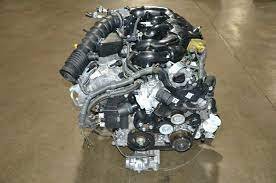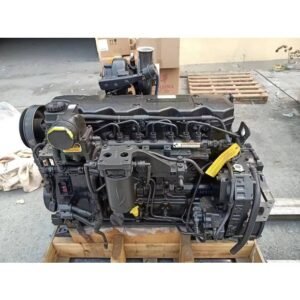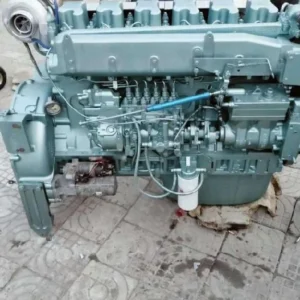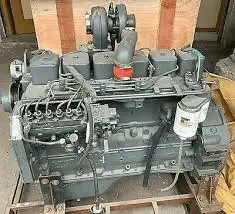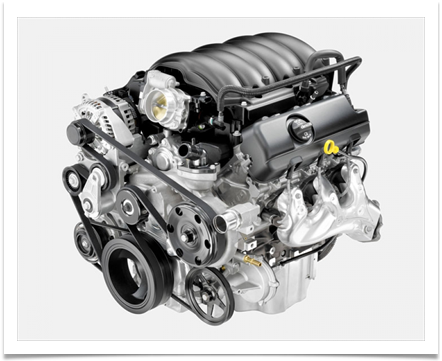
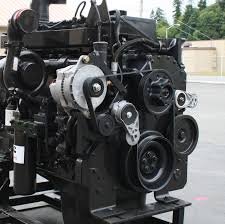
If you’re shopping for a Cummins M11 engine for sale, you already know this isn’t a small-engine kind of decision. The M11 is a big, heavy, inline-six diesel that ends up in highway trucks, transit buses, fire apparatus, and off-highway equipment because it holds up to years of hard running. We keep tested Cummins M11 engines in stock, we check every one before it leaves our shop, and we ship worldwide, so wherever your truck or equipment is parked, we can get a working M11 to you without the guesswork that comes with buying blind off a classified ad.
This page walks through what the M11 actually is, the real specifications behind it, what we check before we call one “ready to run,” and how the buying and shipping process works. If you’ve been searching for a Cummins M11 engine for sale and want a straight answer instead of a sales pitch, keep reading.
What Is the Cummins M11 Engine?
The M11 is a heavy-duty inline-six diesel that Cummins built from the mid-1990s through roughly 2010, when it was gradually folded into the ISM and later ISMe nameplates as electronic controls and emissions requirements evolved. It replaced the older L10 in Cummins’ lineup and was, for a long stretch, one of the most common big-bore diesels running in North American transit buses and coach fleets, plus a healthy share of vocational trucks, fire trucks, and construction machinery.
What made the M11 stick around as long as it did is pretty simple: it’s an iron-block, iron-head engine built for load, not for finesse. Fleets don’t keep running an engine for over a decade because it’s clever. They keep running it because it survives being worked hard, serviced late, and driven by people who don’t baby the throttle. That reputation is exactly why a used, tested M11 still has real value today, and why we regularly get calls asking for a Cummins M11 engine for sale from shops that would rather drop in a proven six-cylinder than gamble on a rebuild of something that’s already failed once.
Cummins M11 Engine Specifications
Here’s what you’re actually buying when you buy an M11. These are the core numbers for the engine family, and we’ll confirm the exact rating and configuration of the specific unit we have in stock when you call or message us.
| Spec | Detail |
|---|---|
| Engine family | Cummins M11 (M11 CELECT / CELECT Plus, later ISM) |
| Configuration | Inline-6, 4-stroke diesel |
| Displacement | 10.8L (659 cu in) |
| Bore | 4.921 in (125.0 mm) |
| Stroke | 5.787 in (147.0 mm) |
| Aspiration | Turbocharged, some later ratings with variable geometry turbo and charge air cooling |
| Fuel system | Electronic CELECT / CELECT Plus unit injection |
| Horsepower range | 280 to 500 hp depending on year and rating |
| Torque range | 925 to 1,550 lb-ft at 1,200 rpm depending on rating |
| Block and head | Cast iron |
| Cooling | Water-cooled, wet sump lubrication |
| Production years | Roughly 1994 to 2010 under the M11 name |
| Predecessor / successor | Replaced the L10, succeeded by the ISX12 |
That horsepower and torque spread is wide because Cummins offered the M11 in a lot of different ratings for a lot of different jobs. A transit bus rating and a vocational truck rating out of the same displacement can look pretty different on paper, which is exactly why we tell every buyer to give us the application, and ideally the truck or equipment’s build sheet, before you commit. We’ll match you to the right rating instead of just shipping whatever’s on the shelf.
Why Buyers Choose a Tested Cummins M11 Engine For Sale
Most people looking for a Cummins M11 engine for sale have already priced out a full rebuild or a brand-new crate option and landed on “used and tested” for one reason: it gets equipment back to work faster and for a lot less money. A ground-up rebuild on a big-bore diesel like this isn’t cheap once you add up machine work, injectors, a turbo rebuild or replacement, gaskets, and labor, and it can tie up a truck or a piece of equipment for weeks. A tested used M11 that’s already proven it runs, holds oil pressure, and doesn’t smoke gets you back on the road in days, not a month and a half.
There’s also the simple fact that these engines were built in huge numbers for a long production run. That means the used market has real supply, and it means parts support for common wear items isn’t drying up the way it does with rarer engines. When you buy a Cummins M11 engine for sale from us, you’re not buying an orphan. You’re buying into a platform that mechanics who’ve been around big trucks and buses already know how to work on.
And honestly, a lot of our repeat buyers are shops and owner-operators who’ve been burned before by an engine listed as “good running” that turned out to need a top end the week it arrived. That’s the gap we’re trying to close. We don’t sell parts engines as running engines, and we don’t dress up a core as something it isn’t.
What a Used Engine Inspection Actually Catches
Before an M11 goes on our floor as ready to ship, someone puts hands and eyes on it. That means a compression check across all six cylinders so we know the rings and valves are sealing the way they should, a look at oil condition and any metal in the pan or filter that would point to bearing or cylinder wear, a check of coolant for oil or exhaust contamination that would flag a head gasket or cracked liner, and a visual pass over the turbo, injection lines, and accessory brackets for cracks, leaks, or prior repair welds that weren’t done right.
We also run the engine when we can, listening for knock, checking for smoke color under load, and confirming oil pressure holds where it should at idle and at higher RPM. If an engine doesn’t pass, it doesn’t go out labeled as a tested, running Cummins M11 engine for sale. It either gets repaired first or it gets sold honestly as a core or parts unit, clearly marked as such. That distinction matters more than almost anything else in this business, and it’s the reason customers come back to us instead of rolling the dice on an unknown seller every time.
Common Issues to Know About
No engine this old is perfect, and anyone who tells you otherwise is trying to close a sale, not help you make a good decision. On the M11 specifically, a few things are worth knowing before you buy from anyone. Injector wear and fuel system issues show up as rough idle, hard starting, or a noticeable power drop, and it’s usually the first thing we check because the CELECT and CELECT Plus systems are well understood and easy to diagnose. Turbo shaft play and oil seal leaks are common on higher-hour units, which is why we spin the turbo by hand and check for excess play before an engine ships. Head gasket failure can happen on units that were run hot or low on coolant at some point in their life, so we check compression and coolant condition specifically to rule this out.
None of this makes the M11 a bad engine to buy used. It makes it an engine where the inspection matters more than the sales pitch. That’s the whole reason we test before we list, rather than just cleaning an engine up and photographing it.
Where the M11 Works: Applications
The M11 spent most of its life in three worlds. The first is transit and coach buses, where its combination of torque and durability made it a default choice for large fleets running long service intervals and high mileage. The second is vocational and highway trucking, where you’ll find it in everything from dump trucks and mixers to line-haul tractors, particularly in the earlier-to-mid production years before newer emissions-focused engines took over that segment. The third is off-highway and industrial equipment, including construction machinery, fire apparatus, and stationary or mobile power units, where Cummins later carried the same core architecture forward into industrial and marine-rated variants under the QSM11 name.
If you’re not sure whether the specific M11 rating we have fits your application, tell us what it’s going into. Bus ratings, vocational truck ratings, and industrial ratings on this platform aren’t interchangeable without checking, and we’d rather spend five minutes confirming fitment on the phone than have you install the wrong one.
Where the M11 Sits in Cummins’ Big-Bore Lineup
It helps to know where this engine fits relative to its siblings. The L10 came before it and is generally considered the M11’s mechanical ancestor, sharing the same basic displacement class but without the electronic fuel control that came later. As emissions rules tightened through the late 1990s and 2000s, Cummins carried the M11’s core architecture forward under the ISM name, and eventually into the ISMe and the marine and industrial QSM11 line, before the ISX12 took over as the primary highway engine in this displacement range. So when people search for “M11,” “ISM,” or “QSM11,” they’re often looking at close relatives of the same basic engine family rather than three unrelated designs. If you’re not sure which nameplate your equipment actually needs, send us the engine serial number or the equipment’s build tag and we’ll confirm before anything ships.
Payment and How Shipping Actually Works
Once you’ve confirmed the rating and fitment with us, we take payment, crate the engine properly, and ship it out. We ship worldwide, so wherever you’re located, we can quote freight to your door or to a freight terminal near you, whichever works better for your setup. Big engines like this one travel on a pallet or in a crate depending on the shipping method, and we photograph the engine before it leaves so you have a clear record of its condition at the time it shipped.
We’re upfront about lead times and freight costs before you pay anything, not after. If something about the shipping estimate doesn’t work for your timeline or your location, tell us and we’ll figure out the best option together rather than locking you into a quote that doesn’t fit.
More Frequently Asked Questions
Will this fit my truck or bus without modification?
Usually yes if you’re replacing a factory M11, but mounting points, accessory drives, and wiring harnesses can differ between model years and ratings. Tell us your chassis and year and we’ll confirm before you buy.
Do you sell the engine with the turbo and injectors included?
Each listing specifies exactly what’s included. Ask us directly if you need the ECM, wiring harness, turbo, or accessories, and we’ll tell you what’s on the specific unit we have.
How many miles or hours does a used M11 typically have?
It varies by unit. We disclose what we know about the engine’s history and hours when available, and we’re honest when that history isn’t fully documented, because compression and inspection results matter more than an odometer number nobody can verify.
Can I get a warranty on a used engine like this?
Ask us about the current warranty terms on the specific unit you’re looking at. We stand behind what we test and sell.
Do you only sell to buyers in the United States?
No. We ship worldwide. Wherever your shop or fleet is located, reach out and we’ll work out freight to get the engine to you.
Comparing a Used M11 to a Remanufactured or New Option
A lot of people who end up searching for a Cummins M11 engine for sale started out pricing a remanufactured unit or a brand-new crate engine first, then backed off once they saw the number. There’s nothing wrong with going new or remanufactured if the budget supports it and the truck or equipment is going to be in service for another decade. But for a lot of fleets and owner-operators, that math doesn’t work, especially on older chassis where the rest of the vehicle isn’t worth a five-figure powertrain investment.
A tested used M11 sits in the middle. You’re not paying a rebuild premium for parts and machine work you can’t see, and you’re not gambling on an untested core either, because we’ve already put it through compression and functional checks before it’s listed. For a lot of buyers, that’s the sweet spot: real cost savings without buying a complete unknown. If your equipment still has years of useful life left in the frame, transmission, and driveline, dropping in a proven used M11 is usually the faster path back to work and the one that makes the most financial sense.
How We Source Our Inventory
We don’t build our Cummins M11 inventory by buying blind at auction and hoping for the best. Engines come out of retired buses, decommissioned trucks, and equipment that’s being parted out for reasons that have nothing to do with the engine itself, things like a cracked frame, a totaled cab, or a fleet simply cycling out older units on a replacement schedule. When an M11 comes in, it goes through our inspection process before it’s ever listed, and we keep notes on where it came from and what we found so we can answer your questions honestly instead of guessing.
This matters because the used diesel engine market has its share of sellers who don’t test anything and just move inventory as fast as possible. We’d rather sell fewer engines and have customers who trust what we tell them than move volume on engines we haven’t actually checked. If you call and ask us a specific question about the M11 we have in stock, we’ll give you a specific answer, not a script.
Installation Notes for Your Shop
If your shop is doing the swap, a few things are worth confirming before the engine shows up. Check your mounting points and accessory brackets against the specific M11 rating you’re installing, since brackets for the alternator, air compressor, and power steering pump can differ between model years. Confirm your ECM and wiring harness compatibility if you’re not reusing the original chassis harness, and have your injector and turbo connections verified against the engine’s documentation before you start bolting things together. Fresh gaskets, seals, and fluids on install are worth the extra cost every time. An engine that tested clean on our end can still develop a leak from an old gasket that wasn’t replaced during the swap, and that’s an easy problem to avoid.
If you run into a fitment question mid-install, call us. We’d rather answer a question in the middle of your swap than have you stuck with a part that doesn’t match.
Signs Your Current Engine Needs Replacing
If you’re not sure whether you actually need a replacement M11 or just a repair, a few signs point toward replacement rather than another round of patchwork. Persistent low compression across multiple cylinders that doesn’t trace back to one bad injector or valve usually means the block or heads have worn past the point where a repair makes sense. Metal in the oil or a magnetic drain plug that’s collecting more than fine dust points to bearing or cylinder wear that’s only going to get worse. Coolant that’s disappearing with no visible external leak, or oil that’s milky, usually means a head gasket or cracked component, and on an engine this old, that’s often the point where replacement costs less over time than another repair.
If any of that sounds familiar, it’s worth getting a straight quote on a tested used M11 before you sink more money into a repair that might not hold.
Bottom line
If you need a Cummins M11 engine for sale that’s actually been checked before it ships, not just cleaned up and photographed, that’s what we do. Compression tested, inspected for the common failure points on this platform, and shipped worldwide with clear communication about condition and lead time. Contact us with your application and we’ll confirm the right rating and get you a quote. You can also see our other Cummins offerings, including our Cummins 6BT engine for sale and our Cummins 4BT engine for sale, or browse the full Cummins Engines category. For general background on where the M11 sits in Cummins’ engine history, see Cummins’ M-series engine history. Ready to move forward? Contact us and we’ll get your engine on the way.