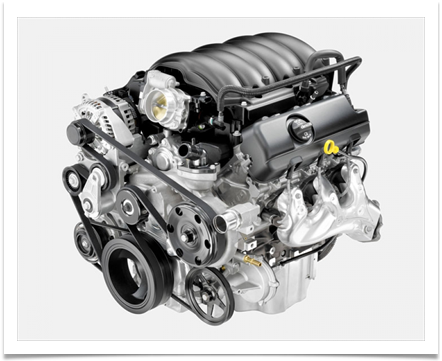
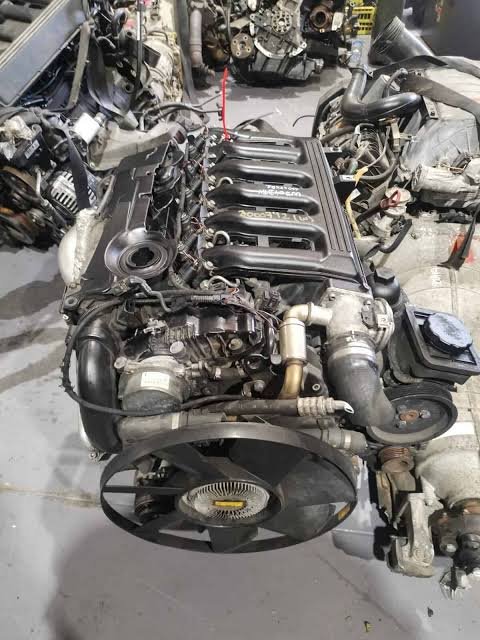
BMW M57 Engine Replacement
Replacing a BMW M57 engine surely requires careful attention, and moreover, we are a supplier you can trust for such work.
Also, actually, whether the engine fails or the turbo blows, we can definitely get you back on the road for less than buying a new vehicle. This is where we step in, as we specialise in the supply of fully tested, high-quality M57 units ready to install, which further ensures reliability. The system itself is designed for seamless integration. The BMW M57 engine replacement itself requires further mechanical precision and expertise.
Presentation Overview
This will definitely be covered in the presentation below.
Basically, the M57 family is just a group of engines with different versions, and all of them have the same basic design and specs. The replacement of the BMW M57 engine requires further attention to the mechanical process itself.
As per the replacement unit, look for quality and compatibility regarding the product.
As per our supply process and regarding what we offer, it makes sense to choose us. Replacing the BMW M57 engine surely requires careful attention to compatibility. Moreover, it is a complex task that demands technical expertise for proper installation.
The BMW installation and compatibility tips are discussed further in the document itself.
Frequently Asked Questions and the Buyer’s Checklist are surely important for buyers; moreover, they provide clear guidance for decision-making.
1. BMW M57 Engine Family: Specifications and Performance
As per the BMW M57 engine family, details regarding its specifications and performance are provided.
We are seeing the BMW M57 engine is a straight-six diesel turbo type only, made from 1998 to 2013.
Actually, the main technical points are clearly shown here. These are definitely the key highlights.
enginedna.com
Actually, the early blocks were made of cast iron, but later models (TU2) definitely switched to aluminum for weight reduction.
As per the details, later versions have a single turbo or variable geometry regarding turbocharging. Moreover, bMW M57 engine replacement
Also, for the fuel system, we are seeing common-rail direct injection only.
Common Applications
Moreover, bimmerarchive.org
The BMW 730d (E65/E66) is surely a notable model in the 7-Series lineup, and moreover, it represents advanced engineering in luxury sedans.
2. When a Full Engine Replacement Is Recommended
As per the text, a full engine replacement is recommended regarding severe damage or high repair costs.
Basically, if the internal engine damage is severe, a full swap is the same as a more economical option. The BMW M57 engine is actually a strong choice, and it is definitely a good option for replacement when needed.
If you are putting a valuable car back on the road, you should surely get a new engine to avoid further risks; moreover, this step will help keep the vehicle safe and reliable.
Basically, the customer just wants the same engine to fix an old or high-mileage BMW. We are seeing the replacement of the BMW M57 engine only. This engine is being changed now.
3. What to Check When Getting a New M57 Engine
We are seeing what to check when getting a new M57 engine only. It is important to look at the right things only.
A. Verification and Condition
A verified mileage or a reasonable estimate for the BMW M57 engine replacement is essential. Moreover, it ensures accuracy and reliability in the assessment.
We are seeing the internal condition is okay only, no major damage, block not cracked, internals not seized, no bent rods.
Further, basically, clean the oil and coolant ways the same way to stop contamination.
As per recent maintenance, check the timing chain, turbo, and injectors if possible regarding the vehicle condition.
Supplier ka warranty ya guarantee basically same cheez hai.
B. Qualification of Supplier
As per the purchase of an engine rather than just parts, the following is required regarding your order.
Basically, the policy for return and guarantee is the same.
Turn-Key Units
Turn-key units: We offer our tagged and cleaned engines by variant. They are definitely ready to drop in, which actually minimises your downtime.
We surely verify the correct variant for your vehicle and provide fitment and installation guidance; moreover, we ensure spare part compatibility.
Basically, you get clear pricing and a warranty, and it’s all the same for your peace of mind. To further replace the BMW M57 engine, the process itself requires careful steps.
Basically, tell us your car’s make, model, year and engine code when asking, so we can give you the right M57 replacement — it’s all the same. Basically, the BMW M57 engine replacement is the same as swapping the old engine with a new one.
4. Installation, Compatibility & Practical Tips for Your BMW
A. Pre-Installation Checks
When you have the correct engine, we are seeing that you must fit it properly only. This way, you will get trouble-free service.
We are seeing that the used engine oil and coolant must be drained, and flush the system only if there is contamination.
One must surely examine the engine mounts, wiring harness, turbo connections, fuel lines, and all belts; moreover, ensure thorough inspection of each component.
Check that the crank pulley, flywheel/flexplate and torque converter are in good condition.
Fit the engine to OEM mounting points, making sure not to allow misalignment or distortion of mounts. BMW M57 engine replacement
Prime the fuel system – bleed diesel lines – prior to first startup.
Use the right type of oil and coolant; most M57s take synthetic 5W-30 / 5W-40.
Also, enginedna.com
Let the engine run after the first start-up at low speed until the normal operating temperature of ~90°C is reached.
enginedna.com
B. Post-Installation Run-In & Maintenance
Avoid hard acceleration or towing heavy loads in the first few hundred kilometres. Allow seals to bed in itself, and further ensure proper performance.
Basically, check the oil, coolant and turbo boost—they all work the same way.
Further, perform an oil change after ~500–1000 km to remove any installation debris.
We are seeing that we should follow the regular service schedule only. Change oil every 7000–8000 km and keep injectors and turbo for checking only.
enginedna.com
C. Compatibility Information for Cameroon and West Africa
Actually, using good quality fuel is definitely important. Basically, high-sulphur diesel reduces injector life because it causes the same wear and tear over time.
Basically, dust and heat are the same big stressors. To ensure effective cooling, keep the air-filter system clean, as it directly impacts performance. The system itself must be maintained further for optimal results.